Freemasons' Hall
Freemasons' Hall
A neoclassical Masonic edifice completed in 1923 in the Egmore district of Chennai, a discreet testament to British colonial architecture in South India.
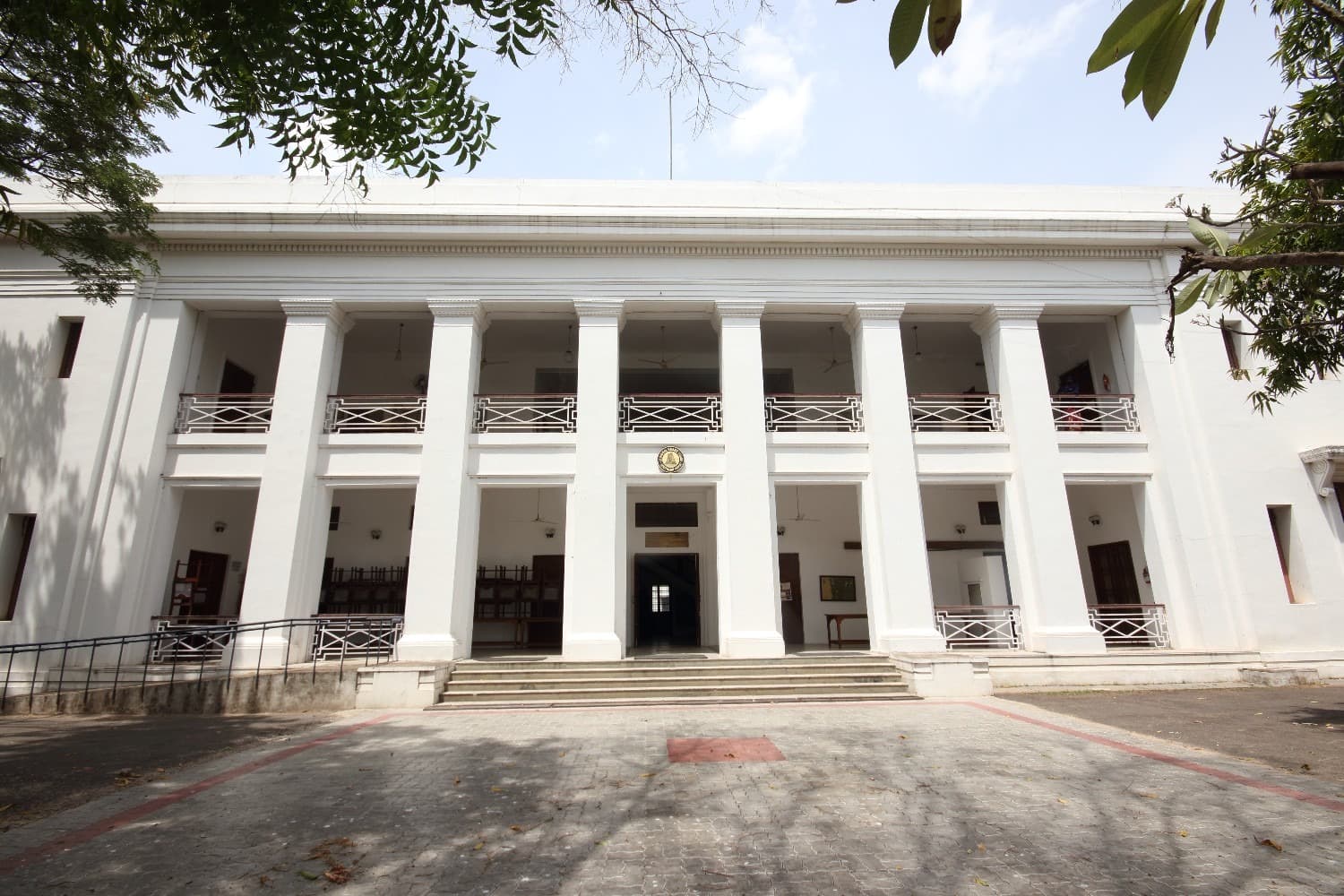
Freemasons' Hall is a Masonic building in the Egmore district of Chennai. Completed in 1923, this two-storey neoclassical structure exemplifies early 20th-century British colonial architecture in South India. Today it continues to host local Masonic lodges and stands as a subtle landmark within the Tamil metropolis's built heritage.
Why visit Freemasons' Hall
- A testament to British colonial architecture in Chennai, completed in 1923
- Refined interiors blending Italian tiles, marble, Sholingar stone staircase and Masonic emblems
- An off-the-beaten-path stop in Egmore, complementing the district's museums and historic railway station
- A rare insight, in India, into the history of Freemasonry inherited from British presence
Building history
Freemasonry originated in Europe during the 17th century before spreading throughout colonial empires. In India, lodges followed British expansion and became established in Madras (present-day Chennai) throughout the 19th and 20th centuries.
Egmore's Freemasons' Hall was completed in 1923, during the British Raj. The building was reserved for local Masonic fraternity activities. It is believed to have also served as a military pavilion for British soldiers, which afforded it institutional protection during periods of tension. Since restoration, it continues to house active lodges in the region.
Beyond its ritual functions, Freemasonry historically supported charitable works, schools and orphanages in India as elsewhere. Egmore's Hall is part of this network of functional and symbolic buildings.
What to observe on site
The edifice adopts a colonial neoclassical style, with a symmetrical two-storey structure designed to withstand the hot, humid climate of Tamil Nadu. Inside, four massive pillars support the structure and punctuate the space.
The Lodge Room
The main chamber, called the Lodge Room, occupies the building's heart. Each floor can accommodate approximately 200 people. Walls are decorated with Masonic emblems, and veranda floors are adorned with Italian tiles. Furnishings include marble, decorative spheres and antique paintings.
The spiral staircase and dining room
A spiral staircase, composed of Sholingar stone, wrought iron and perforated grillwork, leads to the first floor. There lies a dining room capable of seating nearly 150 people.
Chambers and windows
The edifice also includes individual rooms capable of accommodating up to 60 people in total, practical for large assemblies. Windows in the main hall reach up to 12 feet (approximately 3.65 m) in height, ensuring natural ventilation in a city where heat can be prolonged.
Practical information
Freemasons' Hall is an active Masonic building: public access is restricted and depends on permission granted by the lodge. It is not a free-access tourist site. Inquire in advance with your local agency or directly on site to learn whether a occasional visit is possible, particularly during heritage days.
- Admission: generally free or nominal contribution when a visit is available
- Recommended duration: allow 30 minutes to 1 hour if access is granted
- Smart dress code required, as the building remains a meeting place
When to visit
Chennai enjoys a tropical climate with elevated temperatures year-round. The most pleasant period for exploring the city spans November to February, with more moderate temperatures and manageable humidity. The northeast monsoon affects the region from October to December and can bring heavy rainfall. The months from March to June are best avoided for urban walks, as temperatures frequently exceed 35 °C.
How to get there
The Hall is located in Egmore, a central Chennai district well served by public transport.
- By train: Egmore railway station, terminus for many Tamil Nadu lines, is a few minutes' walk away
- By metro: Egmore station (blue line) serves the district
- By taxi or auto-rickshaw: the simplest option from the city's south or Chennai International Airport (approximately 30 to 45 minutes depending on traffic)
Nearby
Egmore concentrates several points of interest within a short radius, including Chennai's Government Museum, Saint Andrew's Basilica and Egmore railway station itself, a remarkable example of Indo-Saracenic architecture. To further explore Indian heritage, you may consult other sites such as the State Museum of Bhopal, Anjengo Fort in Kerala, or the Alchi Monastery in Ladakh.
Frequently asked questions
Frequently asked questions
No. It is an active Masonic building whose public access is restricted. An occasional visit is sometimes possible with permission or during heritage events.
The edifice was completed in 1923, under British administration in Madras (now Chennai).
The building adopts a colonial neoclassical style, with a symmetrical two-storey structure, four massive pillars and large windows adapted to Tamil Nadu's warm climate.
The Lodge Room can hold approximately 200 people per floor. The dining room on the first floor meanwhile seats nearly 150 guests.
Egmore is accessible by metro (blue line), by train from Egmore station, or by taxi/auto-rickshaw. The district is central and well connected to the rest of the city.
Plan your journey
Freemasons' Hall integrates into a broader exploration of Chennai and Tamil Nadu, rich in colonial heritage, Dravidian temples and living traditions. To craft a bespoke itinerary including South India and its historic sites, consult our travels in India.
Interested in this visit?
We can include it in your personalised itinerary.