Pinjore
Some 22 km from Chandigarh, Pinjore Gardens unfolds across seven terraced Mughal levels in cascade, ancient pavilions and blooming flowerbeds at the foot of the Shivalik hills.
About thirty kilometres from Chandigarh, on the road to Shimla, Pinjore Gardens — officially Yadavindra Gardens — extend in terraces along the foothills of the Shivaliks. Laid out during the Mughal era, they combine cascading pools, historic pavilions and shaded walkways. It is one of the finest preserved Mughal gardens in northern India, easily accessible as a day excursion from Chandigarh.
Practical information at a glance
- Admission : paid entry (modest fee, different rates for residents and foreign visitors)
- Access : on NH-5 (Chandigarh–Shimla); regular buses from Chandigarh ISBT
- Recommended duration : 1.5 to 2 hours
- Dress code : no specific restrictions
- Accessibility : main pathways accessible, terraced staircases not wheelchair-accessible
What to see
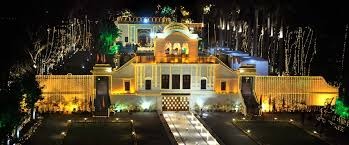
The garden unfolds across seven descending terraces connected by channels and fountains. Each level reveals a central pool, flower beds and fruit trees. Three Mughal pavilions — including the Rang Mahal — punctuate the promenade. A small zoo and children's amusement park occupy a separate section of the site.
History and context
The site is believed to have been laid out in the 17th century under Fidai Khan, Mughal governor of Punjab. Following the Mughal period, it passed into the hands of the kings of Patiala, who restored it and named it Yadavindra Gardens in honour of Maharaja Yadavindra Singh. The Haryana government currently manages it.
Highlights of the visit
The cascading terraces
The tiered layout, inspired by Mughal gardens in Kashmir, creates a striking visual perspective from the upper terrace. The channels connecting each level remain filled with water for much of the year.
The Rang Mahal
This central pavilion, with its characteristic Mughal arches, serves as a landmark within the garden. Its central position and proportions make it the main photographic subject on the site.
Spring blooming
Between February and April, the rose beds and seasonal flowers reach their peak. An annual flower festival draws many visitors from the region.
Photography tips
Morning light, before crowds arrive, is ideal for photographing the pools with their reflections. From the upper terrace, an overhead shot captures all the levels. The arches of the Rang Mahal frame portraits naturally. No known photography restrictions for visitors.
Location and access
Pinjore sits on NH-5, approximately 22 km from Chandigarh and about fifteen kilometres from Kalka. Frequent buses connect Chandigarh ISBT to Pinjore. By car or taxi from Chandigarh, the journey takes roughly 30 to 40 minutes depending on traffic. The garden is visible from the main road.
Nearby attractions
- Rock Garden of Chandigarh — unique environmental sculpture created from industrial waste, about thirty kilometres away.
- Kalka — departure point for the famous narrow-gauge railway to Shimla, about fifteen kilometres away.
- Morni Hills — wooded Shivalik hills with lake and hiking trails, approximately 45 km away.
Frequently asked questions
From February to April, blooming is at its peak. Autumn (October–November) also offers pleasant weather. Avoid June–July, which are very hot.
Yes, easily. Pinjore Gardens can be explored in 1.5 to 2 hours. Setting out in the morning from Chandigarh, you can visit Pinjore and then return to explore the Rock Garden or Sukhna Lake in the afternoon.
No, this is a public garden with no specific dress code.
Yes. One section of the park includes a small zoo and children's attractions, making it a popular family outing for locals.
Regular buses depart from Chandigarh ISBT heading towards Kalka or Shimla and stop at Pinjore. The journey takes around 45 minutes to 1 hour.
Interested in this visit?
We can include it in your personalised itinerary.