Jammu and Kashmir
Located in northern Inde, Jammu and Kashmir stands as a distinct territory within the Indian federal landscape. Its position at the crossroads of China, Inde, and Pakistan has made it a land of cultural immigration where an intense cultural life thrives: Shiva temples in Srinagar, former maharaja palaces, the dazzling Hazratbal Mosque…
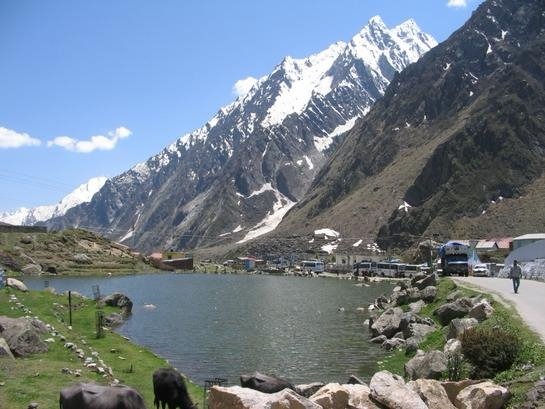
Located in northern Inde, Jammu and Kashmir stands as a distinct territory within the Indian federal landscape. Its position at the crossroads between China, Inde, and Pakistan has made it a land of cultural immigration where an intense cultural life thrives: Shiva temples in Srinagar, former maharaja palaces, the dazzling Hazratbal Mosque… But the Jammu and Kashmir region of Inde also presents itself as a natural paradise: its high-altitude lakes, verdant plantations, flower-strewn meadows, and towering snow-capped peaks defiantly rising above the clouds make it a premier Himalayan destination. Without question, your finest vacation awaits you here!
History
The origins of Jammu and Kashmir are shrouded in mystery. According to legend, Chief Jambu Lochan – who ruled a powerful tribe in northern Inde during the 9th century – founded the city on the strength of a prophetic vision. One morning, while out hunting, he spotted a tiger and a deer drinking together at a watering hole near the Tawi river. The chief decided to establish his royal capital there, assured by his advisors that the place was blessed and would never be troubled by the scourge of war. He named the city "Jambupura," but later it came to be known as Jammu.
During the Middle Ages, Jammu and Kashmir served as a stopover on the Silk Road trade route. Between the 16th and 18th centuries, the city fell under the rule of Afghans, Mughals, and Sikhs, before passing under the British flag in 1846.
Jammu and Kashmir weathered British rule with relative ease. Surprisingly, the Declaration of Independence in 1947 proved more damaging than beneficial to the princely state, when the maharaja was forced to choose between predominantly Hindu Inde and Muslim Pakistan. Opting for neutrality, the province suffered military intervention by Pakistan and called upon Inde for assistance. The maharaja of the time was then compelled to accept a pact of accession to the Indian Union.
Jammu and Kashmir Today: A Union Territory of Inde
The modern era for Jammu and Kashmir began in the 1950s. The revocation of its statehood in 2019 transformed it from a state into an autonomous territory under direct administration from New Delhi. It is divided into three major regions: Jammu, Kashmir, and Ladakh.
Agriculture, livestock, and craftsmanship are the primary engines of the economy. Given its remarkable natural capital, the province established itself early on as a tourist destination. Skiing, whitewater rafting, winter mountaineering, trout fishing in the Kashmir Valley, or peaceful strolls through orchards of peaches, oranges, and almonds… The destination offers a rich array of activities.
Tourism infrastructure has expanded considerably, particularly around the sacred sites of Vaishno Devi and Amarnath, which attract thousands of Hindu pilgrims. The Jammu and Kashmir government reported welcoming 50,000 foreign tourists in 2018. Beyond eco-tourism, which offers adventure travel through a succession of breathtaking landscapes, the Tourism Board is already tapping into other niche markets: medical tourism, sports tourism, floral tourism, and cultural tourism.
Places of Interest to Visit in the Jammu and Kashmir Region
Jammu and Kashmir is nicknamed "Paradise on Earth" for its stunning landscapes, snow-capped mountains, verdant valleys, and glistening lakes. Here are its attractions to visit by region:
In the Kashmir Valley
- Srinagar, the summer capital of Jammu and Kashmir
Srinagar is the summer capital of Jammu and Kashmir. It is renowned for Dal Lake and its colorful shikaras (traditional boats) as well as houseboats. The magnificent Mughal gardens (particularly Shalimar Bagh, the most extensive), the Tulip Garden (Indira Gandhi Memorial Tulip Garden), and the Dargah Hazratbal Shrine sanctuary are also among its finest tourist attractions.
- Gulmarg
Gulmarg is a popular ski resort in winter and a hiker's paradise in summer. Don't miss the Gulmarg Gondola, one of the world's highest cable cars, offering stunning views of Mount Apharwat and Nanga Parbat on clear days. You can also hike to Alpather Lake and Khilanmarg.
- Pahalgam
Nicknamed the "Shepherds' Valley," Pahalgam is a magnificent mountain resort nestled in verdant landscapes. Be sure to visit the picturesque valleys of Betaab, Aru, and Baisaran!
- Sonamarg
Sonamarg, meaning "meadow of gold," is a stunning valley surrounded by snow-capped mountains and traversed by the Sindh river. It's an ideal starting point for treks to the spectacular Thajiwas Glacier and the legendary Zoji La Pass.
- Doodhpathri
Doodhpathri, less frequented and relatively unspoiled, is known for its lush meadows, crystal-clear streams, and vast pastures, earning it the name "Valley of Milk." It's a perfect place for a peaceful retreat and immersion in nature.
- Gurez Valley
This isolated and indescribably beautiful valley is nestled in the heart of the snow-capped Himalayan mountains. It offers a unique cultural experience with charming villages and pristine landscapes.
In Jammu
- The city of Jammu
Winter capital of the autonomous territory, Jammu brings together several cultural and historical sites of interest:
- Shri Raghunath Temple: located in the heart of the city, this vast complex is dedicated to Rama and houses numerous idols. It's one of North Inde's largest temple complexes.
- Amar Mahal Museum and Library: housed in a former palace, they chronicle the history of the Dogra dynasty and showcase regional artwork.
- Bahu Fort: overlooking the Tawi river, this fort houses a temple dedicated to Kali and offers fine views of Jammu.
- Vaishno Devi Temple
Located in the Trikuta hills, Vaishno Devi Temple is a pilgrimage site of major importance in Hinduism, drawing millions of devotees each year. The path to the temple is a unique spiritual and physical experience.
- Surinsar Lake and Mansar Lake
These two charming lakes attract those seeking relaxation and contemplation. The former is surrounded by verdant hills, while the latter is a sacred site with temples and rich biodiversity.
- Patnitop
The mountain resort of Patnitop perches on a plateau in the Shivalik hills. Offering activities such as nature walks, it's an ideal spot for family outings.
- Nathatop
Nathatop is favored for adventure sports like paragliding thanks to its high altitude and Himalayan views. It's therefore an excellent site for thrill-seekers.
In Ladakh
- Leh
The capital of Ladakh is a vibrant center of Tibetan Buddhist culture. It's famous for its numerous ancient monasteries, such as the impressive Thiksey Monastery and the historic Hemis Monastery, as well as the iconic Leh Palace, which dominates the city.
- Pangong Tso Lake
A high-altitude lake of extraordinary beauty, Pangong Tso will impress you with its waters of changing colors, shifting from azure blue to turquoise and even olive green, depending on the sunlight. Its natural splendor makes it an unmissable destination in the Ladakh region.
- Nubra Valley
It's a high-altitude desert valley known for its undulating sand dunes. It's also renowned for its unique Bactrian camels (two-humped), which offer memorable rides, and for its ancient monasteries, such as Diskit Monastery.
- Zoji La Pass
This mountain pass unveils spectacular views of the surrounding mountain ranges. It's a vital link connecting the Kashmir Valley to Dras and the picturesque Suru Valley.
Where is Jammu and Kashmir Located?
Jammu and Kashmir is located at the far north of Inde and is surrounded by Pakistan to the west and north, China to the northeast, and Afghanistan to the northwest. To the southeast lies Himachal Pradesh, while the Punjab extends to the southwest.
Srinagar Airport connects the region to major Indian cities. Trains run to Jammu, after which buses or taxis take over. Roads are open from May to October, depending on weather conditions, particularly for Ladakh.
What is the Climate in Jammu and Kashmir?
The region, situated largely above 3,000 meters in altitude, experiences varied climates. Jammu is hot in summer (up to 40°C) and mild in winter. Kashmir has pleasant summers and cold winters with heavy snowfall. Ladakh, drier and at higher elevation, remains cold year-round.
What Religion is Practiced in Jammu and Kashmir?
The population is predominantly Muslim, particularly in the Kashmir Valley. Buddhism is present in Ladakh, while Hinduism is widespread in the Jammu region.
What Languages are Spoken There?
The main languages are Kashmiri, Dogri, Ladakhi, and Urdu. English and Hindi are also widely used in administration and tourism.