Kalpa Village
Kalpa Village
Perched at nearly 3,000 meters in Kinnaur district, Kalpa offers direct views of the Kinner Kailash massif, ornately carved wooden temples and an atmosphere blending Hindu and Buddhist traditions.
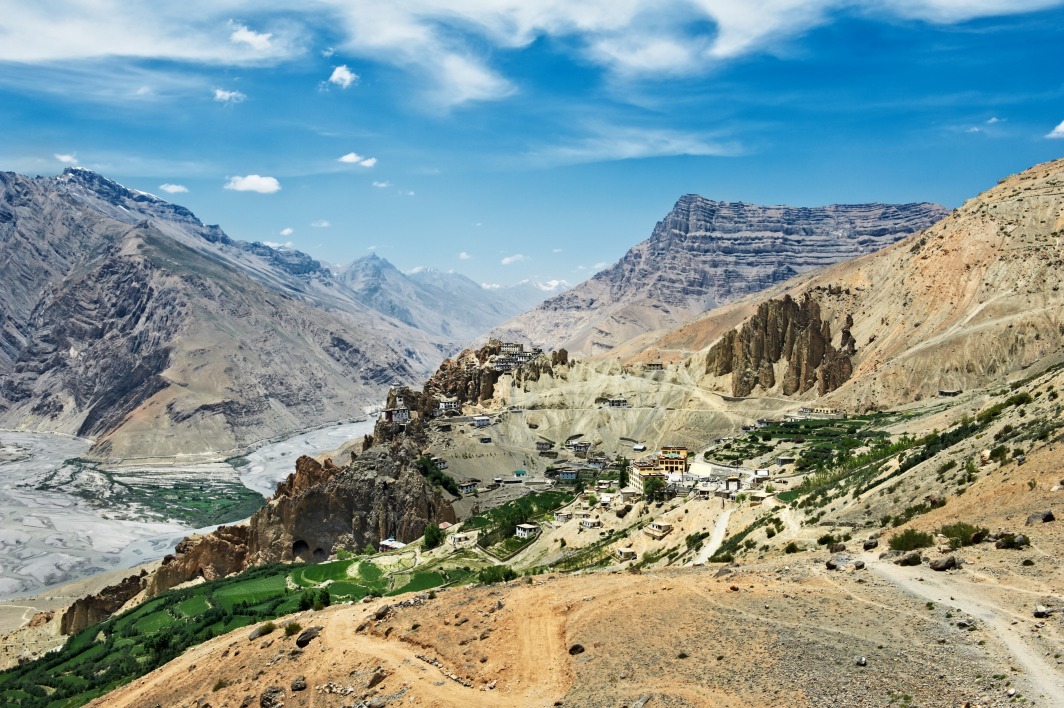
Kalpa is a mountain village perched at approximately 2,960 meters elevation in Kinnaur district, Himachal Pradesh. Nestled on a slope of the Himalayas, it commands direct views of the Kinner Kailash massif and its snow-capped peak. At once inhabited and sacred, Kalpa blends Tibeto-Himalayan wooden architecture, apple orchards and ancient temples.
Essential Information at a Glance
- Access: Kalpa lies approximately 250 km from Shimla via NH-5 (the Hindustan-Tibet highway); the road is winding and the journey typically takes an entire day.
- Permit: An Inner Line Permit (ILP) is required for foreign nationals wishing to travel beyond Kalpa toward Sangla or Chitkul; verify current regulations before departure.
- Best time to visit: April–June (before monsoon) and September–November (after monsoon, apple trees heavy with fruit).
- Recommended duration: 1 to 2 nights to enjoy sunrises over Kinner Kailash.
- Altitude: Approximately 2,960 m — allow time for acclimatization if arriving directly from the plains.
What to See
The panorama of Kinner Kailash (6,050 m) dominates every visit. The village itself features multi-story wooden houses typical of Kinnauri architecture, with carved balconies and slate roofs. Apple and apricot orchards surround the lanes. The Hu-Bu-Lan-Kar temple, dedicated to Shiva, and Kalpa's Buddhist monastery testify to the region's dual Hindu and Tibetan influence.
History and Context
Kalpa is mentioned in the accounts of 19th-century British travelers, including Captain Gerard, who described it as an exceptional vantage point on the Himalaya. Kinnaur district, long closed to foreigners for strategic reasons (Indo-Tibetan border), gradually opened from the 1990s onward. Local culture blends Hindu and Buddhist traditions, reflecting Kinnaur's position between the Indian plains and the Tibetan plateau.
Highlights of Your Visit
Sunrise Over Kinner Kailash
The Kinner Kailash massif blazes with orange and pink hues at dawn. The viewpoint from the village heights, or from the terrace of certain accommodations, ranks among the most striking in Himachal Pradesh. Rise before dawn to catch this spectacle.
Hu-Bu-Lan-Kar Temple
This carved wooden Shaivite temple at the heart of the village exemplifies Kinnaur's distinctive architectural style. The details of the timber frames and doors deserve close attention. The atmosphere is contemplative, especially outside pilgrimage hours.
Buddhist Monastery
Small yet active, Kalpa's monastery houses monks and mural paintings. It underscores the cultural and geographical proximity to Tibet. A brief visit suffices to grasp its essence.
Orchards and Local Market
In autumn, Kinnaur's apple trees are renowned throughout India for fruit quality. You can purchase apples and dried apricots directly from residents or at the village's modest market.
Etiquette and Visit Guidelines
- Remove your shoes before entering the temple and monastery.
- Dress conservatively (shoulders and knees covered) when visiting places of worship.
- Ask permission before photographing residents or temple interiors.
- Maintain silence in prayer spaces.
Photography Tips
Sunrise (between 5:30 and 7 a.m. depending on season) offers the most spectacular light on Kinner Kailash. During the day, light is harsh; favor the golden hour at dusk to photograph wooden houses and lanes. Flowering orchards (April) or fruit-laden ones (October) make natural foregrounds to frame the massif.
Location and Access
Kalpa lies in Kinnaur district, approximately 250 km from Shimla via national highway NH-5. The nearest town with services is Reckong Peo, a few kilometers downhill, which has administration, banks and a market. The nearest airport is Shimla (Jubbarhatti), though most travelers arrive by bus or private vehicle from Shimla. The road follows the Sutlej River and traverses dramatic gorges.
- From Shimla: HRTC bus or private taxi, approximately 8 to 10 hours.
- Reckong Peo is the departure point for obtaining an ILP if necessary.
- Accessibility for persons with reduced mobility: village lanes are steep and unmodified; access is difficult for those with mobility constraints.
Nearby Attractions
- Chitkul Village — the last inhabited village before the Indo-Tibetan border, in Sangla valley, approximately 60 km from Kalpa.
- Sangla Valley — verdant Baspa valley, renowned for its landscapes and traditional Kinnauri villages.
- Reckong Peo — the district capital of Kinnaur, an essential hub for services and transit.
- Nako Village — high-altitude village with a sacred lake and monastery, on the road toward Spiti.
Frequently asked questions
April–June for flowering orchards and clear roads; September–November for fruit-laden apple trees and maximum visibility of Kinner Kailash. Winter (December–March) is harsh and certain roads may be cut off by snow.
Indian nationals do not require a permit for Kalpa. Foreign nationals must obtain an Inner Line Permit (ILP) to travel beyond Kalpa, particularly toward Sangla, Chitkul or Spiti. Inquire with local authorities at Reckong Peo.
Kalpa fits naturally into a Shimla – Kinnaur – Spiti circuit. From Kalpa, you can descend toward Sangla valley and Chitkul, then ascend toward Nako and Spiti valley via Pooh and Khab.
Landscapes and exterior architecture photograph freely. Inside temples and the monastery, always request permission. Avoid photographing residents without consent.
Cover shoulders and knees when entering the Hu-Bu-Lan-Kar temple and monastery. Bring easy-to-remove shoes. A light shawl or scarf is useful year-round.
A minimum of one night to enjoy the sunrise over Kinner Kailash. Two nights allow you to explore the village at leisure, visit places of worship and take a short hike in the surrounding area.
Photos
Want to discover this destination?
Our local advisors design your tailor-made trip.