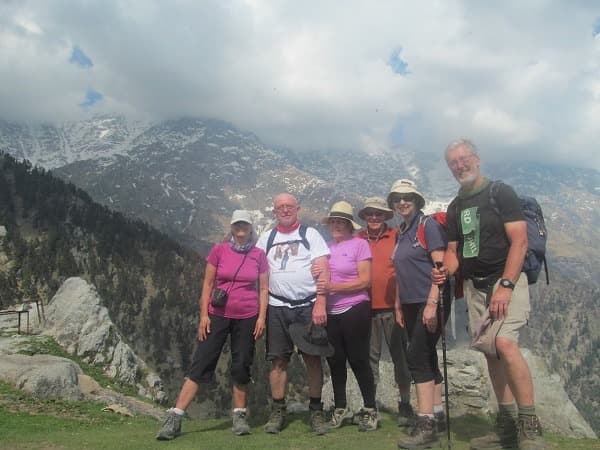
Triund
Triund
High-altitude plateau at 2,850 m above McLeod Ganj, Triund offers panoramic views of the Dhauladhar range and Kangra valley. Accessible trek, camping possible, remarkable starry sky.
Triund is a high-altitude plateau situated at approximately 2,850 metres, above McLeod Ganj in Himachal Pradesh. Overlooking the Kangra valley on one side and the Dhauladhar range on the other, this summit accessible as a day trek or overnight camping trip attracts beginner hikers and travellers seeking Himalayan panoramas without technical climbing expertise. The trek remains one of the most frequented in northern India, particularly from Dharamsala.
Practical information at a glance
- Access: departure from McLeod Ganj or Dharamkot, on foot only — no vehicular road.
- Trek duration: 4 to 6 hours round trip depending on pace; ascent alone approximately 2.5 to 3 hours.
- Altitude: approximately 2,850 m — bring water and warm clothing even in summer.
- Camping: permitted on the plateau; rental tents and dhabas (small mountain restaurants) are available at the summit.
- Recommended season: March–June and September–November; avoid the monsoon (July–August) for safe trails.
- Accessibility for disabled visitors: not accessible — unimproved mountain trail.
- Permit: a forest permit is required; it can be obtained at the checkpoint on the trail.
What you'll see there
At the summit, the grassy plateau opens onto a 180° panorama of the snow-capped peaks of the Dhauladhar. Below, the Kangra valley stretches to the horizon. On clear days, the rocky walls of the range dominate the camp. At night, far from any light pollution, the starry sky is exceptional — one of the main reasons to camp here.
History and context
Triund is a high-altitude pasture long used by the Gaddi shepherds, a nomadic people of Himachal Pradesh. With the rise of tourism in Dharamsala — strengthened by the presence of the Tibetan government in exile in McLeod Ganj — the site became a popular trekking destination from the 1990s onward. Forest authorities have progressively regulated visitor numbers to limit environmental impact.
Highlights of the visit
The trail from Dharamkot
The departure from Dharamkot (above McLeod Ganj) is the most direct route. The trail traverses a forest of oak and rhododendrons before emerging onto open slopes. Vegetation changes noticeably with altitude, and views of the valley appear gradually.
The plateau and sunset
Arriving in late afternoon allows you to witness the sunset over the Dhauladhar. The orange hues on the snow of the peaks constitute the most photographed moment at the site. The dhabas serve tea and simple meals until evening.
A night under the stars
Camping at Triund is the central experience for many visitors. Temperatures drop significantly after sunset, even in summer — a warm sleeping bag is essential. The sunrise over the snow-capped peaks justifies the night spent here on its own.
Photography tips
The golden light of sunrise and sunset is ideal for photographing the Dhauladhar range. Orient yourself towards the northeast at sunrise to capture the first rays on the snow. At night, a tripod is necessary for long exposures of the starry sky. Avoid midday hours in summer: the light is harsh and haze may obscure the peaks.
Location and access
Triund is located approximately 9 km from McLeod Ganj by trail. McLeod Ganj itself is accessible from Dharamsala, connected by bus and taxi to Pathankot (Punjab) and Chandigarh. The nearest airport is Gaggal (Kangra), about thirty kilometres from Dharamsala. No vehicles reach Triund: everything is done on foot from Dharamkot or Bhagsu Nag.
Nearby places accessible on foot from McLeod Ganj:
- Dharamkot — trek departure village, international atmosphere and yoga centres.
- Bhagsu Nag — temple and waterfall, another possible starting point for Triund.
- McLeod Ganj — trek base, seat of the Tibetan government in exile.
In the surroundings
- McLeod Ganj — inevitable starting point, with its Tibetan monasteries, cafés and Namgyal temple.
- Bhagsu Nag — ancient Hindu temple and waterfall accessible in 30 minutes' walk from McLeod Ganj.
- Dharamsala — main town of the valley, with the cricket stadium renowned for its mountain setting.
- Kangra Fort — historic fortress in the Kangra valley, approximately one hour's drive away.
Frequently asked questions
No. The trail is accessible to walkers in good physical condition without alpine experience. The ascent is steady but presents no technical difficulty. Trekking poles are useful on rocky sections.
March to June and September to November offer the best conditions. In March–April, snow may still be present at the summit. The monsoon (July–August) makes trails slippery and hazardous.
Yes. Camping is permitted on the plateau. Tents can be rented on site from the dhabas. Bring a warm sleeping bag: nights are cold even in summer.
Yes, a forest permit is required. It is issued at the checkpoint situated on the trail, before reaching the plateau. Bring an identity document.
Easily. Most travellers spend one or two nights in McLeod Ganj before or after the trek. The monasteries, Namgyal temple and Tibetan market complement the stay well.
Yes, with no particular restrictions on the trail and plateau. Simply respect the privacy of other campers and Gaddi shepherds you may encounter.
Photos
Want to discover this destination?
Our local advisors design your tailor-made trip.