Sikandra (Akbar's Tomb)
Sikandra (Akbar's Tomb)
About 10 km from Agra, Sikandra houses the tomb of Emperor Akbar the Great, blending Hindu, Islamic, and Buddhist styles within a vast garden where deer wander freely.
Some 10 kilometres northwest of Agra, Sikandra holds the tomb of Mughal Emperor Akbar the Great, who died in 1605. This mausoleum, completed by his son Jahangir, merges Hindu, Islamic, Buddhist, and Christian architecture into a singular ensemble. The site sits within a sprawling four-part garden crossed by freely roaming deer—an atmosphere entirely distinct from the Taj Mahal, just kilometres away.
Quick practical information
- Entrance: paid admission (rates differ for Indian residents and foreign visitors) — check current tariffs with the Archaeological Survey of India.
- Access: Agra–Mathura road (NH 19); reachable by auto-rickshaw, taxi, or car from central Agra.
- Recommended time: 1 to 1.5 hours.
- Dress code: no strict obligation, though neat attire is recommended.
- Footwear: remove before entering the inner funerary chamber.
- Closure: the site is closed on Fridays.
What you'll see
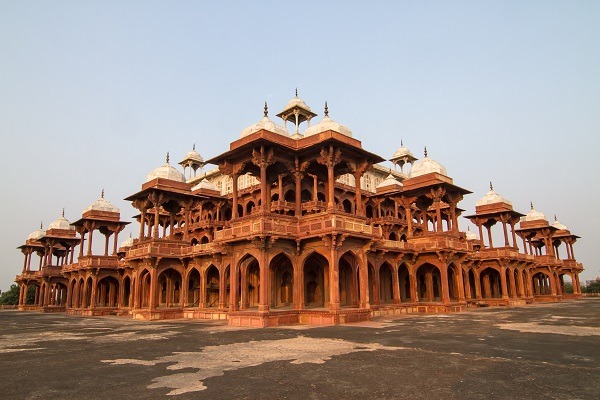
The tomb rises across four descending levels. The first three storeys are red sandstone adorned with white marble inlay; the last, open-air, is entirely white marble tracery. The funerary chamber, at ground level, sits in darkness—the caretakers sometimes provide a lamp. The charbagh garden spans 119 acres, among the largest of the Mughal era.
History and context
Akbar himself selected the site and oversaw the initial building phases before his death. Jahangir altered the original plans, notably replacing a planned dome with the current open-air terrace. The Quranic inscription on the great southern gate (Buland Darwaza of Sikandra) dates to 1613. The site was plundered by the Jats in the 18th century; some inlaid precious stones disappeared.
Highlights of your visit
The great southern gate
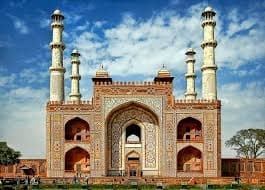
Rising over 20 metres, this red sandstone entrance is flanked by four white minarets. Geometric mosaics and Quranic calligraphy make it one of the finest examples of transitional Mughal art.
The garden and the deer
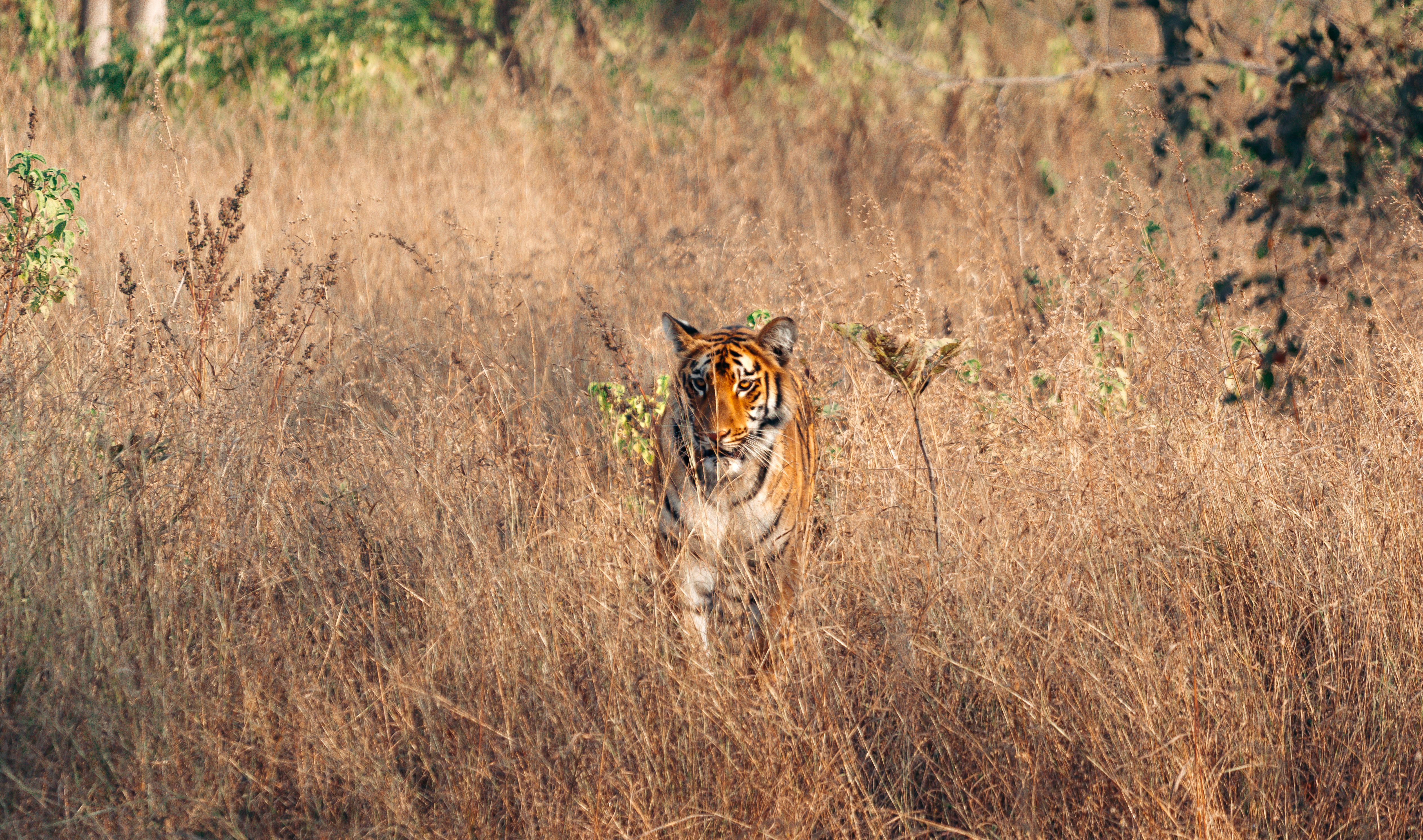
Axis deer (chital) roam freely throughout the charbagh. This detail, uncommon in an archaeological site, lends the place a tranquil, timeless atmosphere.
The upper marble terrace
The fourth level, reached via an interior staircase, commands clear views of the garden and surroundings. Akbar's cenotaph stands open to the air, encircled by finely carved marble screens.
The funerary chamber
At the lower level, Akbar's actual tomb rests in a stark, sober room. The contrast with the outward grandeur is striking.
Etiquette and visitor rules
- Remove your footwear before entering the funerary chamber.
- Speak softly inside the mausoleum.
- Do not feed the deer.
- Photography is generally permitted in the garden and outdoors; check restrictions inside with the caretakers.
Photography tips
Morning light is ideal for capturing the great southern gate, which faces east. The deer in the gardens photograph well early in the day, before visitor crowds build. For the marble terrace, favour the golden hour of late afternoon.
Location and access
Sikandra lies on the Agra–Mathura national highway, roughly 10 km from central Agra. An auto-rickshaw or taxi from the Taj Mahal or Agra Fort is most convenient. The journey from the centre takes 20 to 30 minutes depending on traffic. The site is not easily accessible by local public transport from central Agra.
In the vicinity
- Taj Mahal — The world's most celebrated mausoleum, roughly 10 km southeast.
- Agra Fort — UNESCO-listed Mughal fortress, about 10 km from Sikandra.
- Fatehpur Sikri — Abandoned former Mughal capital, approximately 40 km west of Agra.
- Tomb of Itimad-ud-Daulah — Small white marble mausoleum, often called the "baby Taj,
Photos
Want to discover this destination?
Our local advisors design your tailor-made trip.