Shanti Stupa
Shanti Stupa
Perched at 4,267 m on Changspa Hill, the Shanti Stupa in Leh offers exceptional panoramic views over the Ladakh Valley and Himalayan peaks. This Buddhist place of worship was inaugurated in 1991 by the Dalai Lama.
Perched at 4,267 metres above sea level on Changspa Hill, the Shanti Stupa dominates the city of Leh and the Ladakh Valley. This white Buddhist stupa, inaugurated in 1991 by the Dalai Lama, was built jointly by Japanese and Indian monks to commemorate 2,500 years of Buddhism. It offers 360° panoramic views of the Himalayan and Karakoram mountains, and remains an active place of prayer.
Practical Information at a Glance
- Access: approximately 500 steps from the foot of the hill, or a drivable road accessible by taxi from Leh city centre.
- Recommended duration: 1 to 2 hours, longer if you wait for sunset.
- Dress code: appropriate attire required; cover shoulders and knees.
- Altitude: 4,267 m — ascend slowly if you've just arrived in Leh from the plains.
What to See
The main stupa is adorned with gilded bas-reliefs illustrating the life of the Buddha and major milestones in Buddhism. The circular terrace surrounding it is dotted with prayer flags. On clear days, views extend to Leh Palace, Tsemo Fort, and the snow-capped peaks of Stok Kangri and Zanskar.
History and Context
The project was born from an initiative by Japanese monk Nagazomi Bhikkhu and the Nipponzan Myohoji organisation, with the support of the Indian government. Construction began in the 1980s. The Dalai Lama consecrated the stupa in 1991. It is part of a series of peace stupas erected worldwide by the same Japanese Buddhist organisation.
Highlights of Your Visit
The Panorama at Sunset
The slanting light of late afternoon tints the mountains in ochre and pink. The terrace fills with worshippers and visitors. This is the busiest time — arrive 30 minutes early to secure a good spot.
The Stupa's Bas-Reliefs
Circumambulate the stupa clockwise (pradakshina). The sculpted and gilded panels recount the Buddha's birth, enlightenment, and parinirvana with remarkable craftsmanship.
The Staircase Climb
The ascent on foot from the Changspa quarter winds through a rocky path lined with prayer mills. The climb itself is a meditative experience, provided you respect the pace set by the altitude.
Etiquette and Visiting Rules
- Circle the stupa clockwise, in accordance with Buddhist tradition.
- Remove your shoes before entering the inner prayer hall.
- Speak quietly; monks are praying on site.
- Do not touch the statues or bas-reliefs.
Photography Tips
Early morning light (before 9 a.m.) is soft and makes the white stupa stand out against a deep blue sky. In late afternoon, warm light illuminates the gilded reliefs. From the terrace, frame the stupa with snow-capped peaks in the background to the southeast. Photography inside the prayer hall is generally prohibited.
Location and Access
Shanti Stupa is located in the Changspa quarter, approximately 5 km from Leh city centre. Local taxis serve the hill via an asphalt road. Leh Airport (Kushok Bakula Rimpochee) is about fifteen kilometres away. No wheelchair access via the stairs; the taxi road remains the option for people with reduced mobility.
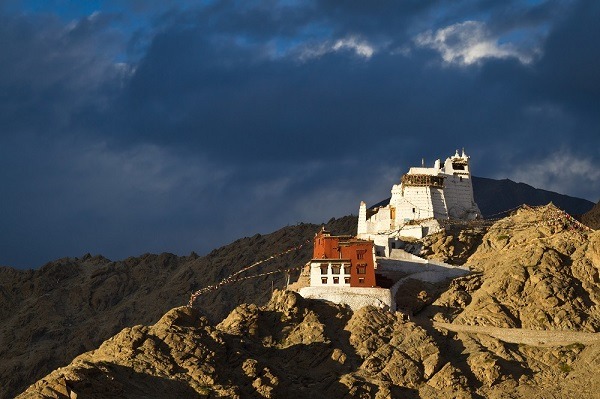
In the immediate vicinity, Leh Palace is visible from the terrace and deserves a combined visit. Tsemo Fort stands out on the opposite ridge.
Nearby Attractions
- Leh Palace — former nine-storey royal residence overlooking old Leh, a few kilometres away.
- Tsemo Fort — medieval fortress perched on a ridge, with a Maitreya temple.
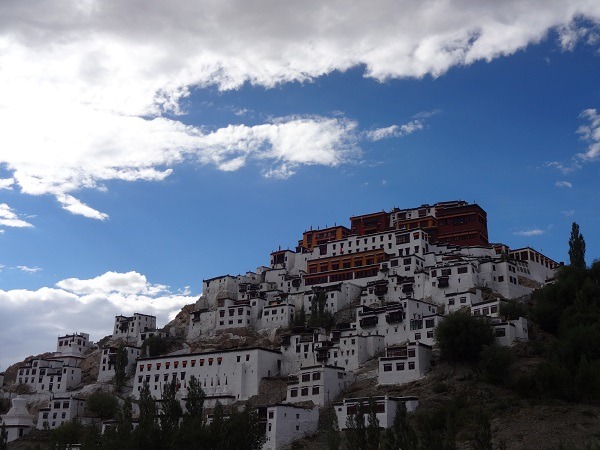
- Thiksey Monastery — large gompa monastic complex some thirty kilometres from Leh, often compared to the Potala in Lhasa.
- Hemis Monastery — the wealthiest monastery in Ladakh, renowned for its annual festival.
- Leh Market — vibrant main market, ideal for Ladakhi crafts and spices.
Frequently asked questions
From May to September, when Ladakh's roads are open and skies are clear. July-August is high season; June and September offer fewer crowds. In winter, Leh is accessible by air but temperatures drop very low.
Yes. Cover shoulders and knees. Remove your shoes before entering the inner prayer hall. A jacket is useful at altitude, even in summer.
Yes, this is the classic half-day combination. Start with the palace in the morning, then head up to Shanti Stupa for sunset. A taxi can connect both sites.
The stupa sits at 4,267 m. If arriving from lower elevations, allow 48 hours to acclimatise in Leh before ascending. Climb slowly, stay hydrated, and descend if you experience severe headaches.
Photography is allowed outside and on the terrace. Inside the prayer hall, it is generally prohibited. Respect any notices posted on site.
A drivable road winds around the hill and leads directly to the base of the stupa. Leh taxis use this road. It is also the recommended option for people with reduced mobility.
Photos
Want to discover this destination?
Our local advisors design your tailor-made trip.