Sasan Gir National Forest Park
Sasan Gir National Forest Park
In the heart of Gujarat, Sasan Gir National Forest Park is home to the world's only wild population of Asian lions. Safari, tips and must-sees.
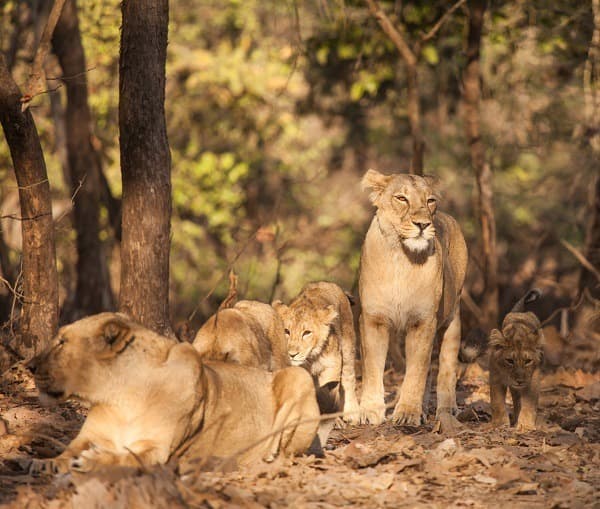
The Sasan Gir National Forest Park ranks among the last natural habitats of the Asian lion, classified as an endangered species. Beyond being the only site in India to observe the king of beasts in the wild, the reserve shelters a remarkable variety of deer, gazelles, primates and birds of every kind. Prepare yourself: within this 1,412 km² sanctuary, your safari promises to be rich with discovery.
History
The Gir forest area was designated a protected zone at the dawn of the 1900s. At that time, management of the site fell under the jurisdiction of the Nawab of Junagadh State. This decision ensured the survival of the Asian lion subspecies. Victims of sport hunting, the population had dwindled to just 15 specimens at the time. In 1965, 258 km² of the protected area were declared a national park.
By the end of the first quarter of 2005, the park's population numbered 359 lions—32 more felines than in 2001. Given the area's size and the environmental pressures it faces, the Indian government linked the park with the Kuno Wildlife Sanctuary in Madhya Pradesh through the Asiatic Lion Reintroduction Project. Conservation breeding aims to safeguard the genetic heritage that had declined due to the felines' reproductive behavior.
Another conservation initiative, the Crocodile Conservation Project launched in 1977, has allowed more than 1,000 crocodiles to return to their natural habitat. These were released into the Kamaleshwar Lake and its tributaries.
Today
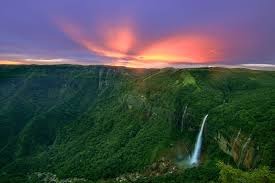
Located some 60 kilometers from Junagadh, in the heart of Gujarat, in southwestern Inde, Sasan Gir National Forest Park unfolds across rugged terrain dotted with deep ravines, rocky hills and several water bodies. Flanking rivers and tributaries, the deciduous vegetation comprises trees of all kinds—teak, jamun, acacia and dhak. Vast stretches of grassland intersperse these distinctive plants, offering visitors pleasant walking trails. Leafy and resinous trees bring fresh shade and moisture to the park, which tends to be dry much of the year. Alongside these species, scrub trees, including flowering babul trees, remain inconspicuous. Furthermore, the Sasan Gir National Forest Park's flora also includes prosopis and casuarina planted along the coastal fringe as part of a reforestation project.
In Inde, the lion embodies the symbol of power, justice and nobility. Despite its place in tradition, lions are becoming increasingly rare, confined to an area spanning just a few hundred kilometers. Within the heart of the Sasan Gir National Forest Park, nestled in a wooded oasis, these magnificent beasts are heavily protected. The "lion shows" organized around water points will give you the privilege of observing them more closely, under the watchful eye of park officials. Be aware that permission is required to access the reserve. Before visiting the park, inquire at the Sinh Sadan Forest Lodge office. Your English-speaking Active India agency also handles permits.
The total wildlife population of Sasan Gir National Forest Park numbers no fewer than 2,375 animal species, encompassing mammals, birds, reptiles and insects of all kinds. Besides the Asian lion, the big cats include leopards, hyenas, jackals, fishing cats and others. The site also shelters the flat-headed cat, though it remains rare here. Among the herbivores, you'll find axis deer, four-horned antelope, sambar, nilgai antelope, wild boar and more.
Among available activities, Sasan Gir National Forest Park offers jeep excursions along three routes covering 25 to 35 km. Departures are typically scheduled between 7am–10am and 2pm–6:30pm. Safari must be reserved in advance. The accompaniment of a forest guide is strongly recommended for safety reasons.
Climate
The Sasan Gir National Forest Park lies in a region with tropical climate. From May to September, the area experiences a monsoon season unsuitable for visits. The park is indeed closed to tourists during this season. The park is best visited between January and April, despite occasional rainfall and temperature fluctuations.
The nearest airport to Sasan Gir National Forest Park is Keshod, connected to Rajkot. Another airport awaits you in Ahmedabad with flights to Delhi and Mumbai. Regarding rail access, the closest stations are at Sasan Gir and Veraval, though the most convenient is Rajkot, which is connected to Delhi and Mumbai. Additionally, Sasan Gir National Forest Park is also served by road, with various bus services available.
For getting around Sasan Gir National Forest Park, you can choose between jeeps or minibuses. Certain parts of the forest area can also be explored on foot. Note that permission is necessary for your visit. The accompaniment of a guide is also recommended.
What to Do at Sasan Gir National Forest Park?
- Encounter the famous Asian lion
- Witness the "lion shows"
- Observe birdlife
- Escape into lush nature
- Participate in jeep excursions, etc.
Accommodation in Sasan Gir National Forest Park
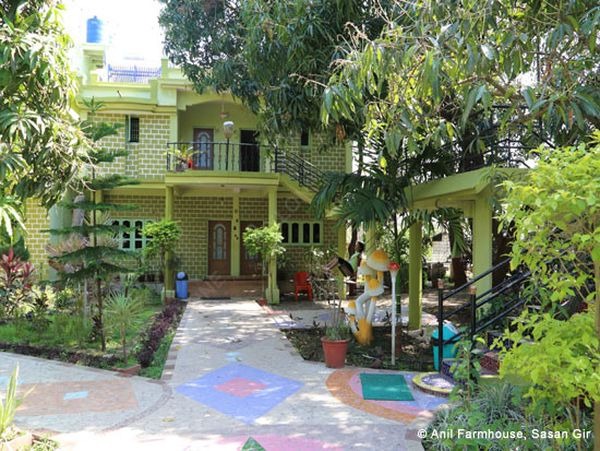
Hotel Anil Farmhouse
Farmhouse à 4 km du parc national de Gir, au Gujarat. Trois catégories de chambres, manguiers bio, randonnées et soirées folkloriques.

The Fern Gir Forest Resort
Resort 5 étoiles aux portes du parc national de Gir, base de safari pour observer les lions asiatiques du Gujarat dans 40 villas, suites, chalets et tentes.
Want to discover this destination?
Our local advisors design your tailor-made trip.