Pathankot
Pathankot
Pathankot, a crossroads city in northern Punjab, is the ideal starting point for reaching Dharamsala, Dalhousie, and the Himalayan valleys. A strategic stop on the mountain route.
Pathankot is a city in northern Punjab, at the confluence of Himachal Pradesh and Jammu and Kashmir. A strategic crossroads for centuries, it serves today as a departure point toward Dharamsala, Dalhousie, and the Himalayan valleys. The city itself is lively, military, and commercial, though not a tourist destination in its own right—but its role as a hub makes it an essential stop for anyone heading north.
Practical essentials at a glance
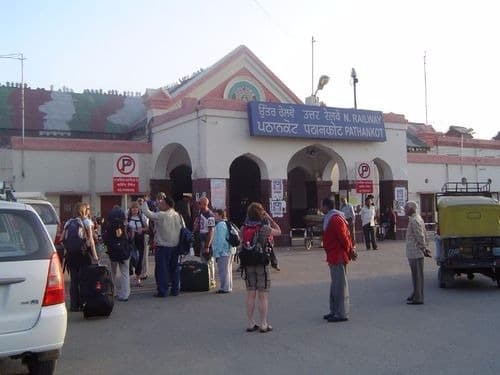
- Railway access: Pathankot Junction and Pathankot Cantt are two distinct stations; verify which one serves your train before booking.
- Road access: regular buses to Dharamsala, Dalhousie, Jammu, and Amritsar from the main bus stand.
- Recommended duration: an overnight stop or a few hours in transit is sufficient for most travelers.
- Dress code: conservative city—modest dress recommended in public spaces and temples.
What to see
Pathankot is not a city of spectacular monuments. Its appeal lies in its frontier-town atmosphere: bustling markets, visible military presence, and a blend of Punjabi, Dogra, and Pahari cultures. The Pathankot Fort (Qila Mubarak) stands as a testament to its princely past, though the site is poorly developed for visitors. The Mukteshwar Mahadev Temple, dedicated to Shiva, attracts local pilgrims.
History and context
Pathankot was long a fief of the Katoch chiefs, a Rajput dynasty that controlled trade routes between the plains and the mountains. Under the Mughals and then the Sikhs, the city retained its role as a strategic stronghold. After independence in 1947, its proximity to Pakistan and Kashmir made it a major military base, a status it retains today.
Highlights of a visit
The central market
Pathankot's bazaar reflects the everyday life of rural Punjab: spices, textiles, copper utensils. An hour of wandering is enough to grasp the atmosphere before moving on.
Mukteshwar Mahadev
This Shaivite temple, perched on a hill at the city's edge, offers clear views of the Himalayan foothills. It is particularly lively during Shivaratri.
Shahpurkandi Fort
About twenty kilometers away, this medieval fort overlooks the Ravi River. The nearby Shahpurkandi Dam is a popular picnic spot for local families.
Photography tips
Morning light is ideal for photographing the bazaar before the crowds arrive. Avoid photographing military installations—it is forbidden and may cause complications. The ghats along the Chakki River offer fine glimpses of daily life in the late afternoon.
Location and access
Pathankot lies approximately 100 km northeast of Amritsar and about 90 km southwest of Dharamsala. The city is connected to Delhi by train (approximately 8-9 hours depending on the service). The nearest airport is Amritsar (Sri Guru Ram Dass Jee International Airport). Shared taxis and buses regularly serve Dharamsala and Dalhousie.
Nearby attractions
- Dharamsala — seat of the Tibetan government in exile and a trekking base in the Dhauladhar range, about 90 km away.
- Dalhousie — colonial hill station with panoramic views of the snow-capped Himalayas, about 80 km away.
- Amritsar — Sikh holy city and the Golden Temple, about 100 km to the southwest.
- Chamba — former princely capital with remarkable medieval temples, accessible from Dalhousie.
Frequently asked questions
Not really. It is primarily a transport hub toward Himalayan destinations. An overnight stay can be useful for catching an early train or bus, but the city does not warrant an extended stay.
October to March offers pleasant weather. Summers (May-June) are hot and humid. The monsoon (July-September) can disrupt mountain roads to Dharamsala and Dalhousie.
State buses and shared taxis regularly connect the two cities. The journey takes about 3 hours depending on road conditions. Book a taxi the day before if you're departing early.
Yes. Military presence is significant: it is strictly forbidden to photograph bases, convoys, and defense installations. Respect this rule scrupulously.
Yes, this is a classic itinerary. Amritsar is best explored over two days, then you head back toward Pathankot to catch a train or road transport to the mountains.
Want to discover this destination?
Our local advisors design your tailor-made trip.