Palampur
Palampur
Palampur, at 1,220 m altitude in the Kangra Valley, combines British tea plantations, the Shiva temple of Baijnath and panoramas over the Dhauladhar — a quiet base between Dharamsala and Bir-Billing.
Palampur is a mountain town in Himachal Pradesh, nestled in the Kangra Valley at approximately 1,220 metres altitude. Surrounded by tea plantations, pine forests and views of the Dhauladhar, it serves as a base for exploring the Kangra region while offering a quieter atmosphere than Dharamsala, located about forty kilometres away.
Practical information at a glance
- Access: Regular buses from Dharamsala and Kangra; the nearest railway station on the narrow-gauge Pathankot–Jogindernagar line is Palampur itself (toy train).
- Best time to visit: March–June (spring, tea in bloom) and September–November (clear skies after the monsoon).
- Recommended duration: 1 to 2 days for the town and its immediate surroundings.
- What to wear: Warm clothing recommended in the evening, even in summer.
What to see
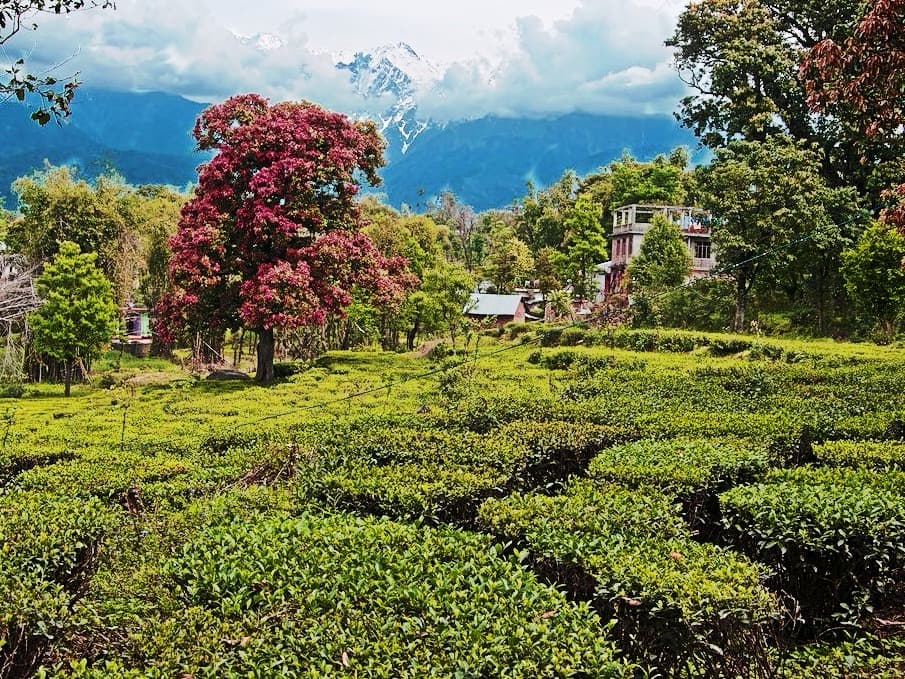
Palampur's immediate landscape is dominated by the HPKV tea plantations (Himachal Pradesh Krishi Vishwavidyalaya), which extend across verdant terraces. Baijnath Temple, about fifteen kilometres away, is the major historical site in the area. The central market and shopping streets offer a glimpse of daily life in the Kangra Valley.
History and context
The Kangra region, of which Palampur is part, was long under the influence of the Kangra kingdom before falling under Sikh and then British rule in the nineteenth century. The British developed tea plantations in the valley, making Palampur one of the few tea-growing centres in northern India. This agricultural tradition remains vibrant today.
Highlights of your visit
The tea plantations
The tea gardens surrounding the town are accessible on foot from the centre. The main harvest takes place in spring (March–April) and after the monsoon (October). Some estates allow visitors to see the tea leaf processing.
Baijnath Temple
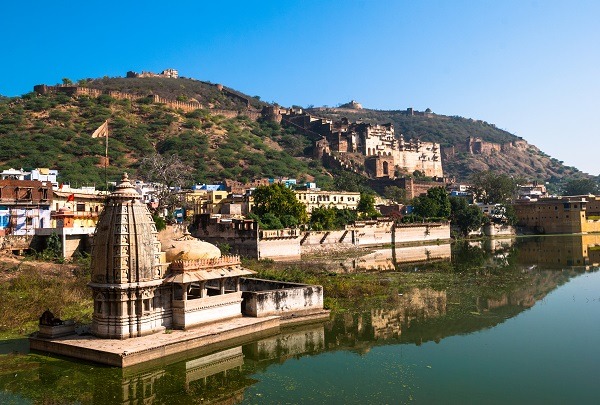
About 15 km from Palampur, this thirteenth-century Shiva temple is one of the best preserved in the region. Dedicated to Vaidyanath (Shiva the healer), it features characteristic Nagara architecture with finely carved sculptures. Entrance is free for visitors.
Views of the Dhauladhar
On clear days, the snow-capped peaks of the Dhauladhar form a striking backdrop from the heights of the town and the plantation roads. Dawn and late afternoon offer the best visibility conditions.
Saurabh Van Vihar
This forest park on the town's edge, dedicated to the memory of a local soldier, offers shaded trails among pines and rhododendrons. Quiet and little frequented, it is ideal for a morning walk.
Etiquette and visiting rules
At Baijnath Temple, remove your shoes before entering the sacred grounds. Dress modestly (shoulders and knees covered). Photography inside the main sanctuary may be restricted; check on site.
Photography tips
The tea plantations are most photogenic early in the morning, when mist rises over the rows. For the Dhauladhar, favour the first hours after sunrise or late afternoon during the dry season. Baijnath Temple photographs well in the raking light of late afternoon, which brings out the carved reliefs.
Location and access
Palampur is located in Kangra district, approximately 40 km east of Dharamsala and 35 km from Kangra. The narrow-gauge railway line connects Pathankot to Jogindernagar with a stop at Palampur — a scenic but slow journey. HRTC buses regularly serve the town from Dharamsala, Kangra and Mandi. The nearest airport is Gaggal (Kangra Airport), about 35 km away.
In the surrounding area
- Dharamsala — seat of the Tibetan government-in-exile and McLeod Ganj, about 40 km away.
- Baijnath Temple — medieval Shiva temple about fifteen kilometres away, a must-see stop in the valley.
- Kangra — former capital of the kingdom of the same name, with its fort and Bajreshwari Devi temple, about 35 km away.
- Bir-Billing — renowned paragliding site about thirty kilometres away, one of Asia's highest takeoff points.
Frequently asked questions
March to June and September to November are the most pleasant periods. Spring offers plantations in full activity; autumn gives the clearest skies over the Dhauladhar. The monsoon (July–August) makes some roads slippery.
The edges of the plantations are accessible on foot from town. To visit a processing unit, it is best to enquire at your accommodation or a local agency, as access to private facilities varies depending on the estate.
The two towns are connected by bus in less than two hours. A common arrangement is to spend two nights in Dharamsala/McLeod Ganj and one night in Palampur, including Baijnath along the way.
Entrance to Baijnath Temple is free for all visitors. Remember to remove your shoes and dress modestly.
The town is a starting point for hikes towards the foothills of the Dhauladhar. Trails to Rajgundha and surrounding meadows are practicable in summer. A local guide is recommended for high-altitude routes.
Photos
Want to discover this destination?
Our local advisors design your tailor-made trip.