Orchha
Orchha
Orchha is a former royal capital of Madhya Pradesh set on the Betwa River. Frescoed palaces, unique temples and cenotaphs make it one of the best-preserved Bundela sites in central India.
Orchha is a former royal capital of Madhya Pradesh, situated on a natural island formed by the Betwa River. Founded in the 16th century by Bundela kings, it concentrates palaces, temples and cenotaphs in a remarkable state of preservation. Less frequented than Agra or Jaipur, it offers an immersion into Bundela architecture without the crowds of major tourist circuits.
Practical Information at a Glance
- Access: Orchha is located approximately 15 km from Jhansi, connected by road. Jhansi is a major railway hub on the Delhi–Mumbai and Delhi–Chennai lines.
- Entry: The palace complex (Raj Mahal, Jahangir Mahal, Rai Praveen Mahal) requires an entrance fee; the Ram Raja Temple is free.
- Recommended duration: A full day for the main monuments; two days to explore the cenotaphs and the banks of the Betwa.
- Dress code: Modest clothing recommended for temples.
What You'll See
The site comprises several distinct complexes. The Raj Mahal (royal palace) preserves murals depicting mythological and court scenes. The Jahangir Mahal, built to accommodate Mughal emperor Jahangir, blends Bundela architecture with Mughal influences. The Rai Praveen Mahal is a two-story pavilion dedicated to a celebrated poet-courtesan. Along the banks of the Betwa, a row of cenotaphs (chhatris) in dome form pays tribute to Bundela sovereigns.
History and Context
Orchha was founded around 1501 by Rudra Pratap Singh, chief of the Bundela clan. The city reached its zenith under Bir Singh Deo (1605–1627), who commissioned the Jahangir Mahal and several temples. Relations between the Bundela and Mughals oscillated between alliance and conflict. After the decline of Bundela power in the 18th century, the capital was moved to Tikamgarh, leaving Orchha in relative abandonment that explains the preservation of its monuments.
Highlights of Your Visit
The Jahangir Mahal
This multi-story palace is the most imposing structure on the site. Its projecting balconies, octagonal kiosks and sculpted elephants at the entrance illustrate the synthesis of Bundela and Mughal styles. The view from the upper terraces encompasses the entire complex and the river.
The Ram Raja Temple
Unique in India, this temple venerates Ram not as a god but as a king: it is the only place where Ram receives daily military honors. The building resembles a palace rather than a temple, as legend has it that the Ram statue refused to be moved from the palace where it had been temporarily installed.
The Betwa Chhatris
Lined along the riverbank, these domed cenotaphs form a striking architectural panorama, particularly at sunrise and sunset. Each chhatri commemorates a Bundela sovereign and presents different proportions and ornamentation.
The Laxminarayan Temple
This fortress-temple perched on a hilltop preserves murals from the 17th and 19th centuries depicting scenes from Hindu mythology and battles. Access is on foot from the village center.
Etiquette and Visiting Rules
- Remove your shoes before entering active temples, particularly the Ram Raja Temple and the Chaturbhuj Temple.
- Dress modestly (shoulders and knees covered) in places of worship.
- Photography may be restricted inside certain temples; check signage on site.
- The Ram Raja Temple observes strict closing hours linked to ceremonies; plan your visit accordingly.
Photography Tips
Golden morning light is ideal for photographing the chhatris from the Betwa riverbank, with their reflection in the water. The Jahangir Mahal lends itself to late-afternoon photography, when raking light reveals sculptural details. For the interior frescoes of the Raj Mahal, a tripod or high ISO sensitivity is useful as natural light is limited.
Location and Access
Orchha is accessible from Jhansi, approximately 15 km away, by rickshaw, taxi or local bus. Jhansi has a well-served railway station with connections from Delhi (approximately 4–5 hours on the Shatabdi), Agra and Bhopal. The nearest airport is Gwalior. The village of Orchha itself is compact and can be explored on foot or by bicycle. Accessibility for people with reduced mobility is limited at historical sites due to stairs and uneven surfaces.
Nearby Attractions
- Jhansi — historic city known for its fort and the memory of Rani Lakshmibai, 15 km away.
- Khajuraho — famous for its temples with erotic sculptures, approximately 175 km away, accessible by bus or plane from Jhansi.
- Gwalior — city dominated by an imposing fort, approximately 120 km to the north.
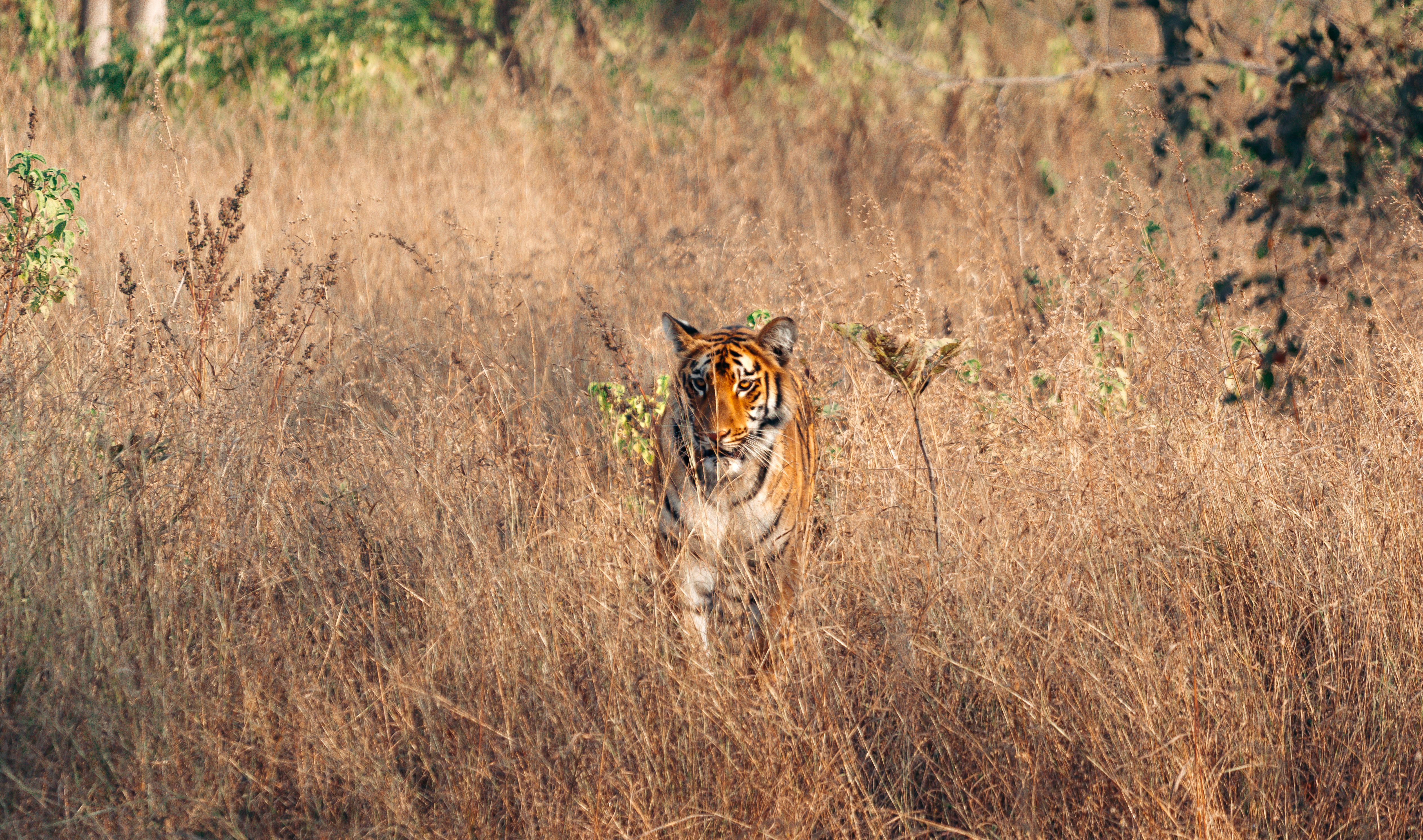
- Panna National Park — tiger reserve on the Ken River, approximately 90 km from Orchha.
Frequently asked questions
The dry season, from October to March, offers pleasant temperatures. Summer (April–June) is very hot. The monsoon (July–September) makes the Betwa more beautiful but certain paths may be muddy.
One day is sufficient for the main monuments. Two days allow you to explore the cenotaphs, the Laxminarayan Temple and to enjoy the Betwa River at a more leisurely pace.
Yes, this is a classic Madhya Pradesh itinerary. The two sites are connected by bus or taxi. Allow half a day of travel between the two.
Photography is generally allowed in the palaces of the archaeological complex. It may be restricted or subject to a fee inside certain active temples; check the signage at the entrance.
The site is family-friendly. The open spaces of the palaces and the banks of the Betwa are suitable for children. Wear good walking shoes as the surfaces of the monuments are often uneven.
Local guides are available at the entrance to the palace complex. Your Nomadays agency can also arrange an English-speaking guide from Jhansi or Khajuraho.
Photos
Want to discover this destination?
Our local advisors design your tailor-made trip.