Kumbhalgarh Fort
Kumbhalgarh Fort
Perched in the Aravalli hills, Kumbhalgarh Fort towers over a wild valley and houses the world's second-longest wall. A UNESCO World Heritage site since 2013, this 15th-century stronghold remains one of Rajasthan's most impressive yet overlooked destinations.
Perched in the Aravalli hills of Rajasthan, Kumbhalgarh Fort dominates a wild valley approximately 80 km north of Udaipur. Built in the 15th century by Maharana Kumbha, it stands as home to the world's second-longest wall after the Great Wall of China. Designated a UNESCO World Heritage site in 2013, it remains one of Rajasthan's lesser-known forts, far removed from the bustle of Jaipur or Jodhpur.
Practical Information at a Glance
- Entrance : Paid admission (separate rates for Indian residents and foreign visitors)
- Recommended duration : 2 to 3 hours for the fort; a full day if exploring the adjoining wildlife sanctuary
- Access : By car or taxi from Udaipur (approximately 2 hours); no direct train service
- Attire : Comfortable clothing and walking shoes essential — paths are paved and steep
- Sound and light show : Held in the evening at the site (confirm scheduling with local tourism office)
What You'll See
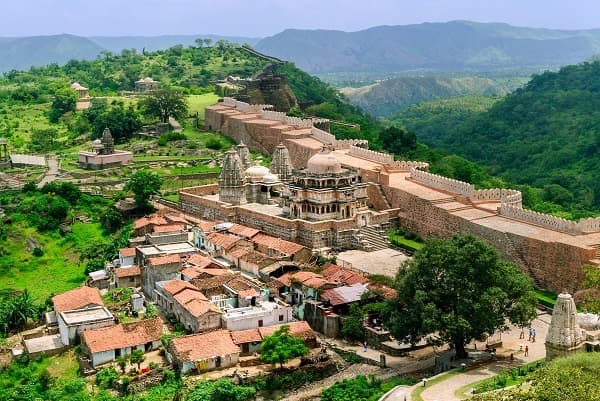
The perimeter wall extends roughly 36 km, wide enough in places to allow horses to pass side by side. Within its boundaries stand over 360 temples, both Hindu and Jain, along with the Badal Mahal palace at the summit. The lush vegetation of the Aravalli hills contrasts strikingly with the ochre-hued stone of the ramparts.
History and Context
The fort was constructed between 1443 and 1458 under Maharana Kumbha, sovereign of the Mewar kingdom. It served as a strategic refuge: Maharana Pratap, a legendary figure in Rajasthani history, was born here in 1540. The fortress fell only once, to a coalition of Mughal, Marwar, and Gujarat empires, and only after its water supply had been cut off.
Highlights of Your Visit
The Great Wall
Walking along a section of the ramparts offers breathtaking views of the forested hills and villages below. The wall reaches heights of up to 15 metres and widths of 7 metres in places. Few visitors venture the entire circuit: the sections near the palace are most accessible.
Badal Mahal Palace
Crowning the fort's summit, this "palace of clouds" commands a 360-degree panorama of the Aravalli range. The architecture blends Rajput influences with ornate interior painted décor. Reaching it requires a sustained climb from the main entrance.
Inner Temples
The Neelkanth Mahadev temple, dedicated to Shiva, is the site's most venerated sanctuary. Several Jain temples also punctuate the path to the summit. The atmosphere remains serene, undisturbed by the crowds of mainstream tourist circuits.
Kumbhalgarh Wildlife Sanctuary
Adjacent to the fort, this reserve shelters Indian wolves, leopards, hyenas, and rich birdlife. Jeep safaris are organised from surrounding lodges, particularly at dawn or dusk.
Etiquette and Visiting Rules
- Remove your shoes before entering active temples.
- Dress modestly (shoulders and knees covered) in worship areas.
- Avoid loud noise inside sanctuaries.
- Request permission before photographing people at prayer.
Photography Tips
The golden light of early morning, just after opening, is ideal for photographing the ramparts without backlighting. At sunset, the sun bathes the stone in warm ochre tones. From Badal Mahal palace, a wide-angle lens captures the wall serpentining through the hills. Photography is permitted across virtually the entire site.
Location and Access
Kumbhalgarh lies in Rajsamand district, Rajasthan. The route from Udaipur traverses hillside landscapes and rural villages. From Jodhpur, allow approximately 3 hours. No rail line serves the site directly; hiring a vehicle with driver remains the most practical option. Accessibility for visitors with mobility challenges is limited due to slopes and uneven paving.
Nearby Attractions
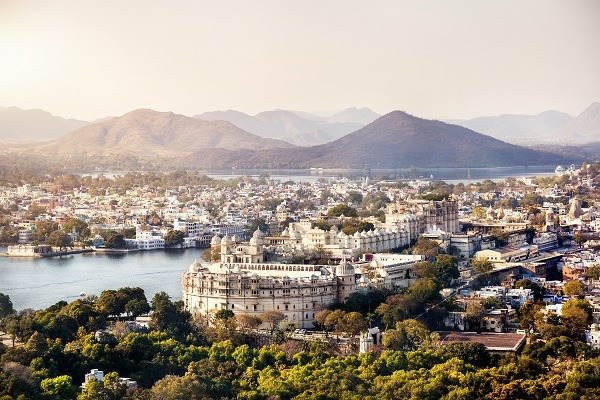
- Udaipur — The "city of lakes" and its waterside palaces, the natural base for visiting Kumbhalgarh.
- Ranakpur Temples — A 15th-century Jain complex featuring 1,444 intricately carved pillars, roughly 1 hour's drive away.
- Jodhpur — The "blue city" and its Mehrangarh fortress, reachable in half a day's travel.
- Chittorgarh Fort — Rajasthan's largest fort and another key bastion in Mewar's storied past.
Frequently asked questions
October through March offers cool, pleasant weather. Avoid the monsoon season (July-September) if you plan to trek the ramparts, as paths become slippery. Summer (April-June) is intensely hot.
Yes, both sites are connected by approximately one hour's drive. Depart early from Udaipur, visit Kumbhalgarh in the morning, then explore Ranakpur in the afternoon before returning.
The site is extensive and poorly signed in English. A local guide helps explain temple history and ensures you don't miss the wall's finest vantage points. Licensed guides are available at the entrance.
The ascent to Badal Mahal is long and steep. It suits children in good physical condition. Bring plenty of water and closed-toe shoes.
Several accommodations—hotels and lodges—are available in Kumbhalgarh village, near the fort. Staying locally allows you to attend the evening sound and light show and visit the fort at opening time.
Photography is generally allowed across the entire site. In active temples, seek approval from priests before photographing altars or ceremonies.
Photos
Want to discover this destination?
Our local advisors design your tailor-made trip.