Kangra
Kangra
Kangra, nestled in the Himalayan valley of Himachal Pradesh, brings together a major medieval fortress, an active pilgrimage temple and the legacy of the celebrated Kangra miniature painting school.
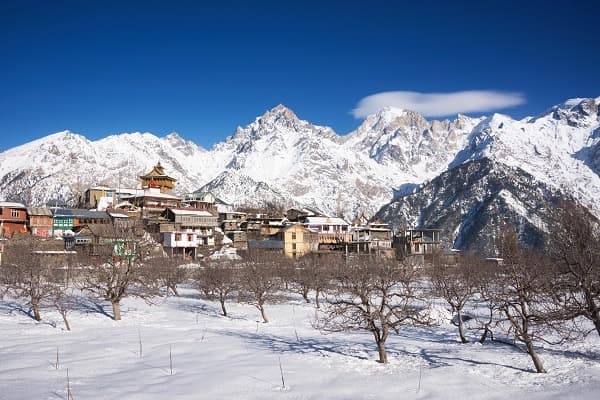
Kangra is an ancient town nestled in the valley of the same name, at the foot of the Himalayan foothills in Himachal Pradesh. Known for its imposing medieval fortress, the Bajreshwari Devi temple and its miniature painting school, it serves as a major cultural and historical gateway to this mountainous region. The surrounding valley, lush and framed by snow-capped peaks, attracts both pilgrims and travelers seeking history.
Practical Information at a Glance
- Access: Kangra is accessible from Dharamsala (approximately 18 km) by road. Kangra railway station is served by the narrow-gauge Pathankot–Jogindernagar train.
- Recommended duration: Half a day is sufficient for the fort and temple; a full day to explore the town and surroundings.
- Dress code: Covered clothing required for the Bajreshwari Devi temple.
- Footwear: Remove shoes before entering the temple.
What to See
The Kangra Fort dominates the confluence of the Banganga and Manjhi rivers. It is one of India's oldest fortresses, with massive ramparts and ruins of temples within the enclosure. The Bajreshwari Devi temple, rebuilt after the 1905 earthquake, is an active pilgrimage site dedicated to the goddess Durga. The Kangra Museum houses remarkable examples of the Kangra school miniature paintings, a style developed under local rajas in the 18th and 19th centuries.
History and Context
Kangra is mentioned in ancient texts as Nagarkot. The fortress withstood numerous assaults, including those by Mahmud of Ghazni in the 11th century, before falling under Mughal and later Sikh control. The 1905 earthquake profoundly reconfigured the town, destroying much of the original temple and damaging the fort. The Kangra painting school, heir to the workshops of the Katoch raja courts, is recognized as one of the great traditions of Indian miniature art.
Highlights of Your Visit
Kangra Fort
Perched on a rocky spur, the fort offers sweeping views over the valley and rivers below. The interior ruins include ancient Jain and Hindu temples. The Archaeological Survey of India oversees its management. The climb from the entrance is moderate but requires a reasonable level of fitness.
Bajreshwari Devi Temple
Located in the heart of town, this temple attracts pilgrims from across Himachal Pradesh. The atmosphere is particularly intense during the Navratri festivals. The current architecture dates from the post-1905 reconstruction, in a simple yet carefully designed style.
Kangra Museum
This modest-sized museum houses miniatures from the Kangra school, sculptures and regional archaeological objects. It is the most accessible place to understand the valley's artistic heritage without visiting a private collection.
Etiquette and Visiting Rules
- Remove your shoes before entering the Bajreshwari Devi temple.
- Wear clothing covering shoulders and knees within the temple grounds.
- Photography may be restricted inside the main sanctum — check on site.
- Quiet and respectful behavior required, especially during puja ceremonies.
Photography Tips
The fort is most photogenic in early morning, when low-angle light accentuates the texture of the ramparts and morning mist still envelops the valley. From the heights of the fort, the panorama of the river confluence and Himalayan foothills is particularly sharp in winter and spring. Avoid peak midday hours for temple photographs.
Location and Access
Kangra is located in the Kangra valley, approximately 18 km southeast of Dharamsala and close to McLeod Ganj. The narrow-gauge train from Pathankot is a scenic option, though slow. Buses and taxis regularly connect Kangra to Dharamsala. The nearest airport is Gaggal (Kangra Airport), a few kilometers from the town.
Nearby Attractions
- Dharamsala — Seat of the Tibetan government in exile, home to the Namgyal temple and Tibet museum.
- McLeod Ganj — Vibrant Tibetan quarter, starting point for many Himalayan treks.
- Masrur Temples — Group of 8th-century rock-cut temples carved into stone, about thirty kilometers away.
- Baijnath — Ancient listed Shaivite temple in the Kangra valley.
Frequently asked questions
October to March offers clear skies and pleasant temperatures. Spring (March-April) provides lush vegetation. Summer is hot in the valley; the monsoon (July-September) makes some roads difficult to access.
Yes, the proximity (approximately 18 km) makes it easy. Spend the morning at Kangra fort and Bajreshwari Devi temple, then head to Dharamsala or McLeod Ganj in the afternoon.
Access involves a climb on foot from the main entrance. The path is manageable for most visitors in good health, but not well-suited for people with reduced mobility.
Photography is generally allowed in the outer courtyards, but often prohibited in the inner sanctum. Check signage on site and ask temple attendants.
The Kangra Museum holds an accessible collection. Galleries and craft shops in Dharamsala and McLeod Ganj also offer works by contemporary local artists working in this tradition.
Photos
Want to discover this destination?
Our local advisors design your tailor-made trip.