The Ganga Golden Jubilee Museum
The Ganga Golden Jubilee Museum
In Bikaner, the Ganga Golden Jubilee Museum brings together Indus Valley excavations, Bikaner miniatures, Rajput weapons and royal manuscripts.
The Ganga Golden Jubilee Museum, which honours the Golden Jubilee of Maharaja Ganga Singh, holds a singular place in Bikaner's museum landscape of Rajasthan. Founded to commemorate fifty years of the Maharaja's reign, it brings together collections from both the region's archaeological excavations and the princely heritage of Bikaner's royal court.
Why visit this museum?
The museum will appeal to travellers curious about Indian history for three main reasons. First, its archaeological galleries display pieces from excavations at Kalibangan and other Indus Valley sites, one of the subcontinental's oldest cradles of civilisation. Second, it houses a remarkable collection of miniatures from the Bikaner school, little known in Europe yet remarkably refined. Finally, it offers a coherent picture of princely Bikaner: Rajput weapons, royal textiles, manuscripts and diplomatic objects allow you to grasp the political role of this state in the Thar Desert.
Allow around 1 to 1.5 hours for a thorough visit to the galleries. It makes an excellent companion to exploring Junagarh Fort, located just minutes away.
An institution born from royal jubilee
The museum was inaugurated on 5 November 1937 by Viceroy Lord Linlithgow, on the occasion of the Golden Jubilee of Maharaja Ganga Singh's reign. This sovereign, who ruled Bikaner from 1888 to 1943, became known for his administrative reforms, vast irrigation projects in the desert and his diplomatic presence at the League of Nations.
As early as 1915, Ganga Singh had entrusted Italian scholar Luigi Pio Tessitori with the mission to conduct a historical and archaeological survey of the region. The pieces unearthed by Tessitori, complemented by the Maharaja's personal donations, formed the nucleus of the collection.
In 1950, the institution came under the responsibility of the Rajasthan department of archaeology. Four years later, the collections were temporarily installed in the Ganga Niwas Mahal, within Junagarh Fort, before being transferred to a building constructed in Shardul Colony thanks to Golden Jubilee Trust funds. The museum remains there today.
Collections to see
The layout is organised into thematic galleries covering archaeology, decorative arts and court life.
Archaeology and terracotta
This section groups stone sculptures, bronzes and clay figurines. Pieces from excavations at Kalibangan and other Indus Valley sites allow you to approach Harappan civilisation, whose chronology dates back several millennia before our era. You will also find sculptures of Hindu and Jain deities from Rajasthan temples.
Paintings and Bikaner miniatures
The gallery presents works from the Bikaner school, influenced by the styles of Bundi, Jaipur and Mewar, as well as Mughal painting. Court scenes, mythological episodes and royal portraits are rendered with precise draughtsmanship, saturated colours and highlights of gold and silver.
Rajput weapons and armour
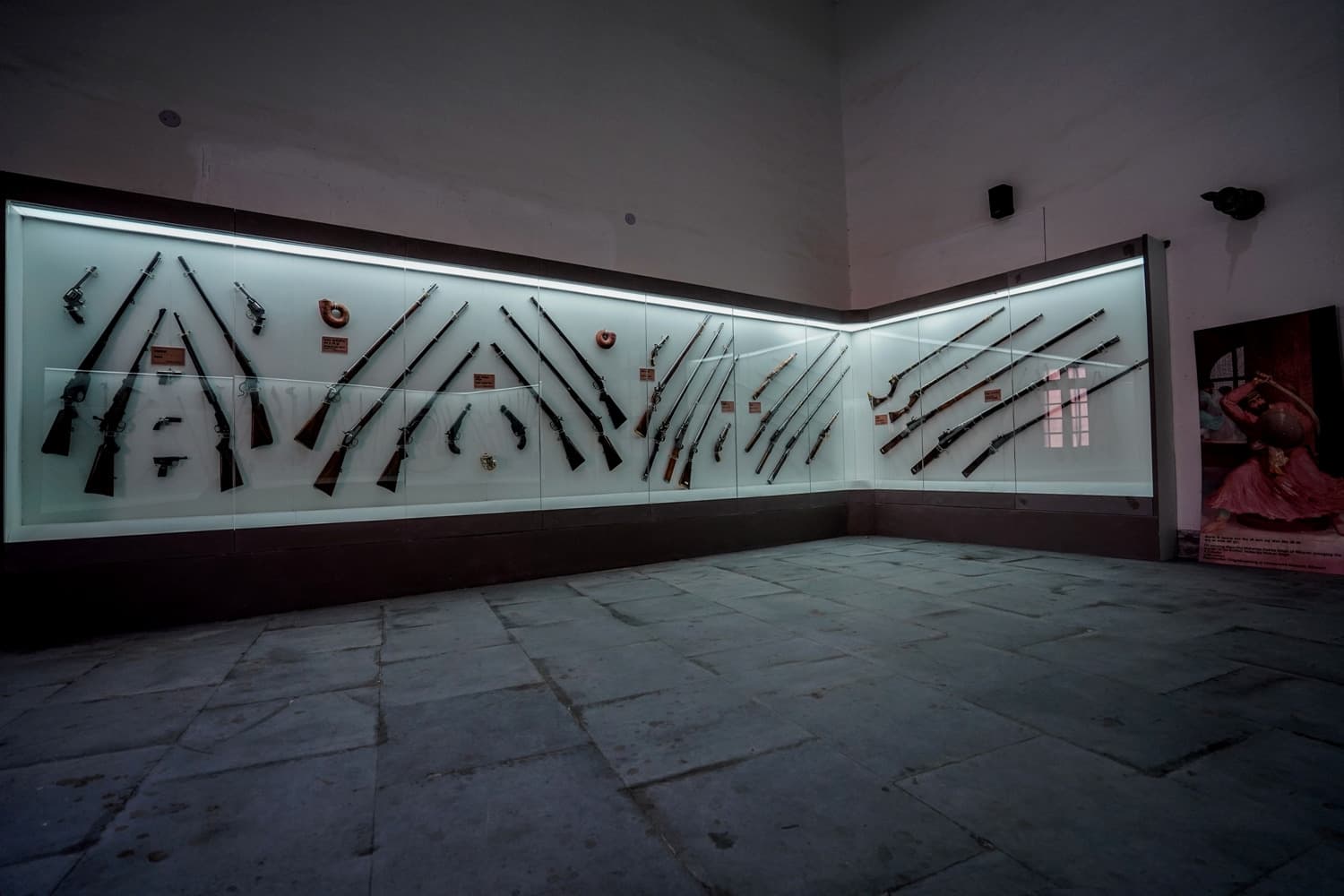
Swords, silver-inlaid daggers, lances, shields and armoury pieces illustrate Rajput warrior tradition. Several blades feature careful ornamentation, testament to the symbolic status of weaponry at court.
Royal textiles
The textile gallery assembles brocades, silks, bandhani-dyed fabrics and ceremonial garments. The most notable piece is the silk robe of Shehzaada Salim, son of Mughal emperor Akbar II, which speaks to the links between Bikaner and the Mughal court.
Manuscripts and Anup library
Adjacent to the museum, the Anup library preserves manuscripts in Sanskrit, Persian and Prakrit, including illustrated copies of the Mahabharata and Ramayana, as well as royal decrees and diplomatic archives useful for understanding the political role of princely Bikaner.
Objects of daily life
Antique cameras, musical instruments, glass pieces, miniature models of trains and palaces document court life in the late 19th and early 20th centuries.
Practical information
The museum is open all week except Mondays, in two time slots (morning and afternoon, with an early afternoon closure). It is best to check current opening hours on site or with your accommodation, as they may vary seasonally.
Entry fees remain modest, with differential pricing for international visitors and reduced rates for students. Photography is generally subject to authorisation, sometimes for an additional fee.
How to get there
The museum is located in Shardul Colony, near Kote Gate, in central Bikaner. Bikaner railway station is less than 3 km away: from the station, it takes just a few minutes by rickshaw. The nearest domestic airport is at Jodhpur.
By road, Bikaner is connected to the major cities of Rajasthan: approximately 330 km from Jaipur and 250 km from Jodhpur. Locally, taxi, auto-rickshaw or walking are sufficient from the town centre.
What to see nearby
The visit combines easily with other sites in Bikaner's historic centre:
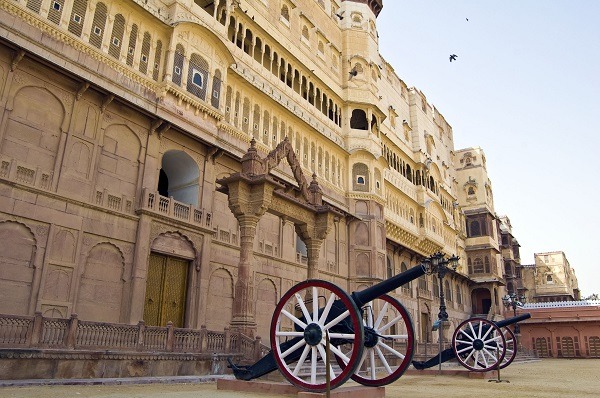
- Junagarh Fort, founded in 1589 by Raja Rai Singh, which houses several palaces with beautifully preserved interiors;
- Rampuria haveli, a merchant's residence with finely carved red sandstone façades;
- The old town's narrow streets, including markets and Jain temples.
To further explore Indian museum heritage, you can also consult our guide to the State Museum in Bhopal or, if you travel west towards Rajasthan, Amar Sagar Lake near Jaisalmer.
Frequently asked questions
Frequently asked questions
Allow 1 to 1.5 hours to explore all the galleries thoroughly. A quicker visit is possible in 45 minutes if you focus on the Bikaner miniatures and archaeology section.
Photography is generally permitted, sometimes subject to an additional fee or forbidden in certain rooms (manuscripts, miniatures). Check with reception before starting your visit.
The museum does not systematically offer English-speaking guides. To benefit from detailed commentary in English, it is best to arrange a private guide through your agency or hotel in Bikaner.
Yes, the weapons galleries, miniature models and textiles generally interest children. The visit is relatively brief, which suits a family audience.
Include this museum in your trip
The Ganga Golden Jubilee Museum naturally fits into a circuit dedicated to Northern Rajasthan, between Jaipur, Bikaner and Jaisalmer. To plan your itinerary, consult our suggestions for trips to Inde or our Bikaner guide.
Interested in this visit?
We can include it in your personalised itinerary.