Savitri Temple (Savitri Mata Mandir)
Savitri Temple (Savitri Mata Mandir)
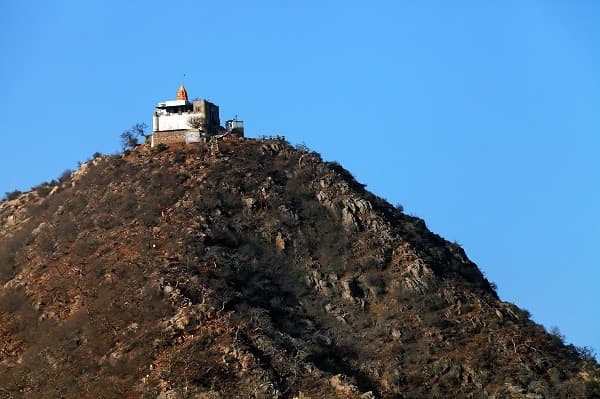
Overlooking Pushkar from Ratnagiri Hill, Savitri Temple is dedicated to Savitri, Brahma's first wife. Ascend on foot or by cable car to panoramic views of the sacred lake and the Thar Desert.
Perched atop Ratnagiri Hill, Savitri Temple has dominated Pushkar and its sacred lake for centuries. Dedicated to Savitri, the first wife of the god Brahma, it commands a 360° panorama over the town, the Thar Desert, and the ghats. The pilgrimage to the summit is itself a spiritual experience, undertaken daily by devotees and travelers seeking elevation and perspective.
Quick Facts
- Access: on foot via a stepped path from Pushkar's bazaar (approximately 30–40 minutes climbing) or by cable car (ropeway) from the hill's base
- Dress code: modest clothing required; shoes must be removed before entering the sanctuary
- Suggested duration: 1.5 to 2 hours (ascent, visit, descent)
- Best time: sunrise or sunset for light and cooler temperatures
What You'll See
The main sanctuary houses the statue of the goddess Savitri, adorned with flowers and colorful fabrics. From the terrace, your gaze sweeps across Pushkar Lake, white-washed ghats, the Thar dunes on the horizon, and Rajasthan's arid hills. Langur monkeys inhabit the path and temple precincts.
History and Context
In Hindu mythology, Brahma chose Pushkar to perform a yagna (fire ritual). Absent his first wife Savitri, he married Gayatri to complete the rite. Savitri, enraged, withdrew to this hilltop and became venerated there. The temple perpetuates this foundational narrative, woven into the spiritual identity of Pushkar itself.
Highlights of Your Visit
The Climb via the Stepped Path
The paved pathway winds between rock outcrops and dry vegetation. Devotees ascend barefoot, carrying offerings. Physical exertion is part of the pilgrimage; the view unfolds gradually, opening onto the town below.
The Panorama at the Summit
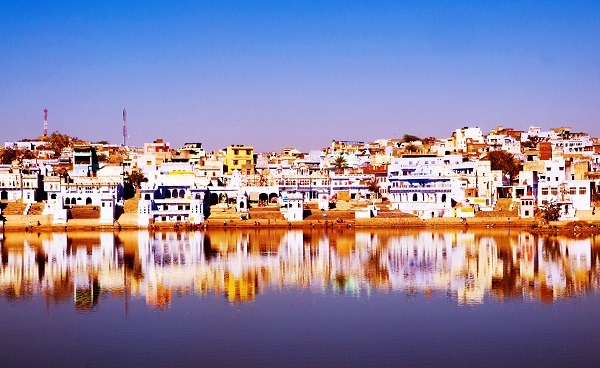
The sacred lake appears in its entirety, ringed by white ghats and temples. On clear days, the Thar Desert dunes stretch westward. It is one of the rare vantage points that encompasses Pushkar in full.
The Cable Car (Ropeway)
For those preferring not to hike, a cabin connects the base to the summit in minutes, offering its own sweeping views of the town and lake.
Etiquette and Visiting Rules
- Remove your shoes before entering the sanctuary.
- Wear clothing that covers shoulders and knees.
- Avoid loud or disrespectful behavior during prayers.
- Do not feed the monkeys: they can become aggressive.
- Offerings (flowers, coconuts) may be purchased at the base or along the path.
Photography Tips
Sunrise bathes the lake and ghats in golden, raking light—ideal for photographing Pushkar from the summit. Sunset sets the desert ablaze in orange. Midday light is harsh, casting sharp shadows. Check restrictions inside the sanctuary before using your camera.
Location and Access
The temple sits on Ratnagiri Hill, west of central Pushkar. The trailhead and the cable car's base station are a few minutes' walk from the main bazaar. Pushkar is connected to Ajmer (approximately 14 km) by road; Ajmer has a well-served railway station. Tuk-tuks and taxis link Ajmer and Pushkar.
Nearby attractions: Temple of Brahma, one of the world's rare temples dedicated to Brahma, located in central Pushkar.
In the Vicinity
- Pushkar Lake — sacred lake ringed by ghats where pilgrims bathe at sunrise.
- Temple of Brahma — 14th-century sanctuary, one of the world's very few temples dedicated to Brahma.
- Ghats of Pushkar — stone steps leading to the lake, alive with daily rituals.
- Ajmer Sharif Dargah — major Sufi mausoleum in Ajmer, a site of interfaith pilgrimage.
Frequently asked questions
Both options are viable. The hike takes about 30 to 40 minutes and is part of the pilgrimage experience. The cable car (ropeway) is available for those preferring to avoid strenuous exertion.
October through March offers cool, pleasant weather. Avoid the monsoon (July–September): the path can be slippery. Pushkar Fair (Kartik Purnima, typically November) is festive but crowded.
Wear clothing that covers shoulders and knees. Remove your shoes before entering the sanctuary. Socks are useful if the floor is hot or rough.
Yes, easily. The Temple of Brahma is in central Pushkar, a few minutes' walk from the trailhead. Plan half a day for both sites.
Photography of the panorama is generally allowed from the terrace. Inside the sanctuary, check posted guidelines before photographing the goddess statue.
Yes, langur monkeys are present throughout the trail and near the temple. Do not feed them and keep your belongings secured: they may seize bags or food.
Photos
Interested in this visit?
We can include it in your personalised itinerary.