Sukhna Lake
Created in 1958 at the foot of the Shivalik Hills, Sukhna Lake is Chandigarh's primary natural space. Walks, pedal boats and migratory birds in winter make this site a peaceful counterpoint to Le Corbusier's planned city.
Sukhna Lake is an artificial lake created in 1958 at the foot of the Himalayan foothills, at the north-eastern edge of Chandigarh. Designed by engineer P. L. Verma under Le Corbusier's direction, it is the city's primary recreational space. Its shores welcome walkers, rowers and migratory birds in a serene setting, removed from the bustle of urban life.
Practical Information at a Glance
- Entry: Access to the shores is free; water activities are paid (rates posted on-site)
- Access: Located at the end of Sector 1, accessible by auto-rickshaw or bicycle from the city centre
- Suggested duration: 1 to 2 hours for a leisurely walk
- Rules: Swimming prohibited; plastic-free zone
- Animals: Dogs allowed on leashes along the pathways
What You'll See
The lake spans approximately 3 km² and a promenade runs along the southern shore for several kilometres. Pedal boats and rowboats are available for hire. The wetland attracts grebes, pintails and, in winter, bar-headed geese arriving from Central Asia. A Le Corbusier sculpture, "The Open Hand", is visible near the Capitol, just a few minutes' drive away.
History and Context
Chandigarh, India's first planned city, was designed by Le Corbusier from 1950 onwards. Sukhna Lake was created by damming the Sukhna Choe, a seasonal stream. Its construction aimed to provide a green lung for Punjab's new capital. Designated a protected wetland, it has held the status of a migratory bird sanctuary since 1988.
Highlights of Your Visit
The Sunrise Walk
Chandigarh residents fill the pathways at dawn for their daily walks. The atmosphere is peaceful, with soft, raking light across the water. This is the best time to observe birds before the crowds arrive.
Water Activities
Pedal boats, rowboats and kayaks allow you to venture from the shore and appreciate the panorama of the Shivalik Hills. Boat outings typically last around thirty minutes.
Birdwatching in Winter
From November to February, thousands of migratory birds stop over on the lake. Ornithology enthusiasts bring binoculars and telephoto lenses to spot rare species among the ducks and waders.
Photography Tips
Morning light, between 7 a.m. and 9 a.m., offers golden reflections on the water and the hills in the background. In winter, flocks of cranes and geese overhead provide remarkable photographic subjects. From the northern shore, the framing captures both the water and the Himalayan foothills. No particular photographic restrictions are noted on public shores.
Location and Access
Sukhna Lake is located in Sector 1, at the northern end of Chandigarh. The Capitol of Chandigarh (Sector 1) is just a few minutes' drive away. The Rock Garden sits practically adjacent to the lake to the north-west — the two sites can easily be visited in the same half-day. Auto-rickshaws and taxis serve the lake from ISBT bus station and the city centre. Wheelchair access is limited on certain sections of the promenade due to uneven surfaces.
Nearby Attractions
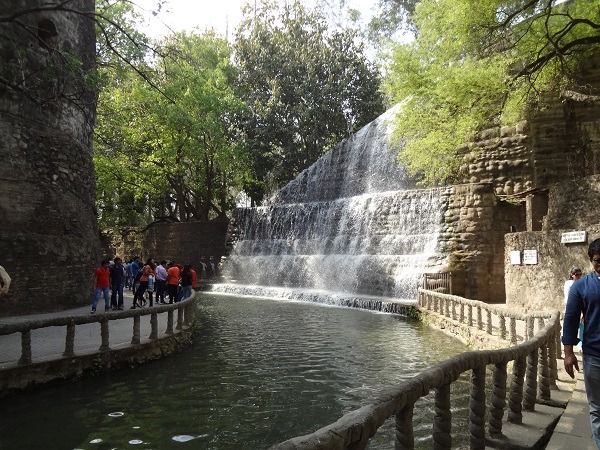
- Rock Garden — a unique environmental sculpture made from industrial waste, just steps from the lake.
- Capitol Complex — Le Corbusier's architectural ensemble, a UNESCO World Heritage site.
- Rose Garden (Zakir Hussain) — one of Asia's largest rose gardens, located in Sector 16.
- Chandigarh Museum and Art Gallery — Collections of Pahari school paintings and contemporary Indian art.
Frequently asked questions
Winter (November to February) is ideal: pleasant temperatures and maximum presence of migratory birds. Summer (April to June) is hot and humid; the monsoon (July-September) makes the shores slippery.
No. Swimming is strictly forbidden for safety reasons and ecosystem preservation. Only vessels authorised by the administration are permitted on the water.
Yes, the two sites are adjacent. A half-day is enough to explore the lake and the Rock Garden. Start at the lake early in the morning, then move on to the garden mid-morning.
Pedal boats and rowboats are suitable for families with children. Life jackets are provided. Check the weather before taking a boat, especially during the monsoon.
No restrictions reported on public shores. Photography is free. For drones, Indian airspace regulations apply — check with local authorities before any flight.
Part of the promenade is wheelchair-accessible, though some sections have uneven surfaces. Main access from the car park is generally flat.
Interested in this visit?
We can include it in your personalised itinerary.