Rao Jodha Desert Rock Park
At the foot of Mehrangarh Fort, Rao Jodha Desert Rock Park unfolds across 70 hectares of volcanic rock and restored desert vegetation—a natural and botanical counterpoint to a fort visit.
Rao Jodha Desert Rock Park sprawls across some 70 hectares of volcanic rocky terrain at the base of Mehrangarh Fort in Jodhpur. Created to restore the Thar ecosystem degraded by invasive plants, the park now showcases reconstructed native desert vegetation. It is a rare space where geology, botany, and history converge, just minutes from the heart of the Blue City.
Essentials at a Glance
- Entrance: Paid admission (separate rates for Indian residents and foreign visitors)
- Time needed: 1.5 to 2 hours to explore the main trails
- Footwear: Closed-toe shoes recommended—terrain is rocky and uneven
- Access: Main entrance on the road skirting Mehrangarh Fort; reachable by auto-rickshaw from the city center
- Water: Bring plenty of water, especially during hot season—limited shade on some sections
What to See
The park sits on a rhyolite formation dating back 750 million years, among the oldest exposed rock in the subcontinent. Marked trails cross zones of native cacti, euphorbias, acacias, and medicinal desert plants of the Thar. Signage identifies each species in Hindi and English. In places, the rocks bear ancient tool marks linked to the fort's construction.
History and Context
The site was originally the natural rocky terrain surrounding Mehrangarh Fort, founded in the 15th century by Rao Jodha, Jodhpur's founder. For decades, invasive vegetation—notably Prosopis juliflora introduced in the 19th century—had overrun the rocks and diminished local biodiversity. A restoration project, launched in the 2000s by the Mehrangarh Museum Trust, has replanted over 200 native Rajasthani plant species.
Highlights
Rock Formations
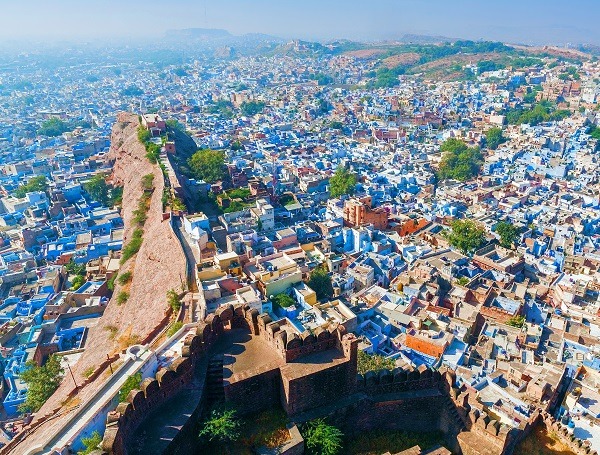
Erosion-carved rhyolite blocks create a striking mineral landscape. Some rocks rise several meters high and offer sweeping vistas of the fort and the Blue City sprawling below.
Thar Desert Flora
The park documents native Rajasthani desert flora with botanical rigor. Species are grouped by habitat: seasonal wetlands, exposed cliffs, rocky depressions. An early morning visit allows spotting birds and lizards active in cooler hours.
The Mehrangarh View
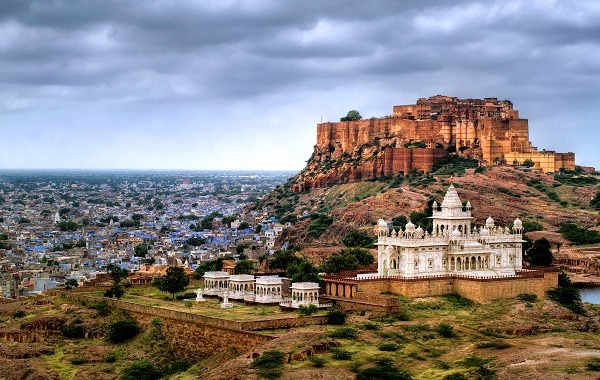
From the park's high points, Mehrangarh Fort cuts a dramatic silhouette against the sky in striking proximity. It is one of the least crowded angles to observe the fortress, far from packed terraces elsewhere.
Photography Tips
Morning light (before 9 a.m.) is ideal: low-angle rays reveal rhyolite textures and bathe the fort in golden tones. Late afternoon warmth suits wide shots of the Blue City. No known photography restrictions in open park areas.
Location and Access
The park adjoins Mehrangarh Fort directly, to the northwest of Jodhpur's historic core. The entrance sits on the road running along the fort's base. From the old city, a short auto-rickshaw ride suffices. The park is not wheelchair-accessible due to rugged terrain.
Nearby Attractions
- Mehrangarh Fort — 15th-century fortress dominating Jodhpur, within a few minutes' walk.
- Jaswant Thada — 19th-century white marble cenotaph, in immediate proximity to the fort.
- Jodhpur's Old City — blue-hued district of dense lanes, spice markets, and havelis, downhill from here.
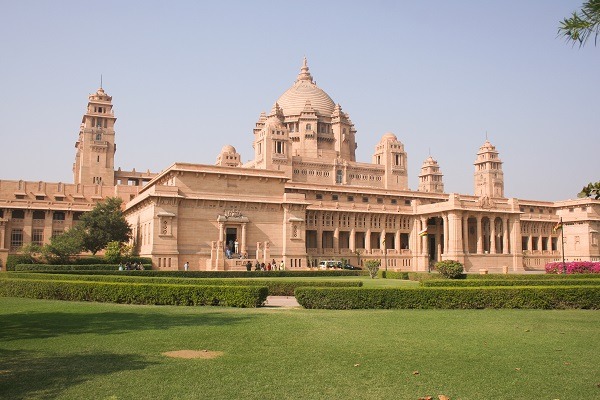
- Umaid Bhawan Palace — 20th-century Art Deco palace, partially open to the public.
Interested in this visit?
We can include it in your personalised itinerary.