Rajarani Temple
Rajarani Temple
An 11th-century Kalinga sanctuary in Bhubaneswar, Rajarani Temple is renowned for its sculptures of couples and a classical music festival held each January.
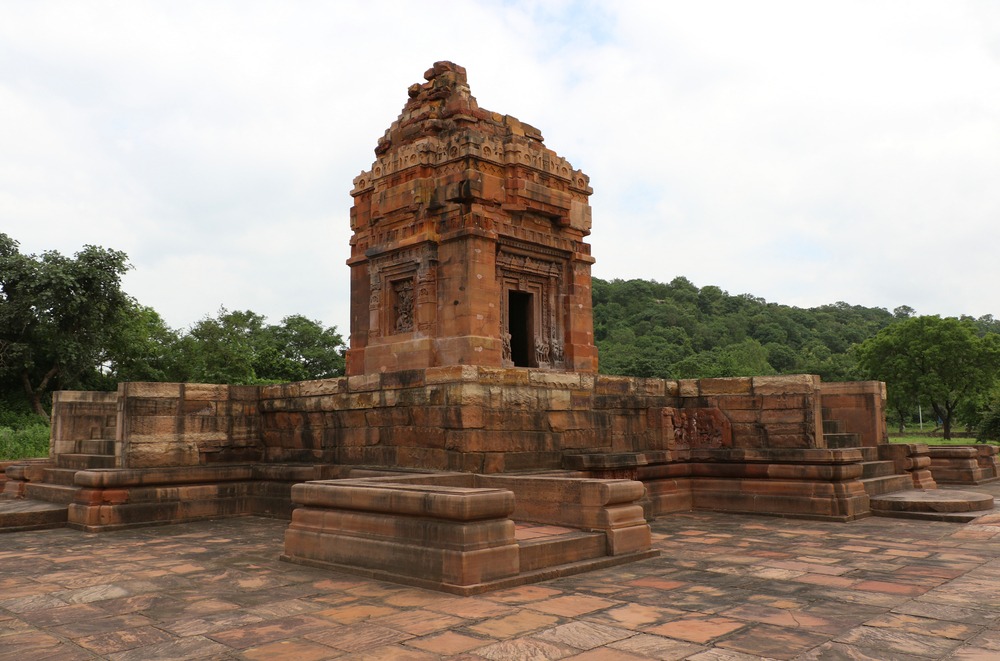
Rajarani Temple is one of the medieval sanctuaries of Bhubaneswar, the capital of Odisha. Built between the 10th and 11th centuries, it stands out for its red and golden sandstone, elevated platform, and sculptures of couples that earned it the nickname of "temple of love." Today deconsecrated, it is managed by the Archaeological Survey of India and hosts a prestigious classical music festival each year.
Why Visit Rajarani Temple
- A rare example of the Kalinga architectural school, contemporary with the Jagannath temple.
- Exquisite sculptures depicting the eight directional guardians (Ashtadikpalas) and scenes of feminine life.
- A carefully maintained landscape setting, on a vast lawn away from urban bustle.
- The Rajarani Festival of classical Indian music, organized annually in January.
History and Dating
Originally called the Indreswara Temple, the structure was dedicated to the worship of Shiva and the goddess Shakti. Its current name, "Rajarani," is believed to derive from the red and golden sandstone used in its construction, a local stone known by that same name.
Dating remains debated among scholars. Historian James Fergusson had proposed construction around 1105, based on architectural style. George Michell, meanwhile, suggests that work on the site would be contemporary with the Lingaraja Temple. Current scientific consensus places it closer to the period of Puri's Jagannath Temple, around the late 11th century.
Fallen into ruin over the centuries, the temple was restored in 1903 by the British archaeological service. It no longer serves an active religious function today, making it a purely heritage monument.
What to Observe On Site
Architecture in Five Divisions
Like the neighboring Mukteswara Temple, Rajarani rises on an elevated platform. Its tower (deul) divides vertically into five sections characteristic of Kalinga art: pabhaga, talajangha, bandhana, uparajangha, and baranda. Fine secondary turrets (angashikharas) surround the central tower, creating a distinctly clustered silhouette quite singular in the region.
The Eight Directional Guardians
One of Rajarani's distinctive features is the sculpted presence of the Ashtadikpalas, the eight guardians of the cardinal directions: Indra (east), Agni (southeast), Yama (south), Nirriti (southwest), Varuna (west), Vayu (northwest), Kubera (north), and Ishana (northeast). Each is depicted with their attributes and mount.
Feminine Figures
The outer walls feature numerous sculptures of women and embracing couples (mithunas): women carrying children, gazing into mirrors, or in dancing postures. These reliefs are what earned the monument its "temple of love" epithet.
Practical Information
- Hours: open daily during daylight. Allow 45 minutes to 1.5 hours on-site.
- Admission: moderate entrance fee, with distinctions between Indian and foreign visitors according to standard ASI guidelines. Additional charges may apply for video equipment.
- Accessibility: level terrain with clear pathways around the temple.
- Photography: permitted. Late-afternoon light particularly highlights the golden sandstone.
When to Visit
The best time to visit Bhubaneswar and Rajarani Temple extends from October through March, when temperatures remain comfortable and humidity is limited. The monsoon season (June-September) is still suitable for visits but may disrupt travel. If your journey falls in January, check the dates of the Rajarani Festival: over three days, classical musicians from across India perform in the temple courtyard.
How to Get There
The temple is located in the Tankapani neighborhood, east of central Bhubaneswar.
- By Air: Biju Patnaik Airport (BBI) is about 6 km away. It connects to Delhi, Mumbai, Kolkata, Hyderabad, Varanasi, and several other major Indian cities.
- By Train: Bhubaneswar railway station, also about 6 km away, serves major rail routes between Kolkata and Chennai. Several express trains offer connections with Delhi.
- Locally: auto-rickshaw, taxi, or ride-sharing service from the city center (15 to 25 minutes depending on traffic).
Nearby
Bhubaneswar has over 600 documented temples. Within a 2 to 3 km radius of Rajarani, you can visit Lingaraja, Mukteswara, Parasurameswara, and the sacred Bindusagar pool. More broadly, Odisha allows you to extend your itinerary toward Konark and Puri. To explore other religious facets of the subcontinent, also consider the Kalighat Kali sanctuary in Kolkata or the sacred ghats of the north. For nature lovers, Bhedaghat and its marble gorge offer striking contrast.
FAQ
Frequently asked questions
Include Bhubaneswar in Your Itinerary
Rajarani naturally integrates into a circuit dedicated to Odisha's temples, often combined with Konark and Puri. To build a customized journey including Bhubaneswar and its Kalinga sanctuaries, consult our suggestions for travel in India.
Interested in this visit?
We can include it in your personalised itinerary.