Palkiya Haveli
Palkiya Haveli
A noble residence in old Kota, the Palkiya Haveli showcases the Rajput civil architecture of the Hadoti region with its intricately carved balconies and central courtyard, away from crowded tourist circuits.
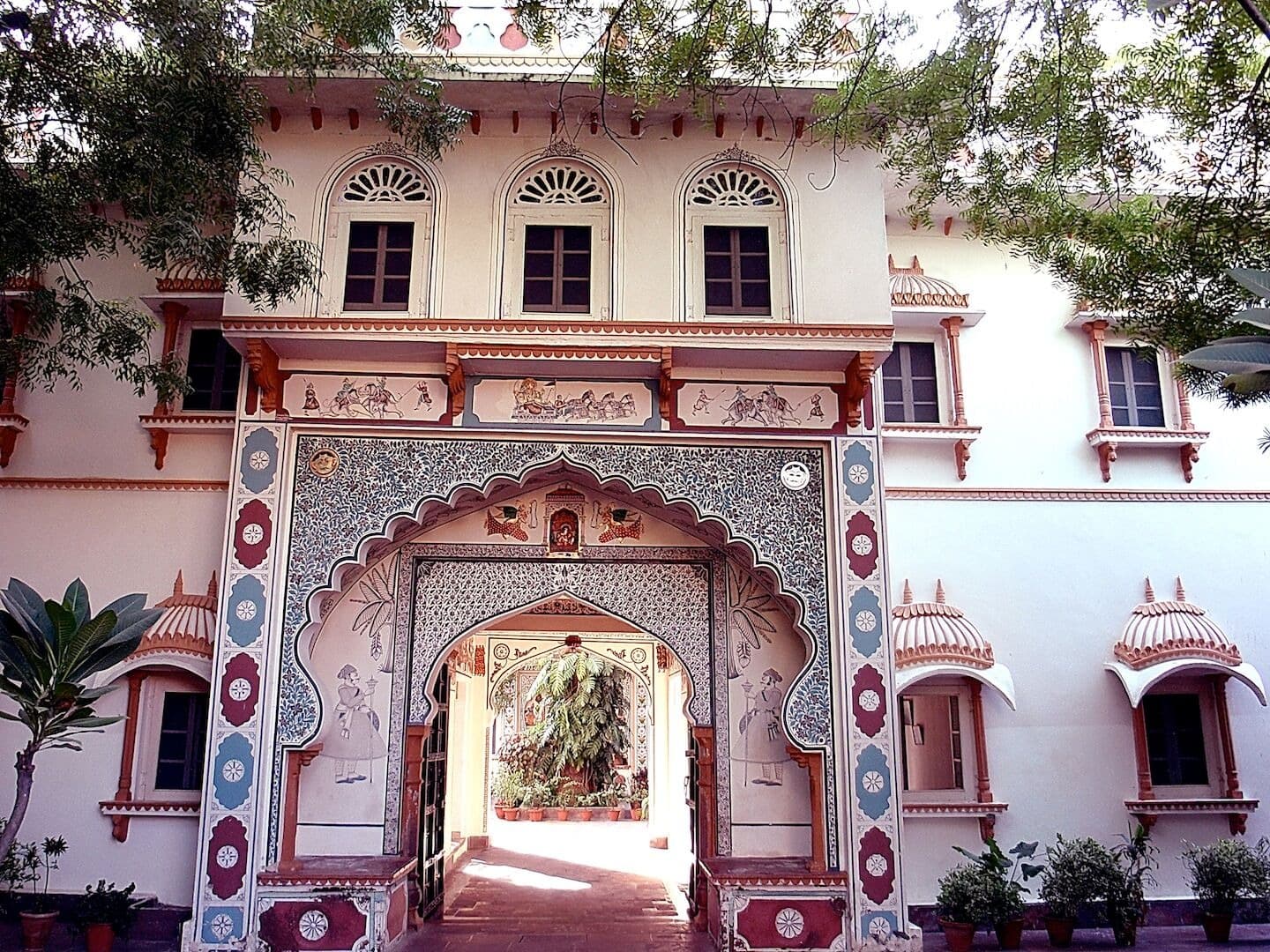
The Palkiya Haveli is an ancestral residence from the era of Kota's nobility, a Rajasthan city known for its palatial architecture and havelis. Built by a family of local aristocracy, it exemplifies the Rajput architectural style characteristic of the Hadoti region, with its ornate facades, interior courtyards, and sculpted galleries. It remains less frequented than Kota's grand palaces, making it a peaceful stop for those interested in traditional civil architecture.
What to see
The haveli displays the typical characteristics of Rajasthani noble dwellings: arcaded facades, intricately carved jharokhas (cantilever balconies), and a central courtyard organized around a common living space. The details in local stone attest to the craftsmanship of artisans from the Hadoti region. Its partial state of preservation lends the place an authentic atmosphere, far removed from fully restored sites.
History and context
Kota became the capital of a distinct princely state from the 17th century onward, following the division of the Bundi kingdom. Noble families who surrounded the maharao's court had their own havelis built throughout the city. The Palkiya Haveli belongs to this aristocratic heritage of the late Mughal and Rajput period, when residential architecture rivaled royal palaces in refinement.
Highlights of the visit
The sculpted jharokhas
The projecting balconies, characteristic of Hadoti architecture, concentrate the essential ornamental work. Floral motifs, geometric friezes, and bas-relief figures adorn facade after facade.
The central courtyard
The spatial organization around a central court reflects the domestic life of noble families: separation of public and private spaces, colonnaded galleries, and wells or basins as found in residences of this type.
Photography tips
Morning light, before the sun reaches its zenith, reveals the relief of stone sculptures. Frame the jharokhas from the street to capture the depth of the cantilevers. Check with the residents or guards whether photography is permitted inside.
Location and access
The Palkiya Haveli is located in old Kota, near the City Palace district and Kota Fort. The sector can be explored on foot or by rickshaw from the city center. Kota Railway Station, well-served from Jaipur, Jodhpur, and Delhi, is the main entry point to the city. Nearby sites include the Kota Fort-Palace and the Chambal Gardens.
Around the area
- Kota Fort-Palace — 17th-century royal complex housing the maharao's museum and a collection of paintings from the Kota school.
- Chambal Gardens — riverside park with a crocodile pool and views over the Chambal river.
- Garadia Mahadev — temple perched on a rocky promontory overlooking a spectacular meander of the Chambal, about thirty kilometers from Kota.
- Bundi — neighboring town renowned for its stepwells, fort, and wall frescoes, approximately 35 km to the north.
Frequently asked questions
Access to private havelis in Kota varies: some are inhabited, others partially open. It is advisable to inquire on site or with a local guide before planning your visit.
Winter (October to February) offers pleasant temperatures for exploring old Kota on foot. Summer is extremely hot in this region of Rajasthan.
Yes. Both sites are located in the same sector of old Kota. Half a day is sufficient to explore the neighborhood on foot and visit both places.
A local guide familiar with old Kota is helpful: they facilitate access, explain architectural details, and know which havelis in the neighborhood are open for visits.
Kota is connected to Jaipur by train (frequent service with varying journey times depending on the train). Kota Railway Station is central and well-connected to the Indian rail network.
Photos
Interested in this visit?
We can include it in your personalised itinerary.