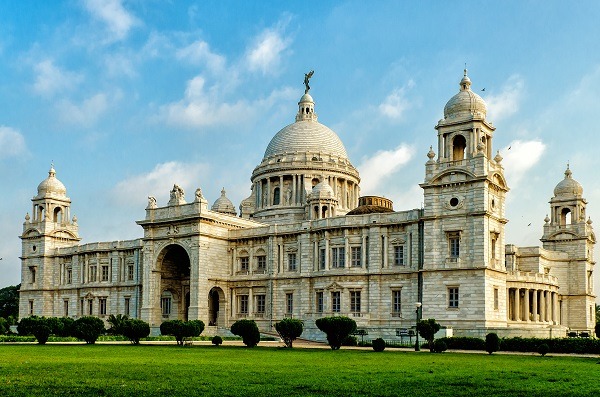
Thirumalai Nayak Palace
Thirumalai Nayak Palace
A major civic monument in Madurai, Thirumalai Nayak Palace (17th century) impresses with its stucco columns, octagonal dome, and evening sound-and-light spectacle. Best combined with the nearby Meenakshi Temple.
In the heart of Madurai, Thirumalai Nayak Palace stands as one of South India's best-preserved civil monuments. Built in the 17th century by King Thirumalai Nayak, it blends Dravidian architecture with Islamic influences across a complex of courtyards, columns, and imposing domes. Today, partially restored, it hosts a nightly sound-and-light show and remains a powerful testament to the power of the Madurai Nayaks.
Quick facts at a glance
- Admission: fee-based (differential rates for Indian residents and foreign visitors)
- Recommended duration: 1 to 1.5 hours for the palace visit; additional time for the sound-and-light show
- Sound and light: evening spectacle in Tamil and English (check timings on-site, they vary by season)
- Dress code: no strict dress restrictions, though smart casual attire is appreciated
- Accessibility: partial access — main courtyards are level, some interior areas may be challenging
What to see
The palace comprises a large central courtyard surrounded by stucco columns soaring over 15 meters high. The Swarga Vilasam (celestial pavilion), crowned with an octagonal dome, is the architectural masterpiece. A museum housed in one wing displays sculptures, paintings, and artifacts related to Nayak history. Much of the original palace was demolished in the 18th century; what remains represents roughly a quarter of the initial construction.
History and context
Thirumalai Nayak reigned over Madurai from 1623 to 1659. He commissioned this palace as a royal residence, employing local craftsmen and drawing on Islamic architectural influences, visible in the arches and domes. After his death, his successor dismantled much of the complex to build the Tiruchirapalli palace. Lord Napier, Governor of Madras, initiated the first restorations in the 19th century.
Highlights of your visit
The Swarga Vilasam
This central pavilion, with its finely worked dome and stucco columns, concentrates the bulk of architectural interest. The acoustics are remarkable: voices carry effortlessly from one end of the hall to the other.
The sound-and-light show
Each evening, the palace comes alive with a spectacle narrating the history of the Nayaks. The lighting of the columns and dome transforms the space. Two sessions are typically offered—one in Tamil, the other in English.
The interior museum
One wing houses sculptures from the Nayak period, royal portraits, and everyday court objects. The collection is modest but well-contextualized to understand the era.
Photography tips
Morning light, before the sun reaches its zenith, is ideal for photographing the columns without harsh shadows. Late-afternoon backlighting creates interesting effects under the dome. During the sound-and-light show, a tripod is useful—check on-site if tripods are permitted. The central courtyard offers the best angle to capture the symmetry of the columns.
Location and access
The palace stands in central Madurai, roughly 2 km from Meenakshi Amman Temple. Both sites are easily visited in a single day. Auto-rickshaws and taxis are available from Madurai railway station and the city center. The palace is signposted from major routes through the center.
Nearby attractions
- Meenakshi Amman Temple — Madurai's grand Dravidian temple, with colorful sculpture-covered gopurams, a few minutes by rickshaw away.
- Gandhi Museum — housed in a former palace, it traces the life of the Mahatma and preserves the dhoti he wore at the time of his assassination.
- Koodal Azhagar Temple — a multi-tiered Vishnavite temple, less frequented than Meenakshi, in central Madurai.
Frequently asked questions
October to March, during the dry and cool season, is most pleasant. Avoid midday hours in summer (April–June) when the heat in the courtyards can be intense.
Yes, the two sites are close. Start at Meenakshi Temple in the morning (before crowds), then visit the palace in early afternoon, and stay for the sound-and-light show in the evening.
Generally, tickets are purchased at the palace ticket counter. It is advisable to arrive a little early, especially during peak tourist season.
Photography is generally permitted in the courtyards and museum. Additional fees may apply for professional cameras or video equipment—inquire at the entrance.
Allow 1 to 1.5 hours to explore the palace and museum at your own pace. Add approximately 1 hour if you attend the sound-and-light show.
The palace is not an active place of worship: no strict dress code applies. Smart casual and comfortable attire (given the heat) is sufficient.
Photos
Interested in this visit?
We can include it in your personalised itinerary.