Thikse Monastery
Thikse Monastery
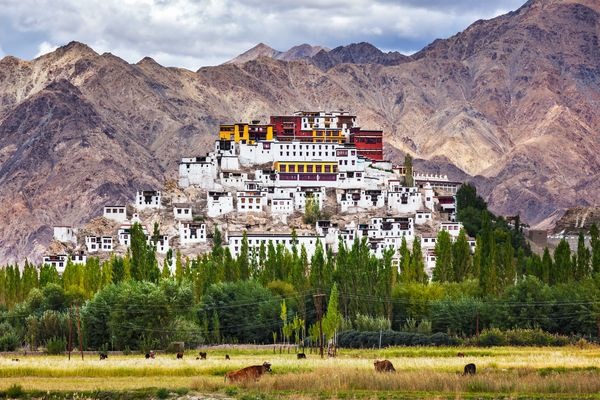
Perched on a rocky spur 17 km from Leh, Thikse Monastery is one of the most impressive Gelugpa Buddhist complexes in Ladakh, featuring a 15-meter Maitreya statue and sweeping views over the Indus Valley.
Perched on a rocky spur some fifteen kilometers east of Leh, Thikse Monastery has dominated the Indus Valley since the 15th century. Affiliated with the Gelugpa school of Tibetan Buddhism—the same school as the Dalai Lama—it houses an active community of monks and one of the tallest Maitreya statues in Ladakh. Its tiered silhouette, reminiscent of the Potala Palace in Lhasa, makes it one of the most photographed monastic complexes in the region.
Practical Information at a Glance
- Admission: Paid (modest entrance fee for foreign visitors)
- Recommended duration: 1.5 to 2 hours to explore all temples and the panoramic terrace
- Dress code: Shoulders and knees must be covered; shoes must be removed before entering temples
- Morning puja: Daily ceremony at dawn—arrive before sunrise to attend (timing varies by season)
- Access: Paved road from Leh (Leh–Manali national highway); taxi or local bus from Leh
- Accessibility: Limited—numerous steep staircases between levels
What to See
The monastery contains about a dozen temples spread across multiple levels. The Maitreya Temple houses a statue of the Future Buddha approximately 15 meters tall, built in 1970 at the initiative of the 19th Dalai Lama. The chapel walls are covered with thangkas, frescoes, and rows of gilt statues. The upper terrace offers an unobstructed panorama of the Indus Valley and the snow-capped peaks of the Zanskar.
History and Context
Thikse was founded in the 15th century by a disciple of Tsongkhapa, founder of the Gelugpa school. The complex grew progressively to reach its present form: twelve stories of white and ochre buildings clinging to the hillside. It remains a living monastery, home to about a hundred resident monks, novices, and an active religious teaching program.
Highlights of Your Visit
The Maitreya Statue
Rising two stories high, the golden Maitreya Buddha statue is visible from the first level of its dedicated temple. It is adorned with silks and surrounded by small votive statues. This is the monastery's crown jewel.
The Morning Puja
Each morning, monks gather in the main assembly hall for collective prayer. Respectful visitors may observe the ceremony: chanting, cymbals, long dungchen trumpets, and yak butter offerings create a rare and moving atmosphere.
The Panoramic Terrace
From the top of the complex, the view sweeps across the Indus Valley, terraced barley fields, and in the distance, the monasteries of Shey and Stakna. It is one of the widest vantage points over Ladakh's central valley.
The Museum and Library
A display room showcases ancient manuscripts, cham dance masks (ritual dances), and ceremonial instruments. Small but informative for understanding Gelugpa monastic life.
Etiquette and Visiting Rules
- Remove your shoes before entering each temple.
- Walk around chortens (stupas) and prayer wheels in a clockwise direction.
- During the puja, stay back, do not cross through the monks' space, and silence your phone.
- Do not touch statues or offerings.
- Ask permission before photographing monks up close.
Photography Tips
The golden light of sunrise illuminates the monastery's white and ochre façade from the road below—arriving early is essential. For interiors, natural light is dim; a tripod or high ISO sensitivity is useful. The upper terrace is ideal in late afternoon for photographing the valley with peaks in the background. Photography is generally permitted in public spaces; some inner temples may prohibit it—check on site.
Location and Access
Thikse is located approximately 17 km east of Leh, on the national highway that follows the Indus toward Hemis. Shared taxis and local buses regularly connect Leh to Thikse. The monastery is visible from the road: a paved track leads directly to the base of the complex. The village of Thiksey, below, has a few guesthouses and simple restaurants.
Nearby
- Hemis Monastery — the largest and richest in Ladakh, about twenty kilometers to the east, famous for its annual festival.
- Shey Monastery and Palace — former royal residence with a large gilt-copper Buddha statue, a few kilometers to the west.
- Stakna Monastery — small monastery on a rocky outcrop overlooking the Indus, less visited.
- Leh Palace — former nine-story royal residence overlooking Leh's old town.
Frequently asked questions
From May to September, the road is clear and the weather stable. July and August coincide with the Thikse Festival (Gustor), featuring masked dances and ceremonies—a particularly lively period. In winter (December–February), the monastery remains accessible from Leh but temperatures are very low.
Yes, respectful visitors are generally welcome. The ceremony begins early, before sunrise. You must be discreet, stay back from the monks, and not disturb the proceedings. Ask at the monastery entrance for the exact time on your visit day.
Plan for 1.5 to 2 hours to visit the main temples, assembly hall, Maitreya Temple, and panoramic terrace. If you attend the puja, add approximately 45 minutes.
Yes. The Indus Valley road groups several monasteries within short distances: Shey to the west and Hemis to the east. A taxi from Leh allows you to visit two or three sites in one day if you leave early in the morning.
Photography is generally allowed in outdoor spaces and on the terrace. Some inner temples prohibit it or require an additional fee. Check signage at the entrance of each room and ask if you are unsure.
Shoulders and knees must be covered to enter temples. Bring a light scarf or lightweight trousers if you wear short clothing. Shoes must be removed before entering any place of worship.
Photos
Interested in this visit?
We can include it in your personalised itinerary.