Kalaripayattu
Kalaripayattu is one of the world's oldest martial arts, born in Kerala. In Kochi, traditional schools open their doors for demonstrations of armed combat and acrobatics inherited from a warrior tradition spanning more than two thousand years.
Kalaripayattu is one of the world's oldest martial arts, born in Kerala more than two thousand years ago. In Kochi, several kalari (traditional schools) open their doors to visitors for daily demonstrations. You will observe fighters training bare-handed, with bladed weapons, and mastering acrobatic techniques inherited from a codified warrior tradition. It is a direct window into the physical and spiritual culture of Kerala.
Quick facts at a glance
- Type of visit: public demonstration in a school (kalari) — paid entry at most centres
- Recommended duration: 45 minutes to 1 hour for a demonstration session
- Attire: casual clothing, no strict dress code for spectators
- Booking: recommended for groups; individuals can often drop in
What you'll see
A Kalaripayattu demonstration takes place in a sunken earth-floored space, the traditional kalari. Practitioners chain together sequences of floor movements, leaps, acrobatic kicks and armed combat — sword and shield, spear, flexible knife (urumi). The precision of movement and speed of execution are striking. Some schools also incorporate demonstrations of therapeutic massage linked to the tradition.
History and context
Kalaripayattu has its roots in Sanskrit texts and the warrior traditions of Kerala's Nair community. Practised by soldiers of local kingdoms, it nearly disappeared under British colonisation, which banned it in the nineteenth century. Its twentieth-century revival, championed by determined masters (gurukkal), made it a symbol of Keralan cultural identity. Some scholars see in it an influence on Southeast Asian martial arts through ancient trade exchanges.
Highlights of the visit
Combat with the urumi
The urumi is a flexible blade several metres long, wielded in rapid spiralling motions. Its mastery requires years of practice. The demonstration is one of the most spectacular moments of the session — the blade whistles through the air just centimetres from the fighters.
Floor sequences (meippayattu)
The basic exercises of Kalaripayattu develop exceptional flexibility and strength. Practitioners chain together postures inspired by animals — lion, elephant, serpent — with a fluidity reminiscent of yoga and Kathakali dance, two disciplines that Kalaripayattu has historically influenced.
Sword and shield combat
Codified duels with short sword and rattan shield illustrate the tactical dimension of the art. Each attack demands a precise parry; the exchange is choreographed yet grounded in authentic combat movement.
Photography tips
Interior light in kalari schools is often dim — a fast lens or high ISO sensitivity is useful. Moments of leaping and armed combat photograph well in burst mode. Always ask permission before filming; some schools allow it freely, others prohibit it or charge a fee.
Location and access
Several centres offer demonstrations in Kochi, notably in the Fort Kochi neighbourhood and in Ernakulam. Fort Kochi is accessible by ferry from Ernakulam (short, frequent journey). The main schools are within walking distance of Fort Kochi's ghats. The neighbourhood is flat and generally accessible, though the kalari themselves are often below ground with steps down.
Nearby attractions
- St. Francis Church, Fort Kochi — India's oldest European church, a few minutes' walk away.
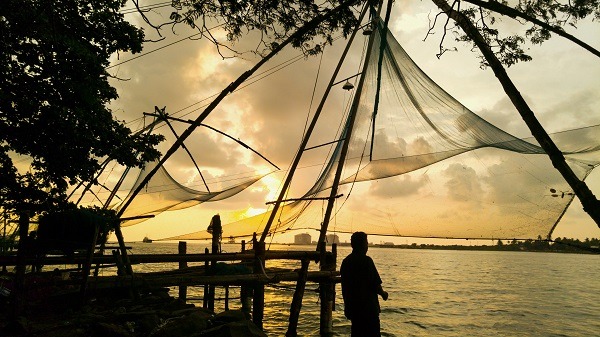
- Chinese fishing nets of Kochi — iconic symbols of Fort Kochi's waterfront, active at dawn.
- Mattancherry and the Jewish quarter — synagogue, Dutch palace and spice shops 2 km away.
- Kerala Kathakali Centre — demonstrations of classical Kathakali dance, an art closely linked to Kalaripayattu.
Frequently asked questions
Demonstrations run year-round. The dry season (October to March) is the most pleasant time to visit Kochi, but kalari schools operate independently of the weather.
Some schools offer short introduction sessions for tourists, in addition to demonstrations. Enquire directly with your chosen centre; beginner classes typically last an hour.
For individual visitors, dropping in usually works. For groups or during peak tourist season, advance booking is advised to guarantee a place at your preferred session.
Policies vary by centre. Ask permission at the entrance. Some allow photos and video freely, others have restrictions or charge a fee for filming.
A standard demonstration lasts between 45 minutes and an hour. It typically covers floor exercises, bare-hand combat and several armed sequences.
Yes, this is a common combination in Fort Kochi. Kalaripayattu demonstrations often run late afternoon, and Kathakali performances in the evening — both fit into one day.
Interested in this visit?
We can include it in your personalised itinerary.