Janardanaswamy Temple
Janardanaswamy Temple
Hindu sanctuary dedicated to Vishnu on a hilltop in Varkala, Janardanaswamy Temple combines Kerala architecture, ancient mythology and the grand Arattu festival.
The Janardanaswamy Temple overlooks the Arabian Sea from a hilltop in southern Varkala, in the state of Kerala. Dedicated to Vishnu in his form as Janardanan, this sanctuary is one of the most active Hindu pilgrimage sites on the Malabar coast and shapes local religious life around the grand Arattu festival.
Why visit the Janardanaswamy Temple
The site offers three distinct attractions. First, well-preserved vernacular Kerala architecture: a circular sanctuary with a copper roof, wood-carved prayer hall, and a rectangular enclosure housing several subsidiary shrines. Second, a rich oral tradition that traces the temple's foundation to a specific mythological episode. Finally, a rare location just a few hundred metres from Varkala beach and its cliffs, making it possible to combine cultural exploration with coastal walks in half a day.
History and legend
Local tradition dates the sanctuary's foundation to over 2,000 years ago, which would make it one of Kerala's oldest temples. While no archaeological evidence currently allows precise dating of this origin, the founding narrative remains firmly embedded in local memory.
According to this legend, the sage Narada sang for Vishnu. Enchanted by the melody, the god followed Narada to Brahma's realm. Upon arrival, Brahma prostrated himself before him, but Vishnu, absorbed in the song, failed to notice the gesture and departed. The other deities, believing Brahma was bowing to Narada, burst into laughter. Offended, Brahma cursed them: they would have to be reborn as mortals and do penance on Earth. It was at Varkala that they are said to have performed this penance, and the temple was erected in memory of this episode.
What you will see on site
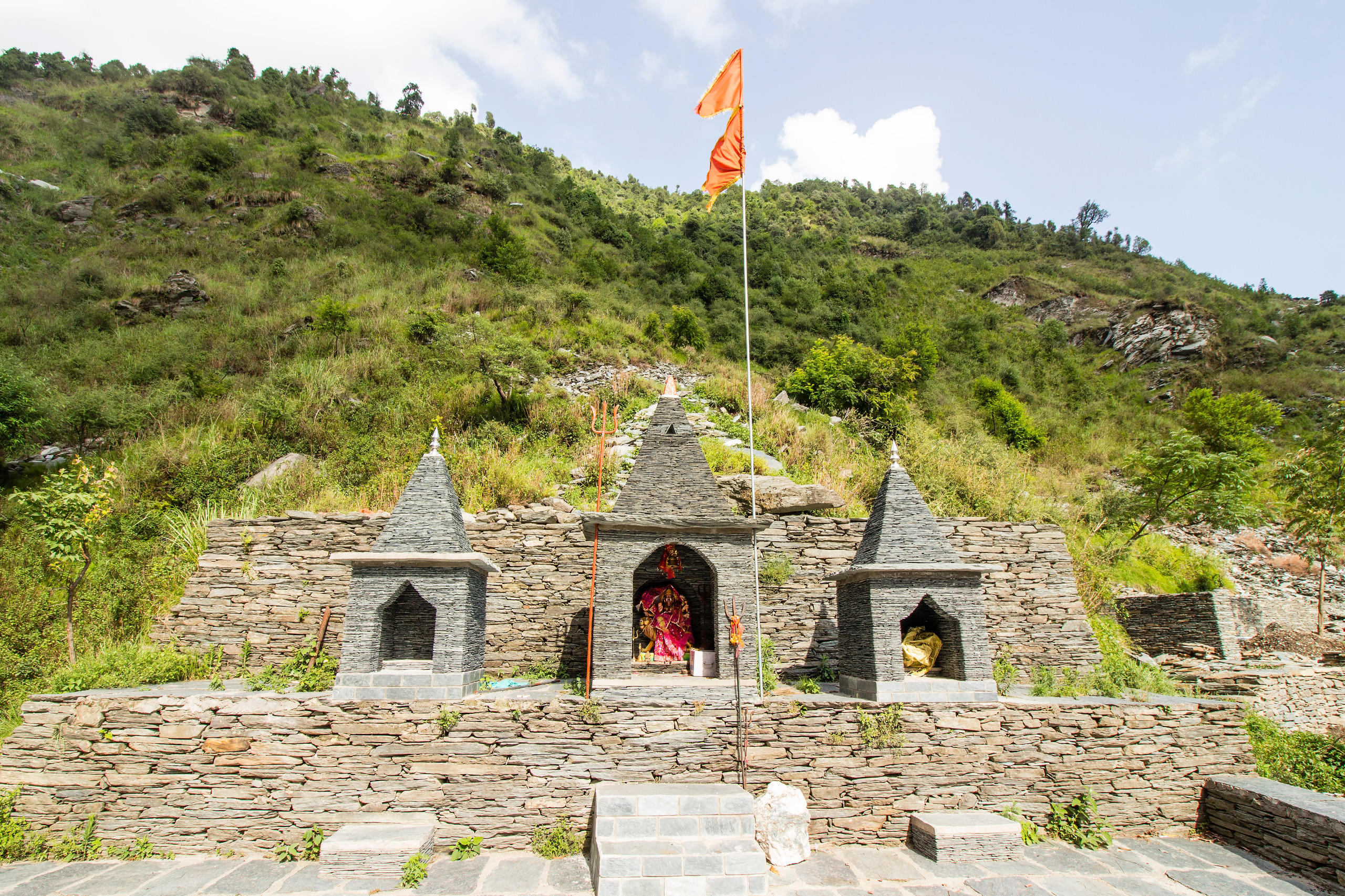
Access is via a staircase that climbs through vegetation to the top of the hill. The rectangular enclosure surrounds the main sanctuary, circular in plan and topped with the distinctive copper roof characteristic of Kerala religious architecture. The prayer hall (mukha-mandapa) retains carefully carved wooden sculptures on its pillars and lintels.
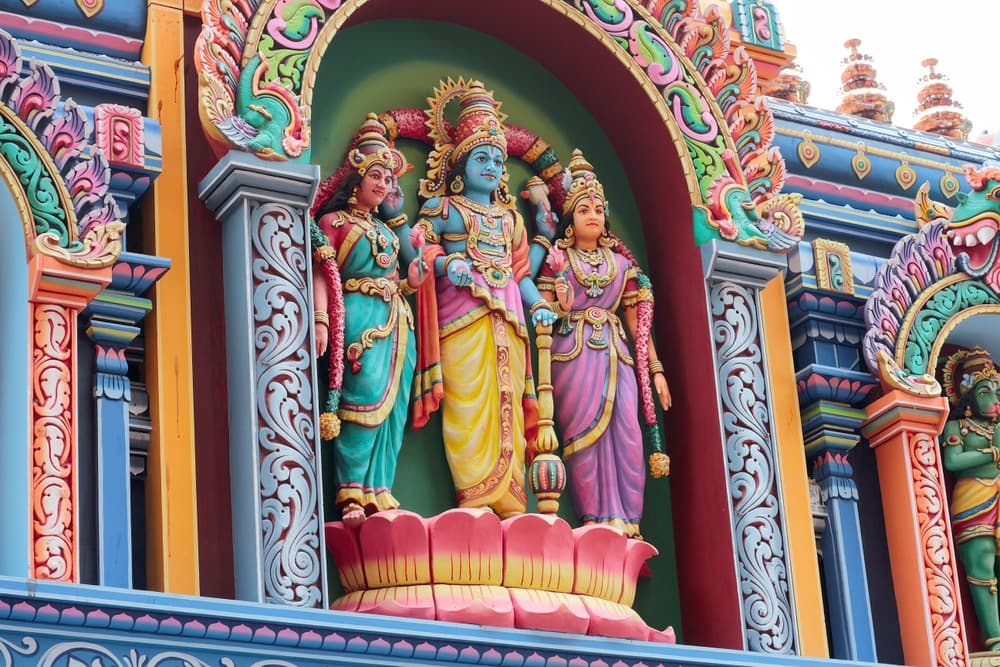
Within the main sanctuary stands the idol of Janardanan, a form of Vishnu, standing flanked by Sridevi and Bhudevi. His four arms carry the god's traditional attributes (conch, disc, mace, lotus). His right hand raised to his mouth is the most singular iconographic element of the statue and fuels several ritual interpretations.
Throughout the enclosure, subsidiary shrines dedicated to Shiva, Ganesh and Hanuman are where devotees leave their offerings before proceeding to the central sanctuary.
When to visit
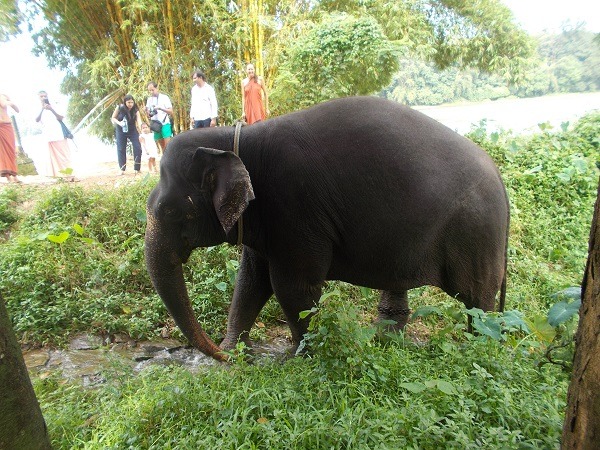
The temple can be visited year-round, but the highlight falls in March-April, during the month of Meenam in the Malayalam calendar, at the time of the Arattu festival. For ten days, the sanctuary becomes the centre of a series of processions with decorated elephants, Kathakali dance performances and public rituals. On the final day, the idol is carried in procession to the sea for a ritual bath on Varkala beach: this is the moment most followed by pilgrims.
Outside this period, Varkala's low tourist season (March to May) remains warm and humid, while the November-February window offers milder weather for combining a temple visit with the coast.
Practical information
The temple is located in Janardhanapuram, approximately 2 km from Varkala railway station and within easy walking distance of the beach. Opening hours follow the typical rhythm of Kerala temples: early morning and late afternoon, with a mid-day closure. Allow 30 to 60 minutes for your visit, longer during festival periods.
Local dress code applies: shoulders and legs covered, shoes removed before entering the enclosure. Photography is generally tolerated in outdoor courtyards but prohibited inside the main sanctuary. The temple is above all a living place of worship: maintain the discretion expected during pujas.
Nearby attractions
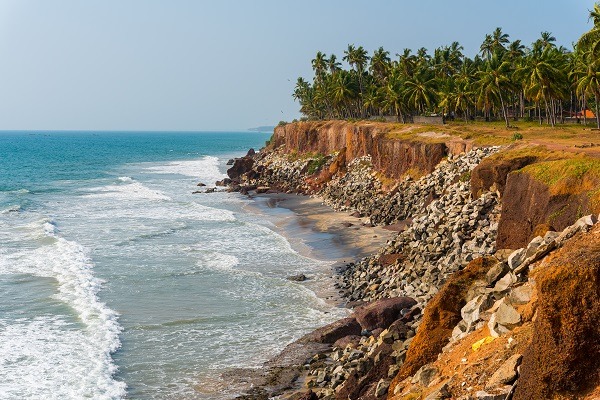
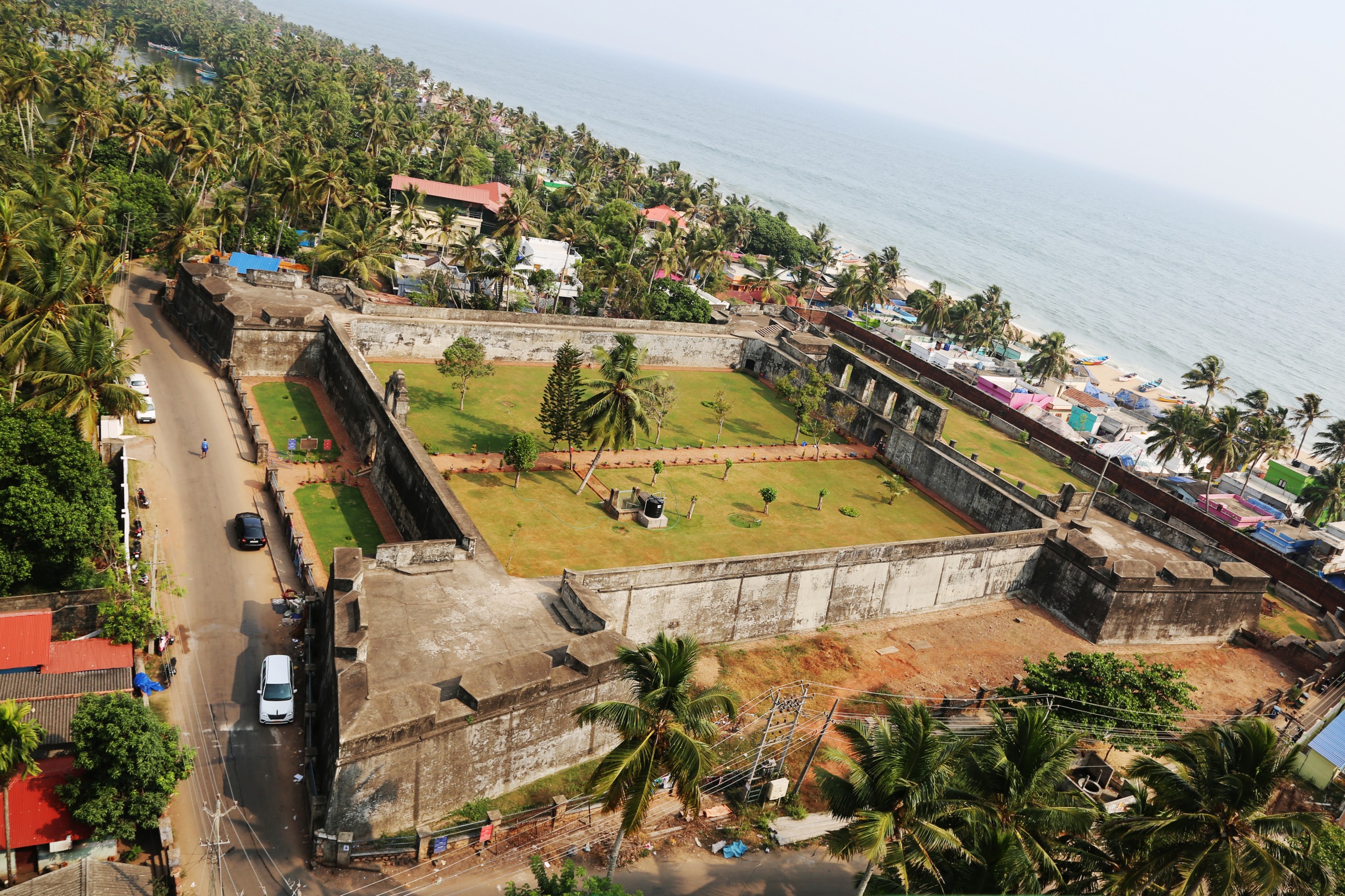
Varkala beach and its red cliffs are accessible on foot from the temple. Further south, Anjengo Fort, a former British colonial trading post, completes your visit with a chapter of modern Kerala coastal history. To contextualise Varkala, consult the destination page for Varkala.
Frequently asked questions
Frequently asked questions
Planning your trip
The Janardanaswamy Temple fits naturally into a Kerala itinerary combining Hindu heritage, beaches and backwater hinterland. To build a bespoke journey, consult our trips to India.
Interested in this visit?
We can include it in your personalised itinerary.