Akal Wood Fossil Park
Akal Wood Fossil Park
Located 17 km from Jaisalmer, Akal Wood Fossil Park preserves petrified tree trunks and Jurassic fossils across 10 km² of desert, a national geological monument since 1972.
About 17 km from the city center of Jaisalmer, in Rajasthan, the Akal Wood Fossil Park preserves a collection of fossils dating back over 180 million years across roughly ten square kilometers. This arid paleontological park, situated on the road to Barmer, bears witness to a time when the Thar region was covered in tropical forests.
Why visit Akal Wood Fossil Park
The site is neither a Mughal fort nor a carved temple: it is a geological outcrop where the desert has exposed petrified tree trunks and remains from the Jurassic period. For those interested in India's deep history—that of rocks and vanished ecosystems—a visit here usefully complements Rajasthan's heritage circuits. The park has been recognized as a national geological monument since 1972, making it one of the rare protected sites of this type in India.
Site history
In 1972, the Geological Survey of India (GSI) declared the site a national geological monument. The park's management fell to the GSI until 1985, when responsibility was transferred to the Rajasthan State Forest Department. Today, the park is managed by the Desert National Park authorities, who oversee its conservation and visitor facilities.
The fossils on display date from the Jurassic period: at that time, present-day Rajasthan formed a warm, humid coastal zone, ideal for dense vegetation that has long since vanished.
What to see on site
The park spans approximately 10 km² and contains:
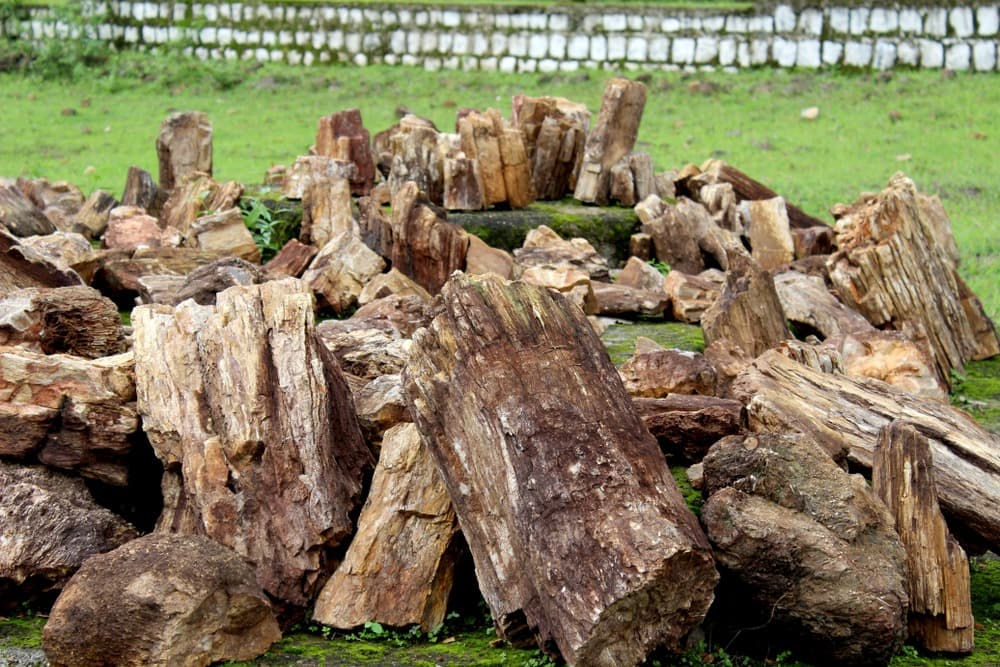
- More than 25 petrified tree trunks, including a dozen fossil logs aligned horizontally.
- Fossils of Ptilophyllum, Pterophyllum, horsetail relatives (close to modern equisetales), wood shells, and dicotyledonous gastropods from the Jurassic period.
- Rocky outcrops and largely bare ground that make the remains directly visible on the surface.
Near the entrance, several mud-brick huts with thatched roofs serve as a small museum space. They house fragments of dinosaur teeth and bones, mineralized fossils, and explanatory panels tracing Earth's geological history.
When to visit
The winter season, between November and March, is the best time to visit the park. The Thar climate is dry and daytime temperatures remain manageable, making it easy to explore the site on foot. From April to September, heat can exceed 40°C and makes a visit exhausting: it's best to avoid this season or come early in the morning.
Practical information
- Duration: allow 1 to 2 hours on site, depending on your interest in the museum exhibits.
- Entrance fee: modest entry, with a distinction between Indian residents and foreign visitors; a small additional fee applies for parking. Check current rates at the entrance.
- Hours: open during daylight, year-round. Exact hours may vary by season.
- What to bring: water, hat, and closed-toe shoes. The site is exposed with no shade.
How to get there
The park is located 17 km from Jaisalmer, on the road to Barmer (national highway heading southwest). Several options from the city:
- Taxi or car with driver: the simplest option, about 30 minutes travel time; possibility to combine with nearby sites.
- Auto-rickshaw: feasible for independent travelers, provided you negotiate a round trip with waiting time on site.
- Interstate buses heading to Barmer that pass nearby; you'll need to walk the remaining distance to the entrance.
No regular public transport serves the park directly: arrange a dedicated vehicle if traveling without a guide.
Nearby attractions
Akal Wood Fossil Park fits well into a day of excursions from Jaisalmer. You can supplement with:
- Amar Sagar Lake, an oasis with Jain temples just a few kilometers from the city.
- The fortified old city of Jaisalmer, with its carved havelis and inhabited fort.
- The dunes of Sam and Khuri, for a night in a Thar Desert camp.
Frequently asked questions
Frequently asked questions
No. It is a paleontological and geological park, not an archaeological one: you will find no human remains here, but plant and animal fossils dating from the Jurassic period.
One to two hours are sufficient to tour the petrified trunks, see the museum huts, and read the explanatory panels.
Yes, the terrain is flat and the walk is short. Fossils of wood and dinosaur bone fragments generally interest children, provided you visit outside the hottest hours.
Yes. On the road to Barmer, you can continue on to nearby desert villages or return to Jaisalmer to visit the fort and havelis on the same day.
Plan your trip
Akal Wood Fossil Park naturally fits into a Rajasthan circuit combining heritage and deserts. To build a custom itinerary incorporating Jaisalmer and its surroundings, explore our India travel experiences.

Interested in this visit?
We can include it in your personalised itinerary.