Bollywood, an introduction to Indian cinema
First, it's important to clarify that the term Bollywood refers only to films shot in Hindi (an official language of India alongside English). However, India has 18 official languages, and so there is a cinema for nearly each of these languages.
First, it's important to clarify that the term Bollywood refers only to films shot in Hindi (an official language of India alongside English). However, India has 18 official languages, and so there is a cinema for nearly each of these languages. We therefore speak of Kollywood (= Hollywood + Kodambakkam, a district of Madras where film studios are located), Tollywood for Telugu and Mollywood for Malayalam, etc.
Its history: From 1899...
Very shortly after its invention by the Lumière brothers in 1895, cinema arrived in India. The first Indian film, by Harischandra Bhatvadekar, was released in 1899. Gradually, cinemas opened and the phenomenon spread. But it was only around 1913, following the film Raja Harishchandra, that the Indian film industry truly began to take off...
... to today
For many years, Indian cinema has been the world's largest film producer (approximately 800 films per year compared to 500 in the USA). Although still relatively unknown in the "Western world," it is quite widespread in Maghreb countries, Réunion, and beyond. But increasingly, more people seem to be interested in these films... Is it simply a passing trend?
"The essence of Bollywood"
Perhaps... perhaps not. Of course, at first glance, any Westerner—raised on "proper" French and American cinema—who respects themselves will laugh at such naïveté. Love stories that always end well, wind in the hair, thunderclaps, songs, dances... everything is often quite over-the-top (except in some recent films that tend toward Westernization). One can stop at this "saccharine" side or try to look deeper, to understand this cinema that speaks to us. Of course, the plots offered are rarely very sophisticated or surprising, but this cinema carries other values. A sense of family, homeland, mutual aid, and tolerance are very much present... And one must learn to appreciate the different layers when watching a Bollywood film.
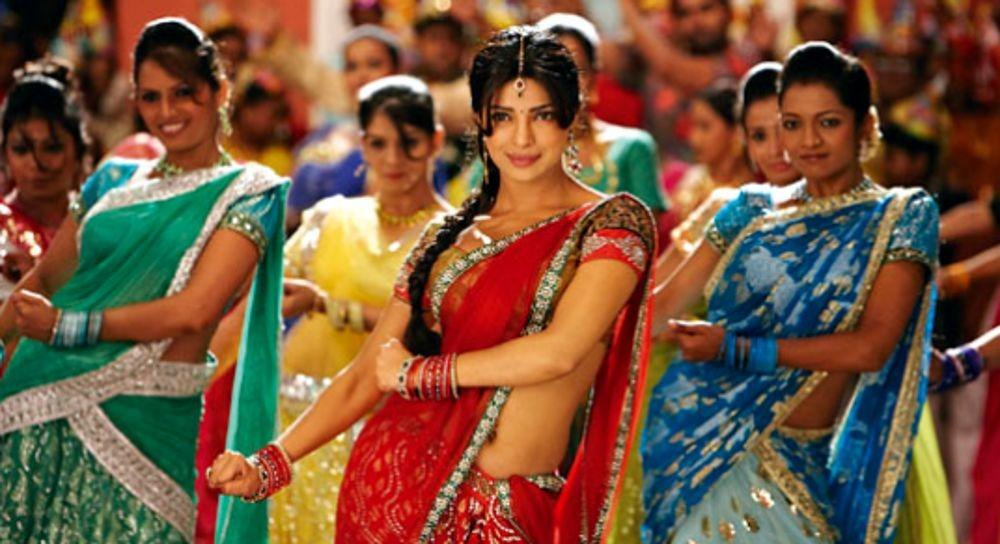
It's also important to consider that the Indian audience—on average much less affluent than us Westerners—has different expectations from a film than those we might have. A fairly simple example: a farmer who has worked hard to earn enough money for a cinema ticket instead of eating—and this is not unusual—would prefer lightness and escapism...
Moreover, the Indian film industry creates many jobs—not counting actors, directors, and all those directly involved in filmmaking: poster painters (and those who build their "structures"), cinema concession workers, musicians, dancers...
In short, when you try to watch these films with an open mind and a touch of irony, you can find truly wonderful things in all these films filled with vibrant colors, magnificent dances, and infectious music…