Guided Tour of the Taj Mahal for Photographers
Who hasn't dreamed of visiting India without discovering the unique beauty of the Taj Mahal? Travelers agree on this point: this tomb-garden is the most beautiful treasure of Mughal architecture and at the same time
Who hasn't dreamed of visiting India without discovering the unique beauty of the Taj Mahal? Travelers agree on this point: this tomb-garden is the most beautiful treasure of Mughal architecture and at the same time the most perfect testament to the omnipotence of the Muslim empire. Before visiting the Taj Mahal, discover our tips and tricks for capturing photographs of the famous mausoleum.
A bit of history…
When Mumtâz, the third wife of Shah Jahan, passed away in 1631, the emperor could not be consoled in his grief. To immortalize their love, he ordered the construction of a mausoleum. Shah Jahan called upon architects, goldsmiths, sculptors, and skilled engineers from Europe and Central Asia. The result was a sublime structure in white marble resting on a base of red sandstone, adorned with 4 minarets and a central dome of 74 meters. Described as "a solitary tear on the cheek of time" by poet Tagore and numbered among the seven wonders of the modern world, the Taj Mahal is an exceptional monument that should not disappoint lovers of stone or photography.
In the heart of Agra, three hours' drive from New Delhi, the mausoleum stands on the banks of the Yamuna River. Construction began in 1632 and ended in 1648.
Avoid the crowds at all costs
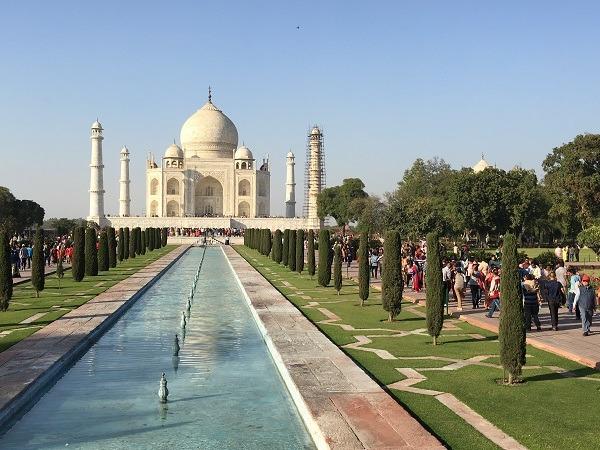
The Taj Mahal (literally "Palace of the Crown") is to India what the Sistine Chapel is to Italy. A site that every self-respecting photographer must visit! That said, between 10,000 and 15,000 visitors come here each day. You don't need to be a photography pro to realize that the beautiful white marble will lose its charm if there are too many people around. Our advice: only bring out your camera during the hours when the square is deserted or frequented by as few tourists as possible.
The best season to visit the Taj Mahal
We're firm on this point: winter is not recommended if you want a unique view of the Taj Mahal. Despite mild temperatures, the sky is wrapped in thick fog that completely hides the building and makes it difficult to highlight its white marble. The worst months to avoid are December, January, and February.
In summer, oppressive heat reigns (between 68°F and 99°F) in Agra. Also best avoided.
To pay homage to this Mughal heritage, the recommended season is spring, which begins in April and ends in June, or autumn, from September through early November.
Best time for photographing the Taj Mahal: sunrise and sunset
The Taj Mahal site is open to visitors every day except Friday. Visiting hours are from 6 a.m. to 7 p.m. Foreign tourists must pay an entrance fee of 1,000 Indian Rupees, equivalent to approximately $12 USD.
For a fully successful photo of the Taj Mahal, I recommend arriving at dawn. Be careful not to enter through the wrong gate. The East gate is crowded with tour buses, while the South gate opens later. Choose the West gate and arrive well before the site opens. If you arrive at 8:30 a.m., it's difficult to avoid the flow of tourists that will spoil your photographic result.
Arriving early improves image quality by taking advantage of the rosy morning light. The stone marquetry of the mausoleum stands out clearly, illuminated by the rising sun.
The visit is equally magical at sunset. The Taj Mahal is breathtakingly beautiful when its white marble dome is bathed in twilight, with play of shadow and light. The only drawback: the square is crowded at this moment, and the long line of tourists will appear in the photo.
The best viewpoints for photographing the Taj Mahal
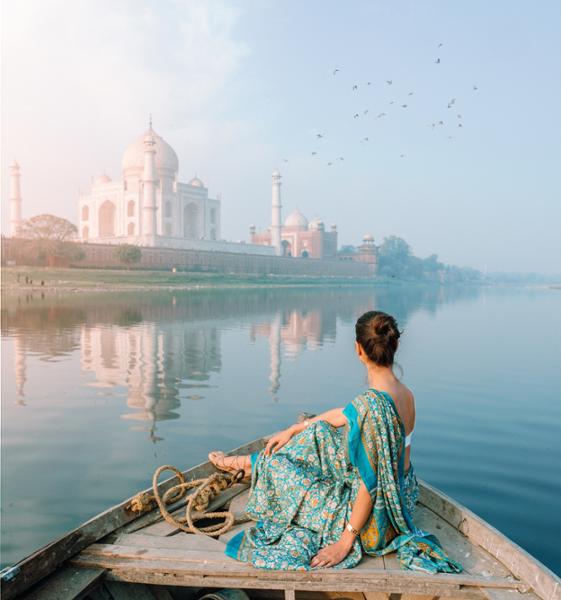
To visit the Taj Mahal affordably while ensuring a unique viewpoint, the trick is to explore only its exterior. Plus, this will spare you from facing the uncontrollable wave of tourists.
On the other side of the Yamuna River, photographers will have a splendid view of the Taj Mahal. Head to the Mehtab Bagh gardens (expect 200 Indian Rupees, around $2.50 USD per person), a wooded park of approximately 35 acres that faces the mausoleum. You can be sure of getting a beautiful image provided the sun cooperates!
Another trick: take a boat ride on the river, in the manner of a 17th-century court lady, then descend to the foot of the mosque.
On the east wing of the Taj Mahal stands an abandoned watchtower rarely visited by tourists. It's also one of the best spots to photograph the immense funeral mausoleum.
Photography regulations
There is one rule applicable to all visitors: backpacks or camera bags are forbidden. Bring only the essentials in your belongings. Your phone, your wallet, a shawl, sunglasses, a camera, water, and a light snack. Cigarettes, alcohol, pens, lighters, and high-tech items apart from your phone are prohibited.
The interior of the site is not accessible for photography. Beware of violators!
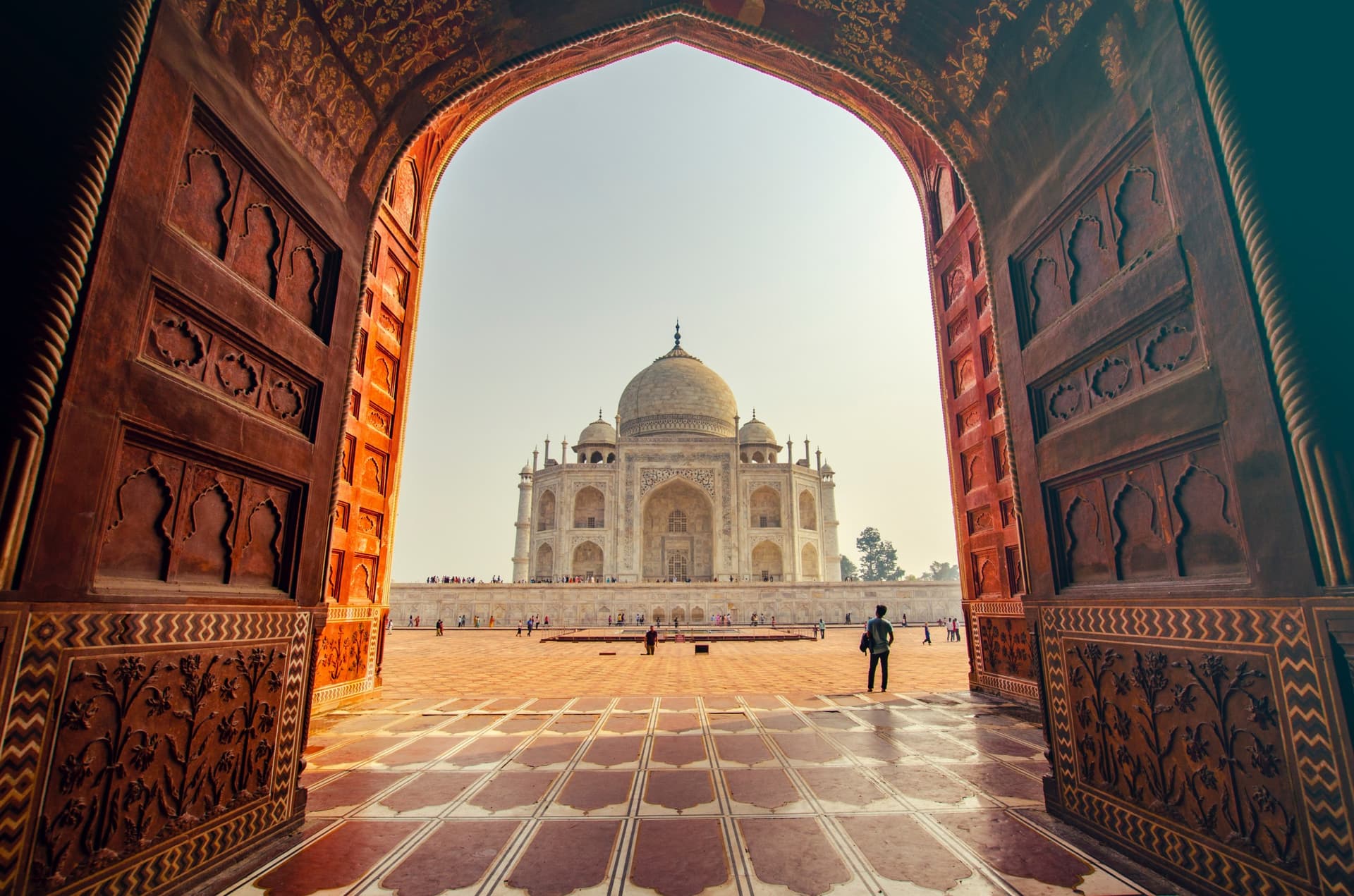
The white marble mausoleum, the great gate "Darwaza-i-rauza" that provides access to the gardens, and the entrance gate of the mosque are the attractions with the most photographic interest. Lovers of towers, bas-reliefs, and floral motifs will have a wonderful time.