India's National Parks
·
In 1900: 40 to 50,000 Indian tigers roamed India. Today barely 2,000 are counted, numbers continue to decline, and the species is listed on the long red list of threatened species with extinction.
India is home to more than 100 national parks. Antelopes, deer, fallow deer, monkeys, elephants, buffalo, rhinoceros and of course Bengal tigers roam freely in these sanctuaries. However, do not expect the spectacular wildlife displays of African parks with their countless herds. High population density, slash-and-burn agriculture, extensive hunting… the 19th and first half of the 20th centuries witnessed a drastic decline in wildlife.
Modern India, aware of the value of this fauna, has implemented strong measures to preserve it. Here is the list of what we consider the best Indian national parks :
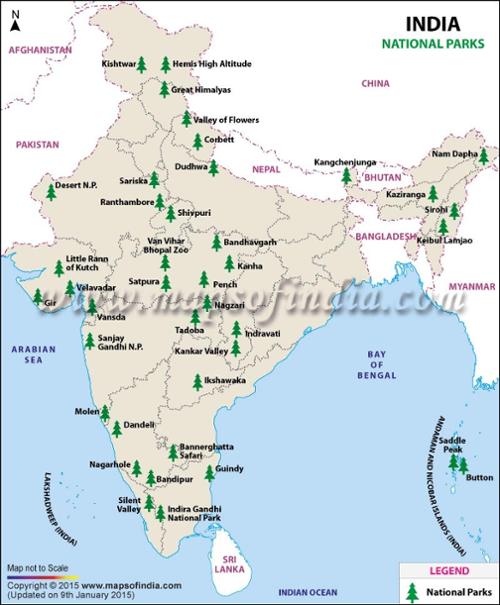
Corbett (Uttarakhand) : the oldest, founded in 1936. Located midway between Delhi and the Garwhal Himalayas. Expect about seven hours' drive from Delhi.
Ranthambore (Rajasthan) : the most accessible from Delhi. Stunning landscapes and diverse wildlife. Regular tiger sightings.
Bandhavgarh (Madhya Pradesh) : renowned for its high concentration of tigers. 8 hours' drive south of Varanasi (Benares). Access is challenging, but "the game is worth the candle".
Kanha (Madhya Pradesh) : landscapes immortalized by Rudyard Kipling in "The Jungle Book"
Kaziranga (Assam) : on the banks of the Brahmaputra. Home to a significant population of one-horned rhinoceros.
When to Visit India's Parks
Ideal period: March to May (dry season). Animals concentrate around the few water sources. Lower vegetation makes them easier to spot.The Royal Bengal Tiger
In 1900: 40 to 50,000 Indian tigers roamed India. Today barely 2,000 are counted, numbers continue to decline, and the species is listed on the long red list of threatened species with extinction.
Its habits make it difficult to observe: a nocturnal and solitary animal par excellence, each male individual covers a territory of at least 100 km². It dislikes sharing its domain with other animals. To discourage intruders, all tigers mark their territory by spraying strong secretions that signal their presence.
Distribution map of Indian parks: