The Country's Demographics
With nearly 1.3 billion inhabitants (17.5% of the world's population), half of them under 25 years old, India ranks second in demographic size behind China. By 2025, or even sooner, it will
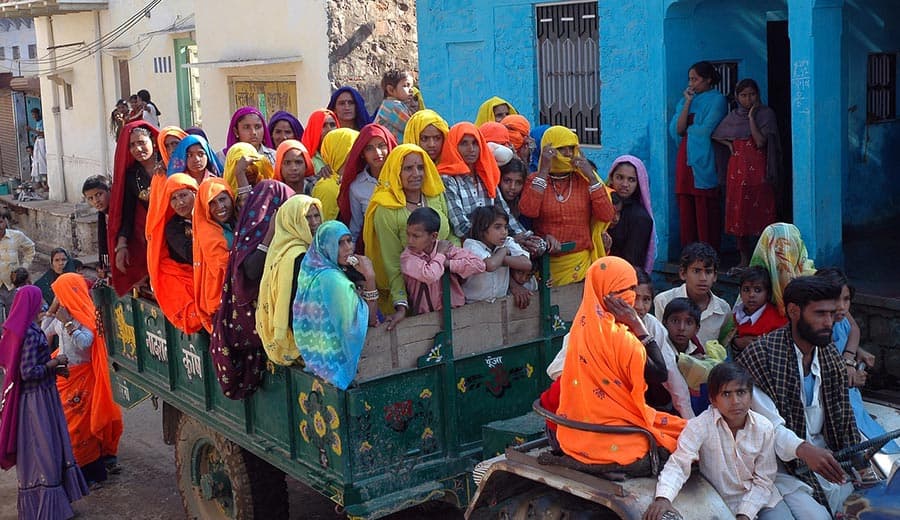
With nearly 1.3 billion inhabitants (17.5% of the world's population), half of them under 25 years old, India ranks second in demographic size behind China. By 2025, or even sooner, it will claim the top position. While China has more or less managed its demographic development (the one-child policy remained in place until 2016), the same cannot be said for India. Since 1951, the growth rate has fluctuated between 21 and 25%, rising from 360 million to 1.260 billion. India places emphasis on education and relies on family planning campaigns to slowly decrease the birth rate. The country must face the challenge of feeding, educating, and housing an exceptionally high number of children.
A Shortage of Women
Troublesome figures: for every 1,000 male births, there are only 930 female births. Forty million Indians will never find a partner.
Upon marriage, a daughter leaves her family to live in her husband's household. This is compounded by the payment of a dowry, which benefits the groom's family. A son ensures the continuity of the household, and his earnings directly benefit his family.
As a result, historically, Indians have preferred to have sons. Infanticide at birth and mistreatment of girls—the imbalance has deep roots.
The arrival of ultrasound technology has worsened the phenomenon: abortion became widespread among wealthy social classes. Though banned since 1994, prenatal examinations to determine fetal sex and subsequent abortions unfortunately continue to be practiced.