The "Magic Train" Saving Lives
The Lifeline Express train, nicknamed the "Magic Train", travels across India providing free medical care to rural populations. Equipped with operating theaters and cutting-edge medical equipment, its
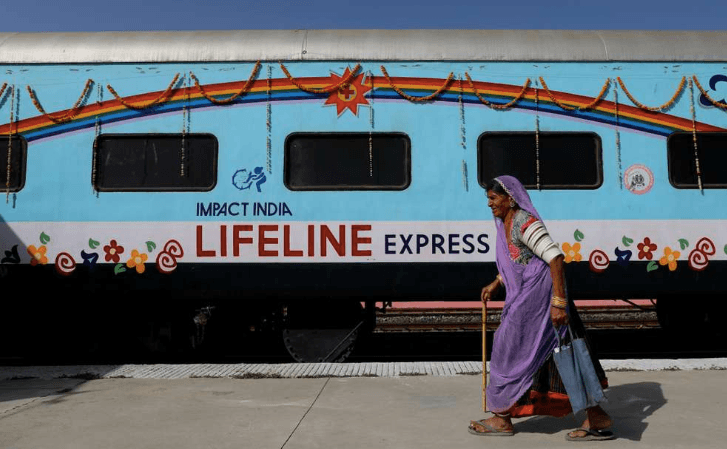
The Lifeline Express train, nicknamed the "Magic Train", travels across India providing free medical care to rural populations. Equipped with operating theaters and cutting-edge medical equipment, the doctors and nurses aboard have, over 27 years of operation, saved the lives of more than a million people.
Operating across India's vast railway network, the Lifeline train moves from city to city on branch lines and stops for a week at each station to offer local residents surgical operations and care provided by healthcare professionals from the subcontinent. The team of this mobile hospital delivers services that in most cases exceed the capacity of local medical centers. Launched in 1991 by the Impact India Foundation, the train has welcomed over 80,000 surgeons and hundreds of thousands of nurses. The operations help restore mobility, hearing, and sight, among other benefits. The train now comprises seven main cars following the addition of two more in 2016 to address cancer treatment and pediatric diseases. Similar vehicles have since been established in South Africa and China.
State-of-the-Art Equipment
Lifeline was not the first train of its kind. Far from it. Wars first gave rise to this concept. The Crimean War in 1855 witnessed mass casualties. The British Army used railway lines to supply soldiers with supplies and ammunition. The trains used then also served to evacuate the wounded to bases. Care was provided, but the equipment and expertise of these newly trained nurses were far from adequate. The idea was revived in 1861 during the American Civil War, then during the Italian campaign and the Franco-Prussian War. But these trains were not originally equipped to treat the wounded—merely an emergency measure.
From World War I onward, such vehicles were dedicated exclusively to medical purposes. During the First Battle of Ypres in particular, in just one month, the British sent hundreds of medical trains to assist 100,000 soldiers at the front. History repeated itself on a much larger scale during World War II, when all countries organized medical trains on their local railways to care for the war wounded. The concept gradually faded with the arrival of air transport.
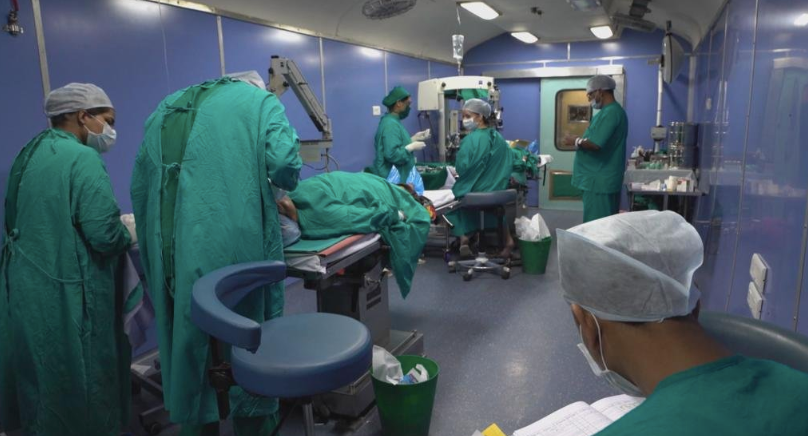
For over a century, these medical locomotives operated at full capacity only during wars, during absolute crises. Malta, which after World War II kept these vehicles running throughout the country, is an exception. But Lifeline is ultimately the world's first hospital train equipped as such and operating on a daily basis. State-of-the-art equipment, cutting-edge medical technologies that enable doctors to provide unparalleled quality care in such circumstances.
Thibault Bourru