In search of silk through the streets of Benares
Known for its ghats and cremations, Benares or Varanasi is also renowned as the city of silk. Its production is a major pillar of the local economy alongside tourism. A report from the city of Shiva.
Known for its ghats and cremations, Benares or Varanasi is also renowned as the city of silk. Its production is a major pillar of the local economy alongside tourism. A report from the city of Shiva to better understand the transformation process, from simple thread to the fabric of kings.
You need only lose yourself in the narrow streets of Bhelupura to grasp the scope of it. In one of the rare parts of Varanasi where you're unlikely to encounter a tourist, weavers abound. Glance through the windows as you pass the houses, keeping an eye out for the cow dung and debris littering the path, and you'll spot them.
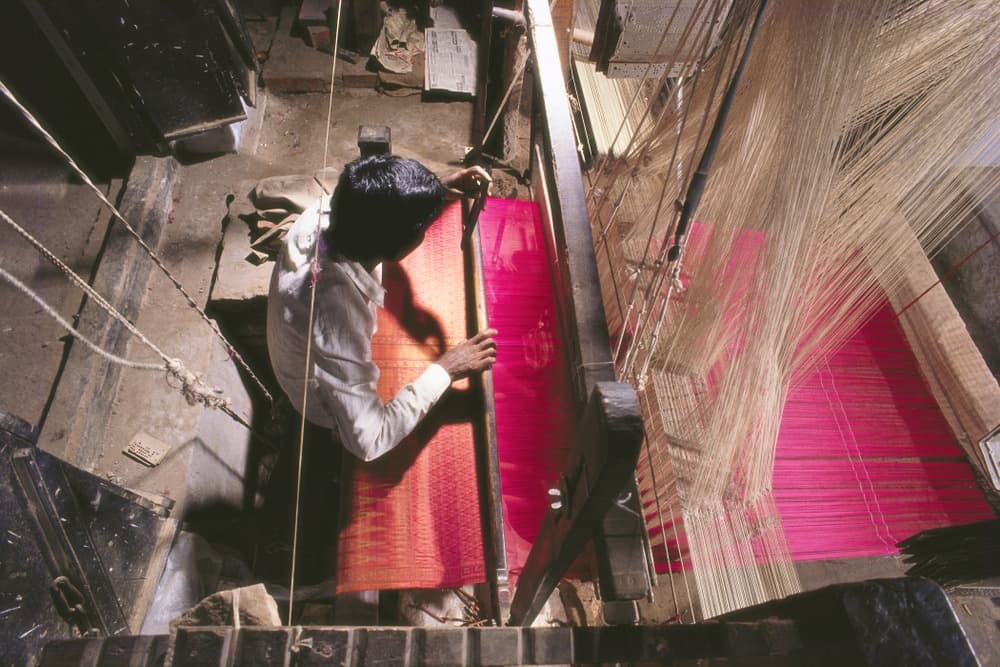
No more than five per room, they work the silk thread meticulously and patiently, positioned as close as possible to natural sunlight. Power cuts are frequent here. These workers produce thousands of meters of fabric daily, destined to become saris adorning Indian brides, scarves, or even duvet covers.
Beyond Hinduism, Varanasi is also the capital of silk. In certain neighborhoods, like Bhelupura, the industry sustains most households. Trades are passed down from father to son. Weavers are found almost exclusively in Muslim families, with Hindus taking charge of pattern design and selling the finished product. It is then distributed throughout Inde and even abroad, where its price sometimes multiplies tenfold before reaching its final destination.
Coming here offers an opportunity for some to strike a good deal. Silk importers arrive to negotiate prices and quantities directly. The passing tourist often benefits as well, leaving local shops with quality fabrics for mere rupees. Three euros for a pure silk scarf—quite the bargain.
Bal Krishiana Mehrotra is therefore a merchant of dreams. At just 25 years old, he holds the reins of the company founded by his grandfather in 1954. Or was it 1956? He's not entirely certain. But at least, he knows his silk well.
At Mehrotra Silk Factory, tradition is unwavering. Bal Krishiana now manages it, following in the footsteps of his father and grandfather. Thanks to these three men, their firm has become the preferred destination for tourists in Varanasi. Proudly, he shows us a brochure published by the local tourism office. His shops rank first on the list of "government approved" silk vendors, recognized by the government. "It's because we've never had complaints, because we're reputable, and because we're a good family," he explains.
Only three other establishments benefit from government approval in Varanasi. To obtain it, one must deposit 50,000 rupees with the tourism office. This deposit is meant to compensate buyers who might complain about poor product quality. Because at Mehrotra and these privileged competitors, they pride themselves on selling only 100% silk. Unlike other merchants who, as Bal Krishna explains, mix their silks with polyester or cotton.
To test the quality of his product, the vendor asks us to choose one of the many scarves laid out before him. He takes a lighter and brings it close to the fringe. The thread blackens and emits smoke. Bal Krishiana asks us to lean in: "Can you smell that? It's like burning hair." Then he does the same with a cotton fabric and the thread catches fire, with the smell of burning paper. "That's how you see the difference," he concludes.
Clearly, our interlocutor knows how to sell his product well. He speaks English fluently, readily taking his time to explain where his fabrics come from. In the shadow of his father, he learned well how to build relationships with clients. While he deals extensively with foreign wholesalers—he keeps over a hundred business cards from his commercial partners in a folder—tourists are equally welcome at the brand's two shops in Varanasi.
It is for them that Bal Krishiana and his ancestors built a factory in the city, so visitors can watch silk workers at their craft. But it is merely a showcase where a maximum of five people work during peak season. The others, roughly forty, would be located in a village ten kilometers away. A version contested by Praveen Pathak, a 19-year-old guide with the confidence of a seasoned veteran. "Here, the vendors will always tell you they have a factory outside the city," he says. "But actually, the silk is always made here, in the houses. It's self-employed people who weave it and then resell it to the merchants."
One thing is certain: nothing is automated. Even though profitability suffers considerably as a result, everything is done by hand using machines that seem straight out of a history book. Bal Krishiana justifies this choice with a metaphor: "If you had to choose between a meal from a hotel and one prepared by your mother, which would you pick?" The argument is irrefutable.