Indian Painting
The art of painting traces back to prehistoric periods. Numerous styles and schools exist throughout Inde, yet two stand out as the most celebrated: miniature art and Buddhist Thangka.
Miniatures
The earliest known Indian miniatures are Buddhist in origin (depicting primarily the life of Buddha) and Jain. When the Mughals invaded Inde and brought with them a distinctive Persian-influenced style, Hindu and Muslim painters began to cross-pollinate each other's work. Moreover, engravings brought from the West by Jesuit missionaries introduced additional elements, notably perspective. Today, this flourishing art form continues to produce remarkably beautiful miniatures, particularly in Rajasthan, most often executed on paper supports.
Bengal (not to be confused with Bangladesh!) and Calcutta dominate the production of contemporary art painting.
Thangka
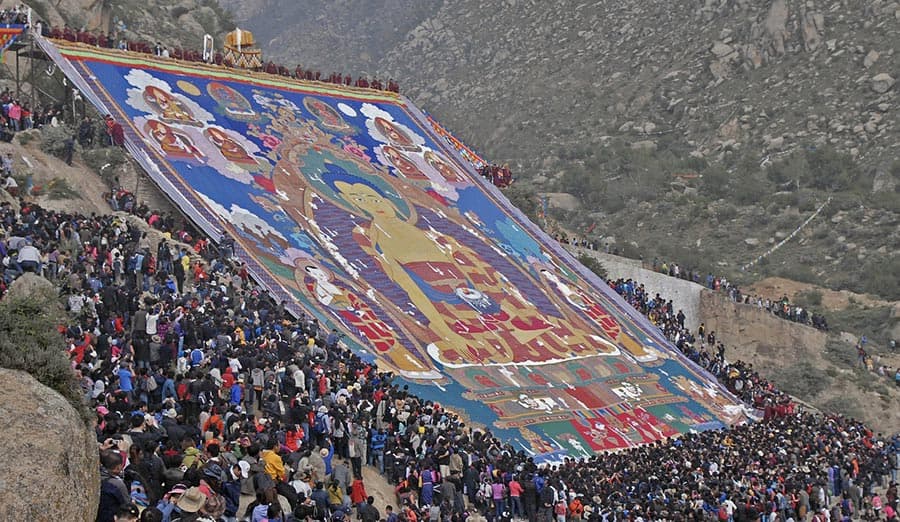
Intimately connected to Tibetan Buddhist culture, the art of thangka spans the entire Himalayan region. From simple rolled paper sheets to immense canvases several meters in length, unfurled once yearly along monastery walls, every scale imaginable exists. The painted motifs illustrate the deities of Buddhism or symbolic representations (wheel of life, mandala) and most often serve as a support for meditation. The highly codified designs, initially sketched in pencil, are then illuminated with vivid colors. The major contemporary schools of thangka production are found primarily in Nepal, with a handful of independent artists working in Ladakh.