Nagarjuna Konda
Nagarjuna Konda
Archaeological island at the heart of Nagarjuna Sagar Lake, Nagarjuna Konda preserves Buddhist remains from the Ikshvaku dynasty, relocated before the dam's flooding in the 1960s.
Nagarjuna Konda — literally "hill of Nagarjuna" — is an archaeological museum island at the heart of the artificial Nagarjuna Sagar Lake in Andhra Pradesh. This major Buddhist archaeological site, dating from the 3rd–4th centuries, houses the remains of stupas, monasteries and sculptures that were relocated before the dam's flooding in the 1960s. A visit here combines archaeology, lakeside landscape and the history of the Ikshvaku empire.
Practical information at a glance
- Access: the island is accessible only by boat from Nagarjuna Sagar; crossings are organized by the Archaeological Survey of India (ASI).
- Admission: paid entry (protected ASI site); reduced rates for Indian nationals.
- Recommended duration: half a day, including the boat crossing.
- Dress code: no strict dress restrictions, but respectful attire is recommended at worship sites.
- Closure: the site is closed on Fridays.
What to see
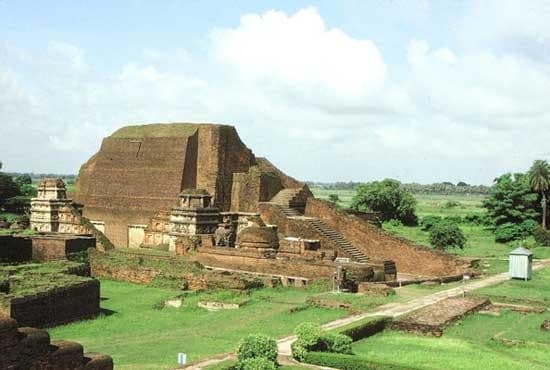
The island museum houses Buddhist sculptures in white limestone, narrative panels illustrating the life of Buddha, and relics from excavations conducted before the original site was flooded. The reconstructed stupas and monastery foundations allow visitors to visualize the layout of an Ikshvaku monastic center.
- Partially reconstructed stupas and chaityas
- Limestone sculptures from the 3rd–4th centuries
- Archaeological museum on the island with ASI collections
- Panoramic views over Nagarjuna Sagar Lake and the dam
History and context
The Krishna Valley once sheltered Vijayapuri, capital of the Ikshvaku dynasty (3rd–4th centuries). This kingdom was among the first to adopt Mahayana Buddhism in the Deccan. The construction of the Nagarjuna Sagar Dam (inaugurated in 1967) submerged the valley; the ASI undertook the relocation and reconstruction of the most important monuments on the hill, which became an island after the reservoir was filled.
The site takes its name from the Buddhist philosopher Nagarjuna, founder of the Madhyamaka school, who is believed to have resided in the region.
Highlights of the visit
The archaeological museum
Housed in a modest building on the island, it displays narrative friezes, Buddha statues and inscriptions in Prakrit. The most remarkable pieces illustrate scenes from the Buddha's life in a style characteristic of the Amaravati school.
The reconstructed stupas
Several stupas have been reassembled stone by stone on the island's plateau. Their drum-shaped circular architecture, typical of Buddhist Deccan, contrasts strikingly with the blue of the surrounding lake.
The boat crossing
The journey from Nagarjuna Sagar offers a progressive view of the island and the dam, one of the world's largest masonry dams. The crossing is an integral part of the experience.
Photography tips
Morning light, just after the first boat arrives, is most favorable for photographing the stupas without crowds. The contrast between white stone and the blue-green lake is particularly striking from the island's higher elevations. Avoid midday in summer: glare off the limestone is intense.
Location and access
Nagarjuna Konda is located in Palnadu district, Andhra Pradesh, approximately 160 km from Hyderabad. The nearest town is Nagarjuna Sagar, the departure point for boats. From Hyderabad, you can reach Nagarjuna Sagar by bus or car. No accessible access for those with reduced mobility is guaranteed on the island due to uneven terrain.
The nearby site of Amaravati, another major Buddhist center in Andhra Pradesh, is located approximately 100 km to the southeast.
Nearby attractions
- Amaravati — grand Buddhist stupa and archaeological museum on the banks of the Krishna, approximately 100 km away.
- Nagarjuna Sagar Dam — one of the world's largest masonry dams, visible from the boat.
- Hyderabad — regional capital with the Charminar, Golconda and a vibrant food scene, approximately 160 km away.
Frequently asked questions
The dry season, from October to March, is the most pleasant. Summers (April–June) are very hot in the Deccan. The monsoon (July–September) can disrupt boat crossings.
No, the site is closed on Fridays. It is advisable to check boat schedules with the ASI or your local agency before departing.
Yes, the two Buddhist sites in Andhra Pradesh complement each other well. Plan an additional day for Amaravati, which is accessible from Vijayawada.
ASI regulations generally prohibit photography inside museum galleries. Outside, on the stupas and the island, photography is permitted.
Half a day is sufficient for the island and museum. Including the journey from Hyderabad, plan for a full day or an overnight stay in Nagarjuna Sagar.
Photos
Want to discover this destination?
Our local advisors design your tailor-made trip.