Mathura
Mathura
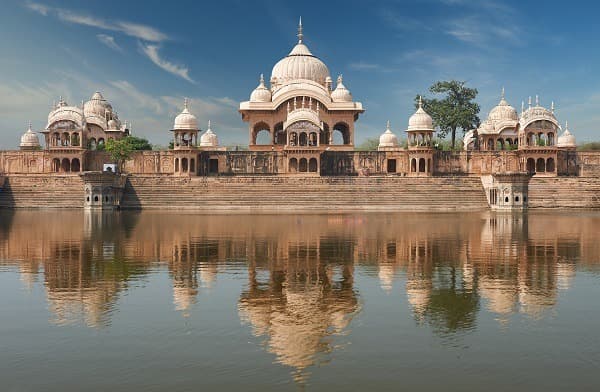
Mathura, on the banks of the Yamuna River, is one of the seven sacred cities of Hinduism and the legendary birthplace of Krishna. Animated ghats, historic temples, and an atmosphere of devotion make it a major spiritual stopover in Uttar Pradesh.
Mathura stretches along the western bank of the Yamuna, approximately 150 km south of Delhi. A holy city among Hinduism's seven sacred sites, it is revered as the birthplace of Krishna. Its bustling ghats, ancient temples, and colorful bazaars make it a major spiritual and cultural stop in Uttar Pradesh, visited by millions of pilgrims each year.
Practical Information at a Glance
- Access: well-connected railway station from Delhi (around 2 hours by express train), Agra (30–40 minutes), and Jaipur.
- Recommended duration: 1 to 2 days for the ghats, main temples, and Vrindavan.
- Dress code: clothing covering shoulders and knees is mandatory in temples.
- Shoes: must be removed at the entrance to all places of worship.
- Alcohol and meat: prohibited in the sacred city.
- Best time to visit: October to March (manageable heat); Janmashtami (Krishna's birthday, July–August) draws massive crowds.
What to See
The riverfront is the heart of religious life: roughly twenty ghats where pilgrims and priests gather from sunrise to sunset. The Krishna Janmabhoomi, a complex marking Krishna's presumed birthplace, is the most visited site. The Dwarkadhish Temple, built in the 19th century, impresses with its frescoes and Rajput architecture. The Government Museum of Mathura houses a collection of sculptures from the Mathura school, among the finest in India.
History and Context
Mathura has been inhabited since at least the 3rd century BCE; it was a Buddhist and Jain center before becoming the spiritual capital of Krishna worship. The Mathura artistic school, active between the 1st and 6th centuries, produced some of the earliest anthropomorphic representations of the Buddha. The city suffered several destructions, notably under Mahmud of Ghazni in the 11th century and under Aurangzeb in the 17th century, which explains the prevalence of temples rebuilt in the 18th and 19th centuries.
Highlights of Your Visit
The Ghats of the Yamuna
The Vishram Ghat is the most sacred: Krishna is said to have rested here after killing the demon Kansa. The evening aarti ceremony, with oil lamps and chanting, creates a moving atmosphere. A boat ride at sunrise allows you to see all the ghats from the river.
Krishna Janmabhoomi
This religious complex houses the prison cell where Krishna is believed to have been born. Access is subject to strict security screening; cameras and phones are often prohibited inside. Arrive early to avoid queues.
Dwarkadhish Temple
Founded in 1814, this temple dedicated to Krishna in his form as the "Lord of Dwarka" is particularly lively during Holi and Janmashtami celebrations. Its painted columns and inner sanctum deserve careful attention.
Government Museum
Housed in a colonial building, it brings together red sandstone sculptures from the Kushan and Gupta periods. An hour is enough to tour it; labels are in Hindi and English.
Etiquette and Visiting Rules
- Remove your shoes before entering any temple or sacred ghat.
- Dress modestly; shoulders and knees must be covered.
- Photography is prohibited inside the Krishna Janmabhoomi; check rules at each temple.
- Avoid turning your back to idols during ceremonies.
- Do not consume alcohol or meat within the sacred city.
- Speak softly during prayers and aartis.
Photography Tips
The golden light of sunrise over the ghats is the most beautiful. Position yourself in a boat on the Yamuna to frame the ghats in perspective. The evening aarti offers stunning reflections of flames on the water. Always ask permission before photographing pilgrims or priests.
Location and Access
Mathura is located in Uttar Pradesh, approximately 150 km south of Delhi and 55 km north of Agra. Mathura Junction railway station is an important transport hub. Rickshaws and tuk-tuks handle local transportation. Vrindavan, a neighboring sacred city also linked to Krishna, is accessible in 15 minutes by rickshaw. Agra and the Taj Mahal can easily be visited as a day excursion.
Nearby
- Vrindavan — the city where Krishna spent his childhood, dotted with hundreds of temples including the famous Banke Bihari.
- Agra — the Taj Mahal and Agra Fort, less than an hour by train.
- Fatehpur Sikri — a UNESCO-listed abandoned Mughal city, approximately 40 km from Agra.
- Govardhan — sacred hill that Krishna is said to have lifted according to mythology, an active pilgrimage site.
Photos
Want to discover this destination?
Our local advisors design your tailor-made trip.