Mankombu
Mankombu
A river island in Alappuzha district, Mankombu reveals the polder rice fields of Kuttanad, cultivated below sea level, and authentic village life along the canals of Kerala's backwaters.
Mankombu is a river island in Alappuzha district, at the heart of Kerala's backwaters. Surrounded by branches of the Pampa River, it is known as one of India's first agronomic research centers for rice. Far from conventional tourist circuits, it offers an authentic glimpse of Kerala's rural life: submerged rice paddies, silent canals and traditional wooden architecture.
What to see there
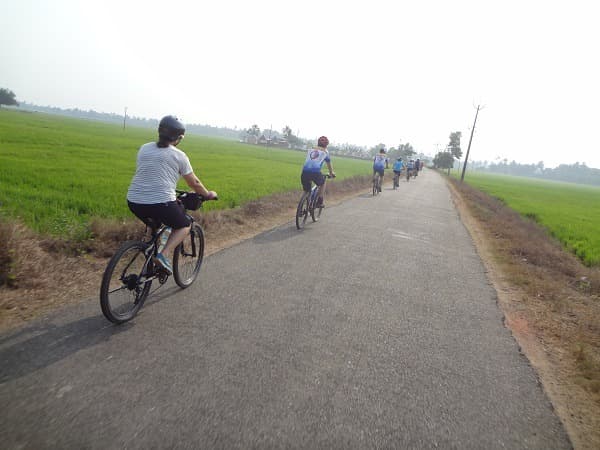
The landscape is dominated by rice fields in water (kuttanad), cultivated below sea level — an agricultural technique that is rare worldwide. Earthen dykes separate the plots from the canals. You'll spot traditional stilt houses, fishing boats and, in season, herons and cormorants along the banks.
- Rice research station: one of Kerala's oldest, linked to improving local rice varieties.
- Canals and backwaters: navigable network connecting Mankombu to neighboring villages in Alappuzha.
- Local temples: several small Hindu temples dot the island, active during local festivals.
History and context
Kuttanad, of which Mankombu is a part, is nicknamed "the granary of Kerala". The region has practiced polder agriculture for centuries: lands are drained by pumping to cultivate rice, then re-flooded. This technique has earned Kuttanad recognition by the FAO as an ingenious system of the Global Importance Agricultural Heritage Systems (GIAHS).
Highlights of the visit
Boating on the canals
Renting a small boat allows you to follow the dykes and observe the rice fields up close. Early in the morning, the low light on the water and light mists make the landscape particularly striking.
Observing polder agriculture
Seeing water pumps in operation and plots cultivated below sea level is a concrete and rare experience. Local farmers sometimes accept explaining their methods to curious visitors.
Village life
Morning markets and canal-side ghats offer a window into daily life: fishermen returning home, women doing laundry, children crossing by boat to reach school.
Photography tips
Light is optimal early in the morning, between 6 and 8 a.m., when mist hovers over the canals. Reflections of coconut trees in the water and silhouettes of fishermen are the strongest subjects. Avoid midday: the light is harsh and agricultural activities slow down. Always ask residents' permission before photographing them.
Location and access
Mankombu is located about fifteen kilometers southeast of Alappuzha (Alleppey). Access is primarily by road from Alappuzha, then possibly by boat on the canals. The nearest town with a railway station is Alappuzha, connected to Kochi and Thiruvananthapuram. There is no formal tourist infrastructure on the island; it is advisable to organize from Alappuzha.
Around the area
- Alappuzha (Alleppey) — departure point for houseboats and capital of Kerala's backwaters.
- Kuttanad — polder agricultural region of which Mankombu is one of the emblematic villages.
- Ambalappuzha — Sri Krishna temple famous for its rice pudding prasadam, a few kilometers away.
- Pathiramanal — bird island with migratory birds in Vembanad Lake, accessible by boat.
Frequently asked questions
The dry season, from October to February, offers the best conditions: pleasant temperatures and navigable canals. Avoid the monsoon (June-August) when roads and some canals may be flooded.
The road from Alappuzha is the simplest way, by taxi or auto-rickshaw. Boat connections exist on the canals, but schedules vary by season; ask locally.
Accommodation options on the island are very limited. It is preferable to stay in Alappuzha and visit Mankombu for the day, or book a houseboat that can navigate the surrounding area.
Yes. A well-organized day trip from Alappuzha allows you to visit Mankombu in the morning, then head to Ambalappuzha or take a boat to Pathiramanal in the afternoon.
As in any Hindu temple in Kerala, remove your shoes before entering, dress modestly (shoulders and knees covered) and ask permission before photographing the interior.
Photos
Want to discover this destination?
Our local advisors design your tailor-made trip.