Samiti Lake
Samiti Lake
A high-altitude lake on the Singalila Ridge in West Bengal, Samiti Lake is a natural waypoint on the Sandakphu–Phalut trek, surrounded by rhododendrons and Himalayan forests.
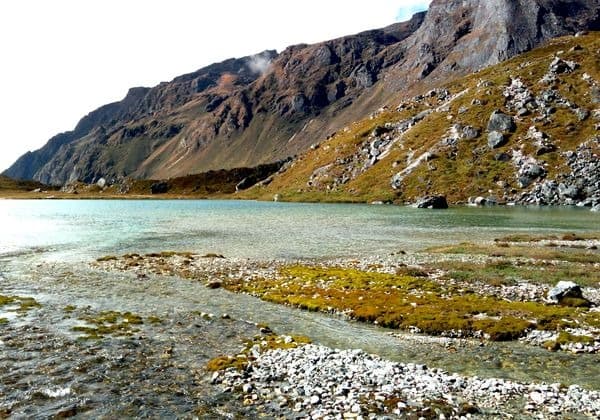
Samiti Lake is a small alpine lake nestled on the Singalila Ridge within Singalila National Park in West Bengal. Situated at approximately 3,600 metres, it lies on the trekking trail connecting Sandakphu to Phalut. Framed by rhododendrons and coniferous forests, it serves as a natural stop on one of the most popular trekking routes in northeast India.
Practical Information at a Glance
- Access: on foot only, via the Sandakphu–Phalut trekking trail within Singalila National Park
- Permit: national park entry permit required for all foreign and Indian visitors
- Recommended duration: 30 to 60 minutes rest stop during the trek; campsites are established nearby
- Gear: mountain trekking equipment essential; extremely cold temperatures at altitude
- Best season: April–May (rhododendrons in bloom) and October–November (clear skies, Himalayan views)
What to See
Samiti Lake is a calm body of water reflecting the forested ridges surrounding it. In season, red and pink rhododendrons frame its shores. On clear days, the snow-capped peaks of the Himalayan range—including Kangchenjunga—appear as a backdrop. Local wildlife includes musk deer, red pandas, and numerous bird species native to the Singalila ecosystem.
History and Context
Singalila National Park, established in 1986, protects the ridge frontier between India, Nepal, and Bhutan. The trail bordering Samiti Lake has been traversed for decades by trekkers seeking to reach Sandakphu (3,636 m), West Bengal's highest peak, and Phalut (3,600 m). The lake itself remains a natural site without heavy tourism infrastructure, preserving its wild character.
Highlights of a Visit
Himalayan Reflections
On clear days, the lake's surface mirrors the surrounding peaks. This phenomenon is most pronounced early in the morning, before wind ripples the water.
Rhododendron Bloom
In April and May, the rhododendron forests bordering the trail reach full flowering. Species such as Rhododendron arboreum and Rhododendron grande dominate the landscape around the lake.
Wildlife Observation
The red panda (Ailurus fulgens) inhabits the park, though it remains elusive. Quiet mornings near the lake improve chances of spotting one. Birds—notably Satyr pheasants and various thrush species—are more easily spotted.
Photography Tips
Morning light, before 9 a.m., offers the best conditions: often clear skies, sharp reflections on water, light mist in the valleys. In the afternoon, clouds frequently obscure the peaks. Avoid flashlights or loud noises to prevent disturbing wildlife. Wildlife photography is permitted, but the park strictly forbids any disturbance of animals.
Location and Access
Samiti Lake lies within Singalila National Park in Darjeeling District, West Bengal. The usual trek starting point is Maneybhanjang, accessible from Darjeeling by road. The trail passes through Tumling, Kalipokhri, and Sandakphu before reaching Samiti Lake on the route to Phalut. No motorized vehicles can access the lake; only foot trekkers can reach it. PMD accessibility is nonexistent due to mountainous terrain.
Nearby Attractions
- Sandakphu — West Bengal's highest peak, offering a panoramic view of four of the world's five highest mountains.
- Phalut — West Bengal's second-highest summit, the final leg of the Singalila Ridge trek.
- Darjeeling — departure city for organizing the trek, renowned for its tea plantations and UNESCO-listed steam railway.
- Singalila National Park — protected setting of the lake, home to red pandas, musk deer, and exceptional birdlife.
Photos
Want to discover this destination?
Our local advisors design your tailor-made trip.