Khajuraho
Khajuraho
Khajuraho is home to around twenty UNESCO-listed medieval temples, adorned with mythological and erotic sculptures of exceptional refinement. A major site in Madhya Pradesh, best combined with Panna National Park.
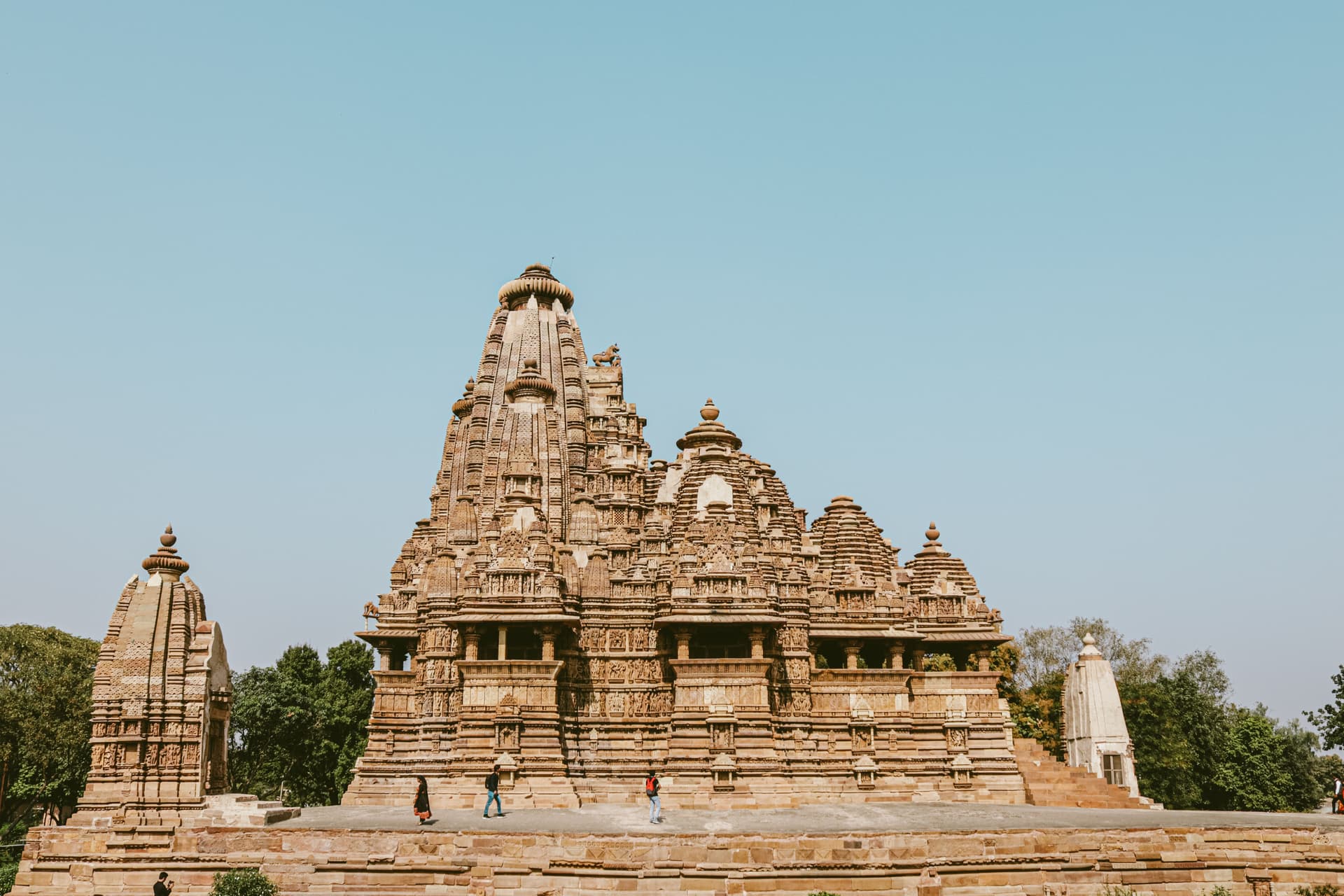
Khajuraho, in the state of Madhya Pradesh, houses one of India's most remarkable ensembles of medieval temples. Built between the 9th and 11th centuries by the Chandela dynasty, these temples are celebrated for their carved friezes depicting erotic, mythological, and martial scenes. Inscribed on the UNESCO World Heritage List, the site attracts visitors as much for the finesse of its sculptures as for the architectural coherence of its sanctuaries in ochre sandstone.
Practical information at a glance
Admission: Fee required for Western group temples (differentiated rates for Indian residents and foreign visitors); some temples in the Eastern and Southern groups offer free or reduced-rate access.
Recommended duration: A full day for all three groups; two days for an in-depth visit.
Dress code: Respectful attire recommended; some temples remain active places of worship.
Access: Khajuraho airport with flights from Delhi and Varanasi; railway station at Khajuraho (Mahoba line); buses from Jhansi, Satna, and Panna.
Best time to visit: October to March (moderate heat, clear skies).
What to see
The temples are grouped into three geographical ensembles: Western, Eastern, and Southern. The Western group, the best preserved, concentrates the most imposing temples. Sculptures cover the entire exterior facades: apsaras, intertwined couples (mithuna), deities, animals, and court scenes succeed one another in superimposed registers. The interior of the sanctuaries houses finely worked shikhara (pyramidal towers) and mandapa (hypostyle halls).
History and context
The Chandela dynasty ruled the Bundelkhand region from the 9th to the 13th century. At its height, Khajuraho contained approximately 85 temples; only around twenty have survived. The temples were gradually abandoned following invasions by the Delhi Sultanate, then rediscovered by British captain T.S. Burt in 1838. UNESCO inscribed the site in 1986. The significance of the erotic sculptures remains debated: Tantrism, celebration of fertility, or simply a representation of human life in its entirety.
Highlights of the visit
Kandariya Mahadeva Temple
The largest and most elaborate of the Western group, dedicated to Shiva. Its shikhara rises to approximately 30 meters. The friezes contain over 800 sculptures, including the famous erotic groups that made Khajuraho world-renowned.
Lakshmana Temple
Dedicated to Vishnu, this 10th-century temple is among the best preserved. Its cross-shaped plan and four secondary sanctuaries at the angles perfectly illustrate the mature Chandela style.
Eastern group: Jain temples
The temples of Parsvanatha and Adinatha, in the Eastern group, belong to the Jain tradition. Their sculptures, of great delicacy, represent tirthankaras and female figures in graceful poses.
Sound and Light Show
Each evening, a sound and light performance is organized in the Western group, available in Hindi and English. It traces the history of the Chandela dynasty against the backdrop of illuminated temples.
Etiquette and visiting rules
Some temples (notably Matangesvara) remain active places of worship: respect any ceremonies in progress and avoid photographing devotees without their consent.
Remove your shoes before entering active sanctuaries.
Avoid overly short or transparent clothing out of respect for practitioners.
Do not touch the sculptures: skin oils accelerate sandstone erosion.
Photography tips
The golden morning light (between 7 and 9 a.m.) reveals the relief of sculptures on east-facing facades. In late afternoon, the Western group temples glow in warm light ideal for wide shots. A telephoto lens allows you to detail high-placed friezes without distorting proportions. Photography is permitted in most exterior areas; check restrictions inside active sanctuaries.
Location and access
Khajuraho is located in Chhatarpur district, north of Madhya Pradesh. The town is served by an airport receiving flights from Delhi and Varanasi. By train, Khajuraho station is connected to Mahoba, itself on the major Delhi–Chennai line. By bus or car, Jhansi (approximately 175 km) and Satna are the usual transfer points. Panna National Park is accessible in less than an hour by road.
All three temple groups are accessible on foot or by bicycle (rentals available in town). The Western group is a few minutes' walk from the center. The Eastern and Southern groups require travel by rickshaw or bicycle.
Nearby attractions
Panna National Park — tiger reserve and gorges of the Ken River, less than an hour from Khajuraho.
Raneh Falls — granite and basalt canyon with multicolored hues on the Ken River.
Ajaigarh Fort — Chandela fortress perched on a rocky spur, rarely visited.
Orchha — Bundela royal city with cenotaphs and temples, approximately 3 hours' drive away.
Frequently asked questions
From October to March, temperatures are pleasant and skies are clear. Avoid May and June when heat regularly exceeds 40°C. The monsoon season (July–September) attracts fewer visitors but roads can be challenging.
Allow a full day for all three groups at a brisk pace. Two days permit a more leisurely visit, including the sound and light show in the evening.
Yes. Direct flights connect Khajuraho to Varanasi. Agra is accessible via Jhansi by train. This "Rajasthan–Bundelkhand–Varanasi triangle" circuit is classic for Northern India travelers.
Erotic friezes represent a minority of the total sculptures. Most panels show deities, apsaras, and court scenes. The artistic and historical context can be explained to children without difficulty.
Photography is generally permitted in exterior areas. Inside active sanctuaries, restrictions may apply. Check signage at the entrance of each temple.
An authorized guide considerably enriches the visit: the iconography of the sculptures is complex, and explanations of Hindu and Jain mythology give meaning to each panel. Guides are available at the entrance to the Western group.
Want to discover this destination?
Our local advisors design your tailor-made trip.