Kaza
Kaza
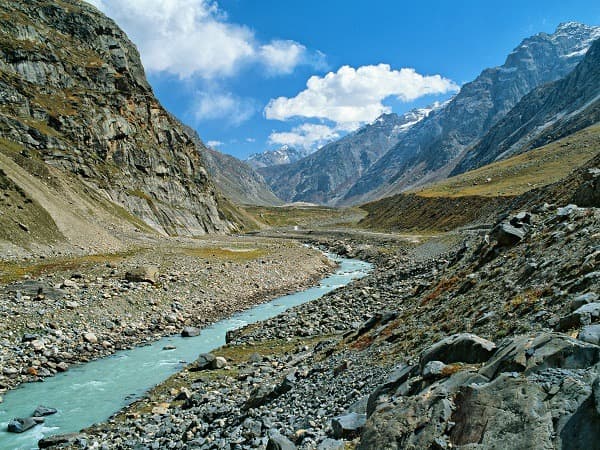
Kaza, the capital of Spiti Valley at 3,800 metres altitude, is the gateway to Buddhist monasteries, high-altitude villages, and the stark landscapes of the Indian Himalaya.
Kaza is the capital of Spiti Valley, perched at approximately 3,800 metres altitude in Himachal Pradesh. As the administrative and commercial hub of this arid Himalayan valley, the town serves as a base for exploring Buddhist monasteries, villages clinging to high slopes, and high-altitude landscapes. Its location between Lahaul and Tibet gives it a distinctly Tibetan cultural identity, visible in the architecture, language, and religious practices.
Practical Information at a Glance
- Altitude: approximately 3,800 m — acclimatisation essential before arrival.
- Access: road from Shimla via Narkanda and Reckong Peo (Kinnaur Valley), or from Manali via Rohtang Pass and Kunzum La (open in summer only).
- Best season: June to October; the valley is cut off by snow for the rest of the year.
- Permits: no special permits required for Indian nationals; foreign visitors must check current regulations for areas near the border.
- Recommended duration: 2 to 4 days to explore surrounding sites.
- Accommodation: guesthouses and simple hotels available; booking advised during peak season.
What to See
Kaza itself is a modest functional town divided into two parts: Old Kaza, the historic quarter around the local monastery, and New Kaza, the administrative and commercial centre. The main market stocks essentials, trekking gear, and several restaurants serving Tibetan and Indian cuisine. Kaza Monastery, modest yet active, sets the spiritual tone of the place.
History and Context
Spiti Valley — literally "the middle land" in Tibetan — long served as a trade and pilgrimage corridor between Inde and Tibet. Kaza emerged as the administrative centre under British rule, then as subdivision headquarters after independence. Geographic isolation has preserved an almost intact Tibetan Buddhist culture, which modern roads have only gradually opened to outside visitors.
Highlights of Your Visit
Ki Monastery (Key Gompa)
About fifteen kilometres from Kaza, Ki Gompa is the largest monastery in Spiti Valley. Founded in the 11th century, it dominates the valley from a rocky spur. Its frescoes, thangkas, and library of Tibetan texts make it a major site. Monks reside here permanently.
Kibber Village
Perched above 4,200 metres, Kibber is one of the world's highest permanently inhabited villages accessible by road. From Kaza, the road winds upward in switchbacks to this settlement of tightly clustered white houses around a small monastery.
Langza Village
Langza is known for its marine fossils — evidence of when the region lay beneath the ancient Tethys Sea — and for the great Buddha statue that dominates the village overlooking snow-capped peaks.
Chicham and the Suspension Bridge
Chicham village is connected by a spectacular suspension bridge spanning a deep gorge. The journey from Kaza crosses the characteristic ochre badlands landscape of Spiti.
Photography Tips
Early morning light on the arid mountains and perched monasteries is optimal. The high-altitude sky, remarkably clear, favours telephoto lenses to isolate villages on their spurs. At Langza, framing the Buddha statue with snow-capped peaks works well in late afternoon. Avoid midday in summer: the light is harsh and the sky often veiled by dust.
Location and Access
Kaza lies in Spiti subdivision, Lahaul and Spiti district, Himachal Pradesh. The nearest airport is Bhuntar (Kullu), several hours' drive away. State buses connect Kaza to Shimla and Manali depending on season. The Manali route crosses Kunzum La Pass (approximately 4,550 m), closed in winter. The Shimla route remains open longer through the year. Disabled access is severely limited due to mountainous terrain and basic infrastructure.
Nearby
- Ki Gompa — Spiti's largest monastery, fifteen kilometres away, with remarkable medieval frescoes.
- Kibber — High-altitude village accessible by road, starting point for treks into snow leopard territory.
- Langza — Village famous for marine fossils and Buddha statue overlooking peaks.
- Dhankar Gompa — Spectacular fortress-monastery at the confluence of Spiti and Pin rivers, approximately 30 km away.
- Pin Valley — Lateral valley harbouring Pin Valley National Park, habitat of the snow leopard.
- Tabo — Monastery founded in 996, UNESCO World Heritage site, approximately 50 km downstream.
Frequently asked questions
June to October, when passes are open and roads passable. July–August is peak season; September–October offers calmer conditions and autumn light on the mountains.
Yes. Kaza sits at approximately 3,800 m. If coming from Manali, the ascent is rapid; plan a night at intermediate altitude. Mountain sickness symptoms (headaches, nausea) are common the first few days.
Yes, most monasteries in the valley are freely accessible. A local guide enriches the experience through explanations of iconography and history, but is not essential.
Shoulders and knees must be covered. Remove shoes before entering prayer halls. Maintain a respectful demeanour and ask permission before photographing monks or ceremonies.
Kaza makes an ideal base for a loop circuit: Ki Gompa and Kibber in one day, Langza and Komic another, then descent towards Dhankar and Tabo before leaving the valley.
Connectivity is limited and unreliable. ATMs exist but may be out of service; bring sufficient cash before entering the valley.
Photos
Want to discover this destination?
Our local advisors design your tailor-made trip.