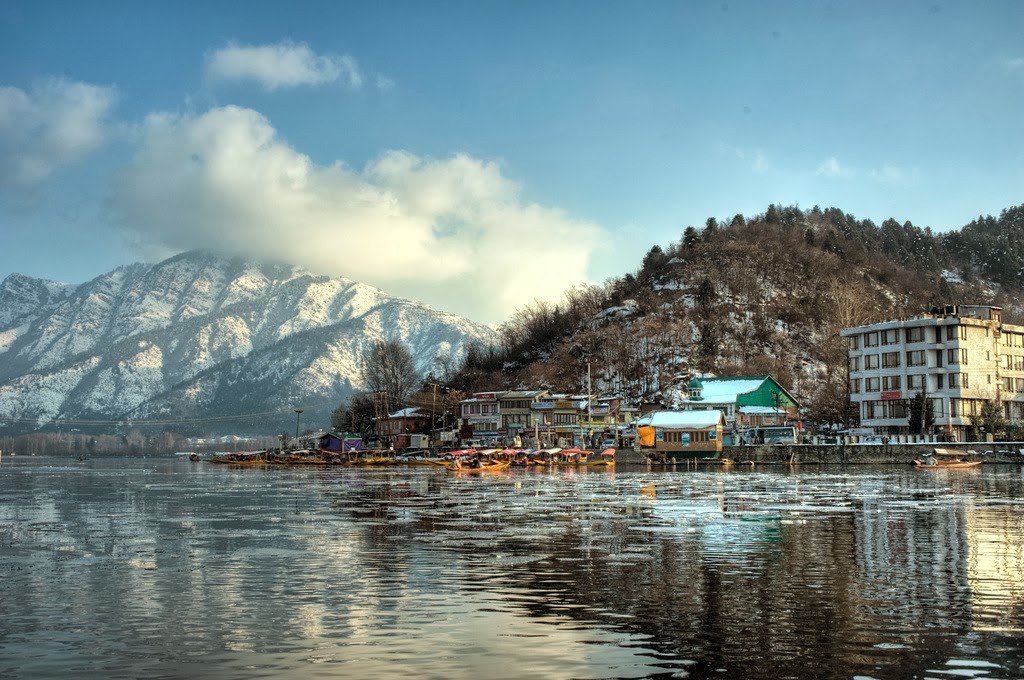
Kangra Village
Kangra, nestled in the Himalayan valley of the same name, is home to one of Northern India's oldest forts, a major pilgrimage temple and a unique heritage of 18th-century miniature painting.
Kangra is an ancient town in the district of the same name, situated in the Kangra Valley in Himachal Pradesh, at the foot of the Himalayan foothills. Known for its imposing medieval fort, Hindu temples and a school of miniature painting, it stands as a cultural and historical anchor in a region often traversed for its mountain scenery. The town itself remains modest, yet its heritage far exceeds its size.
What to see
Kangra concentrates several distinct sites to explore on foot or by rickshaw.
- Kangra Fort: one of the oldest fortresses in the Himalayas, perched on a rocky outcrop at the confluence of the Manjhi and Banganga rivers. The ramparts, palace ruins and interior temples bear witness to centuries of Rajput, Mughal and Sikh rule.
- Bajreshwari Mata Temple: a Hindu temple dedicated to the goddess Bajreshwari, rebuilt after the 1905 earthquake that destroyed the original structure. It draws pilgrims from across Himachal Pradesh.
- Masrur Temple: 8th-century rock-cut temples carved from sandstone, a few kilometres from town, comparable in style to temples of central India.
- Kangra Painting: a miniature style developed under the patronage of Kangra's rajas in the 18th century, recognisable by its soft hues and scenes from the life of Krishna. Examples are visible in some regional museums.
History and context
Kangra appears in ancient texts under the name Nagarkot. Its fort withstood repeated assaults — Alexander the Great allegedly attempted to take it, Mahmud of Ghazni plundered it in the 11th century, the Mughals occupied it in the 16th century. The Sikhs under Ranjit Singh gained control in the early 19th century before the British seized it. The 1905 earthquake, one of the deadliest in Indian history, profoundly reshaped the town.
Highlights of a visit
Kangra Fort
The climb to the fort offers views of the valley and Himalayan snows on clear days. Inside are several small active temples. Plan at least an hour to explore the various fortifications and ruins of the interior palaces.
Bajreshwari Mata Temple
Located below the fort, this temple is an active place of worship. Its post-earthquake architecture blends Hindu and colonial influences. The atmosphere is particularly intense during Navratri celebrations.
Masrur Temples
About twenty kilometres from Kangra, these monolithic rock-cut temples see few foreign tourists. Their partial state of preservation — damaged by the 1905 earthquake — lends them a distinctive atmosphere.
Etiquette and visiting rules
- Remove your shoes before entering temples.
- Dress conservatively (shoulders and knees covered) to access places of worship.
- Photography may be restricted inside the main sanctum of Bajreshwari Mata Temple — check on site.
- Respectful behaviour is required during puja ceremonies.
Photography tips
The fort photographs best late in the morning, when light illuminates the ramparts without backlighting. On clear days (October to March), snow-capped peaks appear in the background from the fort's heights. The Masrur temples are best photographed in raking light, early morning or late afternoon.
Location and access
Kangra is located in the Kangra Valley, about 20 km east of Dharamsala. The nearest railway station is Kangra Mandir, on the picturesque but slow narrow-gauge Pathankot–Jogindernagar line. Regular buses connect Kangra to Dharamsala, Pathankot and Shimla. The town is accessible by taxi from Gaggal Airport (Dharamsala Airport), about fifteen kilometres away.
Nearby
- Dharamsala and McLeod Ganj — seat of the Tibetan government-in-exile, about 20 km away; monasteries, Tibetan market and hiking.
- Masrur Temples — 8th-century rock-cut temples, about twenty kilometres southeast.
- Palampur — tea garden town of the Kangra Valley, about 35 km east.
- Baijnath — 13th-century Shaivite temple in excellent condition, about 60 km away.
Frequently asked questions
October to March offers clear skies and pleasant temperatures. Views of the Himalayan peaks are sharpest in winter. Avoid the monsoon season (July-August) for outdoor sites.
Yes, the two sites are about 20 km apart. One day is enough for the fort and Kangra temple in the morning, then McLeod Ganj in the afternoon, provided you start early.
The fort itself does not impose a strict dress code, but the temples inside require removing shoes and covering shoulders and knees.
The quickest option is a flight to Gaggal Airport (Dharamsala), then a taxi. By train, the Pathankot–Kangra Mandir line is scenic but lengthy; a bus from Delhi to Dharamsala or Kangra is also possible.
Yes, if you have an extra half-day. These rock-cut temples are little-visited and offer a striking contrast to the busier sites in the valley. A taxi from Kangra is the most convenient option.
Want to discover this destination?
Our local advisors design your tailor-made trip.