Kalighat
Kalighat
In the heart of south Kolkata, Kalighat Temple is one of India's most sacred Hindu sanctuaries, dedicated to the goddess Kali. Devotion, rituals and history converge in a neighbourhood that gave its name to the city.
Kalighat is one of India's most sacred Hindu temples, dedicated to the goddess Kali. Located in south Kolkata, it draws thousands of pilgrims daily from Bengal and across South Asia. The neighbourhood that surrounds it bears its name and, according to some historians, gave its name to the city of Calcutta. The fervour that reigns there, the endless rituals and the charged atmosphere make it an extraordinary visiting experience.
Practical information at a glance
Admission: free for the main temple; special paid queues allow you to skip the long wait
Access: Kalighat metro station (Line 1, Blue Line), a few minutes' walk away
Dress code: decent attire required; shoulders and legs must be covered
Shoes: must be removed before entering the temple grounds
Recommended duration: 1 to 2 hours depending on crowds
Crowds: very dense on festival days, particularly during Kali Puja and Durga Puja
What to see
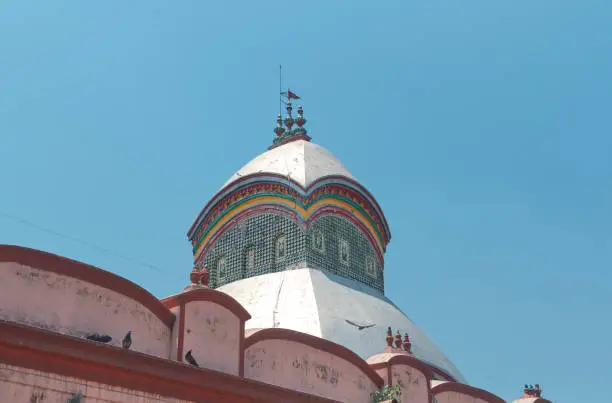
The current temple dates from the early 19th century, rebuilt on a much older worship site. The characteristic Bengali architecture is recognised by its central tower (shikhara) and curved roofs. Inside, the statue of Kali features three eyes and a golden tongue, adorned with jewels and garlands of fresh flowers. Priests (pandas) conduct rituals continuously, reciting mantras and receiving offerings from the faithful.
History and context
Kalighat is one of the 51 shakti peethas, sacred sites marking the places where, according to Hindu mythology, the limbs of the goddess Sati fell to earth. Here, it is Sati's right toe that is said to have touched the ground. The site is mentioned in ancient texts, but the current stone temple was erected around 1809 by the Sabarna Roy Choudhury family. Mother Teresa founded her first home for the dying, Nirmal Hriday, a few steps from the temple in 1952.
Highlights of the visit
The darshan of Kali
The darshan — the sacred vision of the goddess — is the heart of the visit. The crowd moves slowly towards the sanctum sanctorum. The atmosphere of collective devotion, the bells, the chanting and the scent of incense create an intense sensory immersion.
Rituals and offerings
Goats are sacrificed within the temple grounds on certain ritual occasions. Offerings of red flowers (hibiscus), coconut and rice are omnipresent. Observing these rituals from areas accessible to non-Hindus offers a rare glimpse of Bengali devotion.
Kalighat flower market
At the edges of the temple, vendors offer garlands of marigolds, red hibiscus and ritual offerings. This lively market is visually very rich and illustrates the devotional economy that gravitates around the sanctuary.
Nirmal Hriday
The home founded by Mother Teresa to welcome the dying and the destitute is located in immediate proximity. It is open to respectful visitors and provides a striking counterpoint to the bustling temple.
Etiquette and visiting rules
Remove your shoes before entering the sacred grounds.
Dress modestly: shoulders and legs covered for both men and women.
Non-Hindus may visit the outer courtyards but access to the inner sanctum may be restricted depending on the time.
Avoid photographing sacrificial rituals or the faithful at prayer without discretion.
Do not touch statues or ritual objects.
Beware of unofficial guides who offer their services at the entrance.
Photography tips
The morning light, before the crowds become too dense, is ideal for photographing the architecture and flower market. The colours of the offerings — red, orange, yellow — are particularly photogenic. Inside the temple, photography is generally prohibited; respect this rule strictly. The streets around the temple, with their flower stalls and pilgrims, offer very lively street scenes.
Location and access
Kalighat is located in south Kolkata, in the neighbourhood of the same name. The Kalighat metro station (Blue Line) is the most convenient option from the city centre. Taxis and rickshaws also serve the site. The temple is approximately 6 km from Park Street and about 8 km from Howrah. Nearby places include Victoria Memorial and the Maidan, accessible by metro or taxi.
In the surrounding area
Victoria Memorial — Iconic monument of the British colonial era, with its gardens and museum tracing the history of the Raj.
The Maidan — Vast green space in the heart of Kolkata, ideal for a stroll after visiting the temple.
Mullik Ghat Flower Market — One of Asia's largest flower markets, on the banks of the Hooghly.
Kumartuli — Neighbourhood of artisans who craft clay statues of deities, particularly for Durga Puja.
Frequently asked questions
Non-Hindus are generally admitted to the outer courtyards of the temple. Access to the inner sanctum may be restricted depending on the time of day and crowds. Adopt modest attire and respectful behaviour.
The temple is open year-round. To avoid crowds, choose weekdays and early morning hours. During Kali Puja (October-November) and Durga Puja, attendance is exceptional — the atmosphere is intense but visits are very long.
Photography is prohibited inside the sanctum. In the outer courtyards and surrounding flower market, it is generally tolerated, but always ask permission before photographing people.
Special queues allow you to reduce waiting time for a contribution. Arriving early in the morning remains the best strategy for a smoother visit.
Yes. Victoria Memorial and the Maidan are accessible by metro or taxi from Kalighat. Half a day is enough to combine the temple with a stroll through these nearby spaces.
Ritual sacrifices of goats take place within the temple grounds on certain occasions. This ritual is an integral part of the worship of Kali. Visitors sensitive to this matter should be informed before visiting.
Want to discover this destination?
Our local advisors design your tailor-made trip.