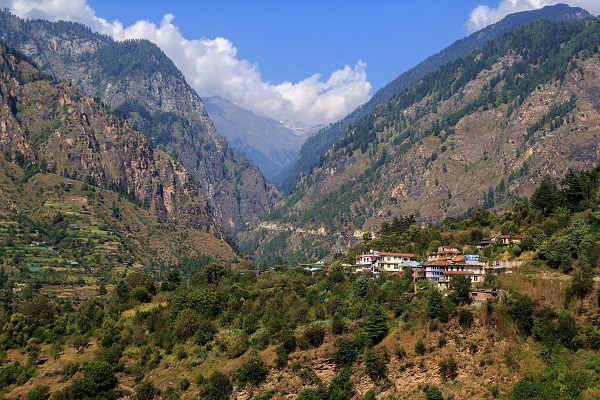
Wanla
Perched on a cliff in the Wanla Valley, this 11th-century monastery shelters Buddhist frescoes among the best preserved in western Ladakh, far from the tourist crowds.
Wanla is a remote village in Ladakh, nestled in the Wanla Nullah valley, between Lamayuru and Khalsi. Its Buddhist monastery, clinging to an ochre cliff, houses one of the region's oldest chapels. Rarely visited by mainstream tours, the site offers an authentic immersion into the architecture and Tibetan spirituality of medieval Ladakh.
Quick Practical Info
- Access: On the Leh–Srinagar road (NH1), turn off toward Wanla from Khalsi or from Lamayuru.
- Dress code: Modest attire required inside the chapel; remove your shoes before entering.
- Recommended duration: 1 to 2 hours for the monastery and village.
What to See
Wanla Monastery consists of a main chapel dedicated to Avalokitesvara (Chenrezig), believed to date from the 11thth century and attributed to the master Rinchen Zangpo. The central painted clay statue and period frescoes are remarkably well preserved. A ruined fortress tower dominates the village from the cliff's summit.
History and Context
Wanla is associated with the period of Buddhism's diffusion in Ladakh under the impetus of Rinchen Zangpo (958–1055), a prolific translator and builder. The chapel is part of a network of temples founded during this era in the Indus valley and its tributaries. The village itself retains traditional rammed-earth architecture characteristic of western Ladakh.
Visit Highlights
The Avalokitesvara Chapel
This is the site's heart. The frescoes with natural pigments, ancient thangkas, and central statue rank this space among the best-preserved examples of medieval Ladakh Buddhist art.
The Fortress Tower
The tower ruins offer a panorama over the enclosed valley and colorful cliffs. The climb is short but steep; hiking shoes recommended.
Wanla Village
A few dozen families still live here in traditional agricultural ways. Adobe houses, terraced barley fields, and prayer wheels compose an intact tableau.
Etiquette and Visit Rules
- Remove your shoes before entering the chapel.
- Circumambulate stupas and prayer wheels clockwise.
- Ask permission before photographing monks or locals.
- Speak quietly inside the chapel.
Photography Tips
Morning light illuminates the monastery façade and ochre cliffs head-on. Late afternoon, raking light emphasizes the relief of the ruined tower. Inside the chapel, light is dim: avoid flash, which damages frescoes.
Location and Access
Wanla lies in Leh district, roughly 100 km west of Leh on the Srinagar road. The village is accessible by car from Lamayuru (about 15 km) or from Khalsi. No regular public transport directly serves the village; a private vehicle or taxi from Leh is the most practical solution. The final trail to the monastery is on foot from the village (a few minutes).
Nearby
- Lamayuru Monastery — One of Ladakh's oldest and largest monasteries, in a striking lunar landscape.
- Alchi Monastery — Set of 11th-century temples with exceptional frescoes, roughly 30 km east.
- Khalsi — Town at the Indus confluence, resupply point on the Leh–Srinagar road.
Frequently asked questions
May to October, when the Leh–Srinagar road is open. In winter, access is difficult or impossible due to snow.
Wanla is in a zone accessible without a restricted inner permit for foreign nationals, unlike certain border areas of Ladakh. Check regulations in effect at the time of your visit.
Yes, the two sites are close. From Leh, a private car tour allows you to visit Alchi, Wanla, and Lamayuru on the same day if you start early.
Generally yes, but without flash to preserve the frescoes. Check with the resident monk on-site, who may request a contribution.
The village offers a few homestays with local families, an ideal solution for an authentic night. Options remain very limited; it is advisable to arrange this from Leh or Lamayuru.
Interested in this visit?
We can include it in your personalised itinerary.