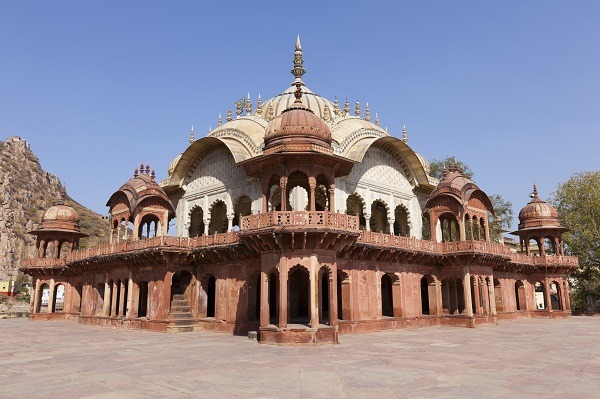
Somnathpur Temple (Keshava Temple)
Located 35 km from Mysuru, the Keshava Temple of Somnathpur (1268) stands among India's best-preserved Hoysala temples, inscribed as a UNESCO World Heritage site in 2023. Its sculptured friezes in chlorite stone rank among the finest examples of medieval Indian art.
Some fifty kilometers east of Mysuru, the village of Somnathpur is home to one of India's finest surviving Hoysala temples. Built in 1268 by Somanatha Dandanayaka, a general under King Narasimha III, the Keshava Temple stands out for its friezes carved with exceptional precision. Protected as a monument by the Archaeological Survey of India, it remains an active place of worship dedicated to Vishnu.
Practical Information at a Glance
- Admission: paid (rates vary for Indian residents vs. foreign visitors) — check current ASI rates
- Closure days: open daily; verify closures on religious festivals
- Recommended duration: 1.5 to 2 hours to observe the friezes in detail
- Dress code: modest dress required; shoes must be removed before entering the inner sanctuary
- Access: by car or taxi from Mysuru via the T. Narasipur road; no direct train service
What You'll See
The temple sits on a star-shaped platform (jagati) that multiplies the angles of the façade. Three sanctuaries (trikuta) rise around a central hall, each topped with an intricately carved tower (shikhara). The outer walls unfold several horizontal registers: elephants, horses, scenes from the Ramayana and Mahabharata, figures of deities and dancing attendants (madanikas). The interior preserves three statues of Vishnu — Keshava, Janardhana, and Venugopala — two of which were damaged during medieval invasions.
History and Context
The Hoysala Empire (11th–14th century) produced a unique architectural school in the Deccan, characterized by the use of chlorite schist stone — soft to carve yet hardening in air. Somnathpur is the last great Hoysala temple built before the dynasty's decline under pressure from the Delhi Sultanate. Together with Belur and Halebidu, it forms the triumvirate of Hoysala masterpieces, inscribed as a UNESCO World Heritage site in 2023.
Highlights of the Visit
The Sculptured Friezes
Expect at least six superimposed registers on each wall panel: a band of elephants symbolizing stability, horses representing speed, vegetative scrollwork, epic scenes, divinities, and finally the madanikas — graceful female figures, often cited among the most beautiful works of medieval Indian art.
The Star-Shaped Platform
The sixteen-pointed star plan is more than aesthetic: it creates shifting patterns of shadow and light throughout the day. Late morning light makes each projection cast a sharp shadow that accentuates the relief of the sculptures.
The Colonnade and Garden
The temple is surrounded by a columned cloister (prakara) and a well-maintained garden overseen by the ASI. Together, they provide a clear sense of the original layout of a Hoysala complex—rare to find so intact.
Etiquette and Visiting Rules
- Remove your shoes before entering the inner precinct.
- Avoid short or transparent clothing.
- The main sanctuary is an active place of worship: maintain discreet behavior.
- Do not touch the sculptures; some are fragile.
Photography Tips
Morning light (before 10 a.m.) is ideal: it strikes the friezes at an angle and reveals their relief. At midday, overhead light flattens the details. A macro lens or telephoto zoom allows you to frame the madanikas without approaching the walls. Photography is permitted within the grounds; check for any restrictions inside the main sanctuary.
Location and Access
Somnathpur lies roughly 35 km south-east of Mysuru via the T. Narasipur road (NH 212, then secondary roads). Most visitors come by taxi or rental car from Mysuru, often combining this visit with Talakadu Temple or the T. Narasipur ghats on the Kaveri River. There is no direct rail link; local buses exist but run infrequently.
Nearby Attractions
- Mysore Palace — the Amba Vilas Palace, the city's iconic landmark, approximately 35 km to the west.
- Belur Temple — another Hoysala masterpiece, roughly 150 km north, ideal for a two-day circuit.
- Halebidu Temple — the former Hoysala capital, close to Belur, featuring two remarkable twin temples.
- Ranganathittu Bird Sanctuary — a bird sanctuary on the Kaveri, about 20 km from Mysuru, on your route back.
Interested in this visit?
We can include it in your personalised itinerary.