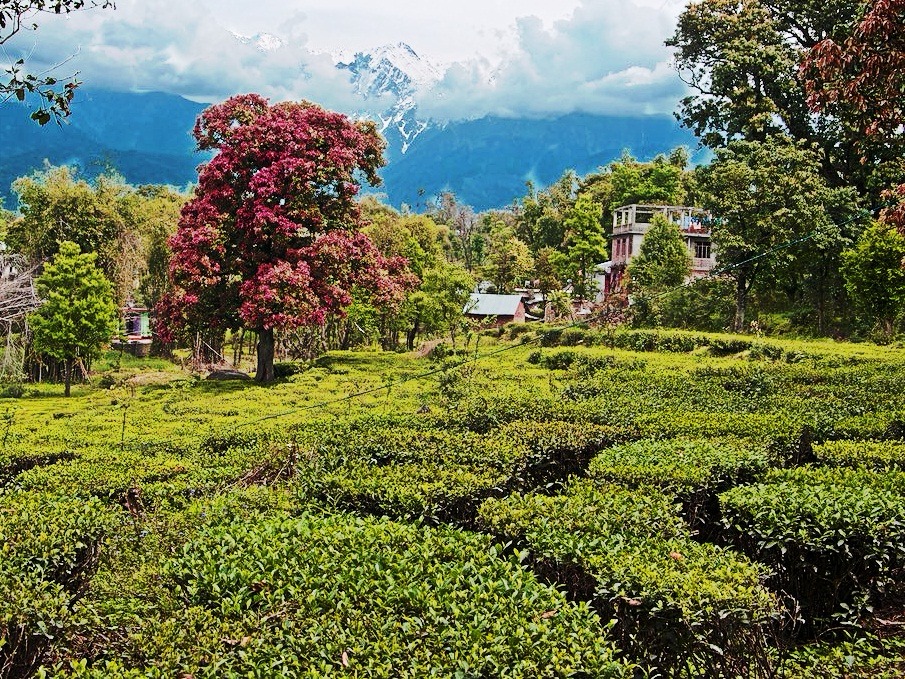
Sainj
Sainj Valley, in Kullu district, offers alpine meadows, stone-and-wood villages and hiking trails in the heart of the Great Himalayan Biosphere Reserve, away from the crowds.
Sainj Valley opens in Kullu district, Himachal Pradesh, in northwestern India. Traversed by the Sainj River, a tributary of the Beas, it forms a preserved enclave between deodar forests and high-altitude villages. Part of the Great Himalayan Biosphere Reserve, it attracts trekkers and travelers seeking a less-frequented Himachal than Manali or Kasol.
Quick facts
- Access: from Aut (on NH3), a road climbs the valley to Sainj and beyond toward Shangarh.
- Clothing: warm clothes essential at altitude, even in summer.
- Recommended duration: 2 to 4 days to explore the valley and its trails.
- Best season: April–June and September–November; the road may be closed in winter.
What to see
The valley unfolds alpine meadows (thatch), dense forests of pine and Himalayan cedar, and stone-and-wood villages with slate roofs. The Shangarh plateau, at approximately 2,000 m, offers an open panorama over the surrounding ridges. Wooden temples in Kath-Kuni style dot the hamlets.
History and context
Sainj Valley is part of the Great Himalayan Biosphere Reserve, designated a UNESCO World Heritage Site in 2014. Local communities practice subsistence farming and transhumant herding. Kath-Kuni vernacular architecture—alternating stone and timber beams—testifies to know-how passed down through centuries in Kullu's valleys.
Highlights of the visit
Shangarh Plateau
This vast high-altitude meadow, surrounded by deodar forests, is the valley's focal point. A temple dedicated to Narayan is revered by villagers. The atmosphere is calm, far from saturated tourist circuits.
Treks to alpine lakes
Several trails depart from Shangarh and neighboring villages toward glacial lakes and passes. Routes vary in difficulty; a local guide is recommended for multi-day treks.
Kath-Kuni architecture
The valley's villages preserve houses and temples built using the Kath-Kuni technique, resistant to earthquakes. Observing the carved details of wooden doors and lintels is worthwhile.
Photography tips
Morning light on Shangarh Plateau is particularly sharp, with snow-capped peaks in the background. Villages photograph best in late afternoon, when golden light warms the stone and wood. Always ask residents' permission before photographing them.
Location and access
Sainj lies approximately 50 km south of Kullu by road. The usual entry point is the town of Aut, on the highway. Local buses connect Aut to Sainj; beyond, transport is sparse and a private vehicle or taxi is preferable. The valley is not suitable for people with reduced mobility due to narrow roads and unimproved trails.
Nearby
- Tirthan Valley — neighboring valley, also in the biosphere reserve, renowned for trout fishing and trekking.
- Kullu — main town of the district, known for its Dussehra festival and temples.
- Manali — mountain resort to the north, departure point toward Rohtang and Spiti.
Frequently asked questions
April to June and September to November offer the best conditions. In winter, snow may render the road impassable. The monsoon (July–August) brings landslide risks.
Certain zones of the Great Himalayan National Park, which encompasses the reserve, require a permit. Inquire with local forest authorities in Kullu before setting out on a trek.
Yes. The two valleys are close and accessible from Aut. Plan a minimum of 4 to 5 days to explore both without rushing.
A few guesthouses and homestays exist in Sainj and Shangarh. Supply remains limited; booking in advance during peak season is advised.
Walks around Shangarh suit families. High-altitude treks are reserved for children accustomed to mountain hiking and changing conditions.
Interested in this visit?
We can include it in your personalised itinerary.