Pushkar 1
Pushkar, a holy city of Rajasthan, centers around a sacred lake with 52 ghats. The Temple of Brahma, vibrant bazaar and annual camel fair make it an essential stop on any Rajasthan circuit.
Pushkar is a Hindu holy city in Rajasthan, nestled around a sacred lake roughly 150 km from Jaipur. Dedicated to the god Brahma — one of the rare temples dedicated to him across India — it has drawn pilgrims and travelers for centuries. Its white ghats, colorful lanes and atmosphere of quiet devotion make it a distinctive stop on any Rajasthan itinerary.
Practical information at a glance
- Access: The nearest railway station is Ajmer (around 14 km away); taxis and buses regularly connect the two towns.
- Dress code: Covered clothing is required in temples; shoes must be removed before entering.
- Alcohol and meat: Holy city — alcohol and meat are prohibited for sale throughout the town.
- Recommended duration: A full day for the ghats, Temple of Brahma and bazaar; two nights to enjoy sunrise over the lake.
- Best time to visit: October to March for pleasant weather; November for the famous camel fair.
What to see
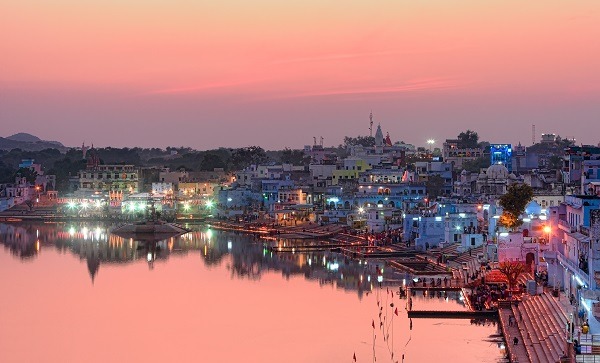
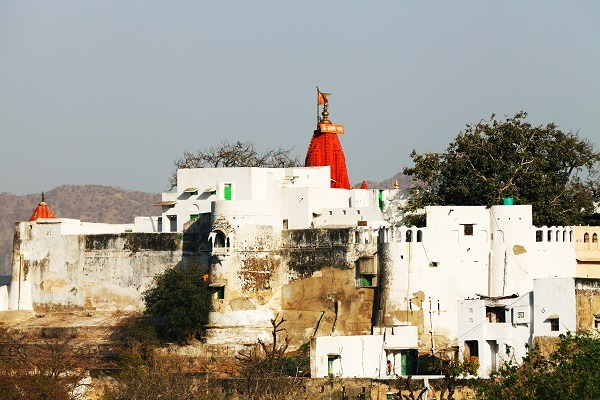
Pushkar Lake is the heart of the city: its 52 ghats descend in white stone steps down to the water. The Temple of Brahma (Jagatpita Brahma Mandir), recognizable by its red spire and swan sculptures, is the main pilgrimage site. The main bazaar runs alongside the lake, offering textiles, silver jewelry, spices and ritual objects.
History and context
Pushkar ranks among India's oldest pilgrimage sites. Legend holds that Brahma himself chose this spot to perform a yagna (Vedic sacrifice). The lake is believed to have appeared where a lotus flower dropped from the god's hand fell to earth. References to Pushkar appear in the Mahabharata and Padma Purana, attesting to its long place in Hindu tradition.
Highlights of your visit
The lake and its ghats at sunrise
At dawn, pilgrims descend to bathe in waters believed to be purifying. The atmosphere is hushed, punctuated by bells and prayers. Brahma Ghat and Gandhi Ghat (where the Mahatma's ashes were immersed) are the most visited.
The Temple of Brahma
Built in the 14th century according to tradition, this white marble temple is one of the world's very few sanctuaries dedicated to Brahma. Inside stands a statue of the four-faced god. Entry is open to all, regardless of religion.
Pushkar Fair (Pushkar Mela)
Each November (by the Hindu lunar calendar, at the full moon of Kartik), the city hosts one of Asia's largest camel fairs. Thousands of animals, merchants and pilgrims converge on Pushkar for days of trading, competitions and rituals.
The bazaar and local crafts
Lanes around the lake are filled with shops selling tie-dye textiles, hand-worked silver jewelry and Rajasthani miniatures. Prices are negotiable; vendors are accustomed to foreign visitors.
Etiquette and visit guidelines
- Remove your shoes before entering any temple or main ghats.
- Wear clothing covering shoulders and knees.
- Priests offer pujas (prayers and offerings) on the ghats: you may accept or politely decline, though financial participation is often expected.
- Do not photograph rituals or people praying without their explicit permission.
- The lake itself is sacred: do not bathe in it unless invited to do so as part of a ritual.
Photography tips
Sunrise over the ghats offers golden light and fewer crowds. White façades reflect strong light at midday: prefer early morning or late afternoon. During Pushkar Mela, dunes to the north of the city provide panoramic views of the camel encampment.
Location and access
Pushkar lies in Ajmer district, Rajasthan. The town is accessible from Ajmer by road (Nag Pahar pass, around 20 minutes by taxi). From Jaipur, allow roughly 2.5 to 3 hours by car. Direct buses also connect Pushkar to Jodhpur and Udaipur. The town is small and walkable; tuk-tuks circulate for longer distances.
Nearby attractions
- Ajmer — 14 km away: the dargah (mausoleum) of Khwaja Moinuddin Chishti, one of India's most important Sufi pilgrimage sites.
- Jaipur — Around 150 km away: Rajasthan's capital with its fortified palaces, a natural step before or after Pushkar.
- Jodhpur — Around 200 km away: the blue city and Mehrangarh Fort, reachable in a day's drive.
Frequently asked questions
October to March offers pleasant weather. November coincides with Pushkar Mela, the camel fair: the atmosphere is unique but accommodation books well in advance.
No. Pushkar is a holy vegetarian city: sale of meat and alcohol is prohibited. Restaurants serve exclusively vegetarian cuisine.
Yes. Shoulders and knees must be covered. Shoes are removed at temple entrances and main ghats. A spare scarf or sarong is handy.
One day is enough for the main sites. Two nights allow you to enjoy sunrise over the lake and explore the bazaar at a leisurely pace.
Yes, the two towns are 14 km apart. Many travelers visit Ajmer's dargah in the morning and arrive in Pushkar for sunset over the ghats.
Rules vary by temple. At the Temple of Brahma, photography is generally restricted inside the sanctuary. Always ask permission before photographing pilgrims or rituals.
Interested in this visit?
We can include it in your personalised itinerary.