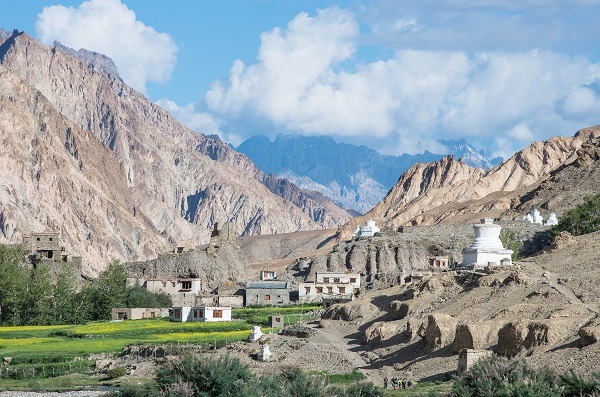
Nalgonda
A historic city in Telangana about 90 km from Hyderabad, Nalgonda preserves a medieval fort perched on a granite hilltop and serves as a gateway to Nagarjuna Sagar dam and the Buddhist museum island of Nagarjunakonda.
Nalgonda is a mid-sized city in Telangana, approximately 90 km southeast of Hyderabad. Once a stronghold of the Kakatiya and Bahmani dynasties, it retains significant medieval vestiges set within a landscape of granite hills and reservoirs. The region is also known for its historical fluorosis issues linked to groundwater—a subject that has shaped its contemporary development.
What to See
Nalgonda Fort, perched on a rocky hilltop, dominates the cityscape. Its stone walls, bastions, and entrance gates bear witness to medieval Deccan military architecture. The Nagarjuna Sagar reservoir, one of the world's largest masonry dams, lies nearby and stands as the area's major attraction.
History and Context
The region first came under Kakatiya influence, then passed to Bahmani sultans in the 14th century. The name "Nalgonda" derives from Telugu and refers to the blue hill (nalla konda). Under the Nizams of Hyderabad, the city became an important administrative district. Following independence, the Nagarjuna Sagar dam, constructed between 1955 and 1967, transformed the agricultural economy of the entire region.
Highlights of Your Visit
Nalgonda Fort
The fort ruins offer sweeping views across the city and surrounding hills. Enclosure walls, water cisterns, and garrison structures remain partially intact. The climb is short but requires good footwear on rocky terrain.
Nagarjuna Sagar Dam
Located roughly 150 km from Nalgonda, this colossal dam on the Krishna River supplies two states. The site also houses the Nagarjunakonda museum island, accessible by boat, where Buddhist artifacts from the 2nd–3rd centuries, relocated during reservoir filling, are on display.
Local Temples
Several ancient Hindu temples dot the district, including sanctuaries dedicated to Shiva and Vishnu dating from the Kakatiya period, identifiable by their distinctive architectural style with finely carved sculptures.
Photography Tips
The fort photographs best in late afternoon, when low-angled light accentuates the texture of granite stone. From the summit, the panorama over the city and hills is sharp during the dry season (November–February). For Nagarjuna Sagar, dawn light offers remarkable reflections on the reservoir.
Location and Access
Nalgonda is situated on NH-565, approximately 90 km from Hyderabad. Regular buses connect Hyderabad's Mahatma Gandhi Bus Station (MGBS) to Nalgonda. The city has a railway station on the Hyderabad–Vijayawada line. Most visitors come as day trips from Hyderabad.
Nearby Attractions
- Nagarjunakonda — Buddhist museum island with 2nd-century sculptures and stupas, accessible by boat from the dam.
- Nagarjuna Sagar Dam — one of the world's largest masonry dams, spanning the Krishna River.
- Hyderabad — Telangana's capital, about 90 km away, featuring the Charminar, Golconda, and a renowned food scene.
Frequently asked questions
The dry season from October to February offers pleasant temperatures. Summer (April–June) is extremely hot in this Deccan region. The monsoon (July–September) can make secondary roads difficult to navigate.
Yes, the distance of approximately 90 km makes it feasible as a day excursion. To combine Nalgonda and Nagarjuna Sagar, however, an overnight stay locally is more comfortable.
In active Hindu temples, it is customary to remove shoes before entering and to wear clothing that covers the shoulders and knees.
You'll need to reach the Nagarjuna Sagar dam site, then board the official boat to the museum island. Departures typically run in the morning; verify schedules on-site as they vary seasonally.
Visiting the fort and climbing to the summit takes approximately one to two hours, depending on your pace and interest in architectural details.
Interested in this visit?
We can include it in your personalised itinerary.