Nagaur
Nagaur and its Ahhichatragarh Fort offer an immersion into medieval Rajasthan, away from the crowds. Mughal frescoes, a giant livestock fair in January, and artisanal bazaars make this stopover an authentic halt between Jodhpur and Bikaner.
Nagaur is a city in central Rajasthan, midway between Jodhpur and Bikaner. It is home to one of the state's best-preserved medieval forts, Ahhichatragarh, as well as a fabric of havelis and mosques that bear witness to a history blending Rajput dynasties with Mughal influence. Less visited than Jodhpur or Jaisalmer, the city offers an authentic immersion into inland Rajasthan.
Practical Information at a Glance
- Access: Nagaur is connected by road to Jodhpur (approximately 135 km) and Bikaner (approximately 135 km); regular buses and taxis serve both cities.
- Recommended duration: half a day for the fort and bazaar, a full day to explore the surroundings.
- Dress code: covered clothing recommended when visiting places of worship inside the fort.
What to See
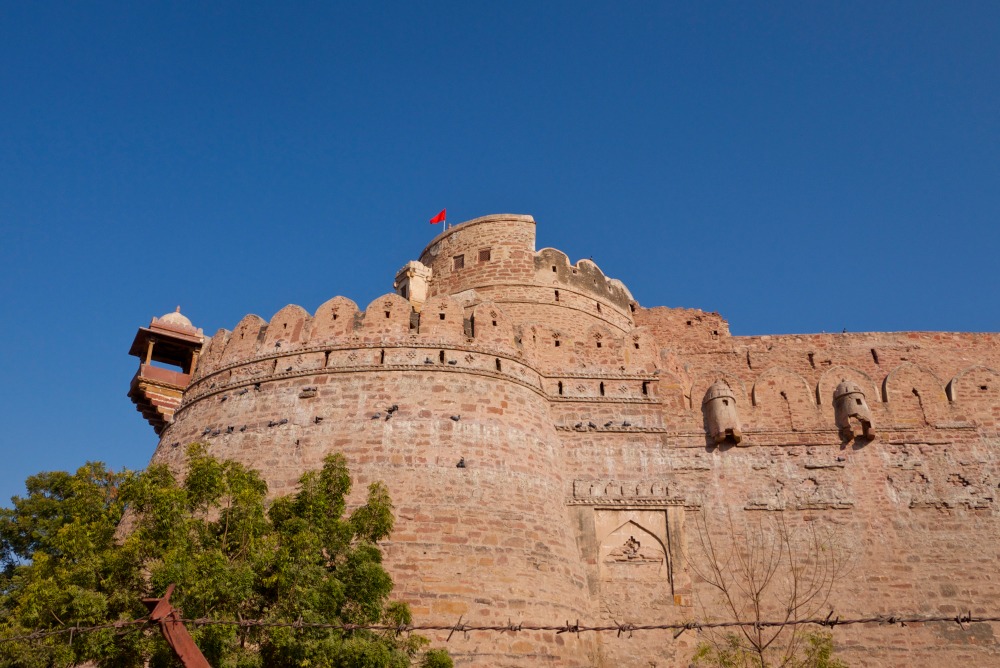
Ahhichatragarh Fort dominates the city from within an enclosure spanning several kilometers. Inside, Rajput palaces adorned with frescoes coexist with Mughal mosques, ancient water reservoirs (kunds) and restored gardens. Nagaur's bazaar, lively and low on tourist traffic, is renowned for its leather artisans and livestock traders.
History and Context
The site has been inhabited since antiquity; the name "Ahhichatragarh" (fort of the crowned cobra) evokes very ancient foundations. The Chahamanas (Chauhans) established a fortress here in the Middle Ages. The fort subsequently came under the control of Delhi's sultans, then the Mughals — Akbar stayed here — before being incorporated into the kingdom of Jodhpur. This succession of rulers explains the layering of architectural styles visible today.
Highlights of the Visit
Ahhichatragarh Fort
The outer walls are imposing. Inside, the Akbari and Amar Singh Mahal palaces retain mural frescoes with pigments still vibrant. The kunds — stepped reservoirs — illustrate Rajput hydraulic ingenuity in the face of the Thar Desert's aridity.
Nagaur Fair
Each year in January-February, Nagaur hosts one of Rajasthan's largest livestock fairs. Camels, horses, and oxen are traded by the thousands. The event also attracts artisans and folk musicians; it is one of the state's most vibrant rural spectacles.
Bazaar and Craftsmanship
Nagaur is known for its leather goods (saddles, harnesses) and dried red chili peppers, exported throughout Rajasthan. The daily market, around the old town, is best visited early in the morning to capture its buzz.
Etiquette and Visiting Rules
- Remove your shoes before entering places of worship inside the fort.
- Ask permission before photographing residents, particularly women.
- Adopt covered clothing (shoulders and knees) in religious areas.
Photography Tips
Golden morning light is ideal for photographing the ramparts from outside. Inside the fort, palace frescoes are best captured in soft mid-morning light. During the January-February fair, the first hours of the day offer the most colorful scenes before crowds gather.
Location and Access
Nagaur is located in its namesake district, in the heart of Rajasthan. The city is accessible by bus from Jodhpur and Bikaner. Nagaur railway station is connected to these two cities, though frequencies are limited. The drive from Jodhpur takes approximately two hours. There is no airport in Nagaur; the nearest airport is Jodhpur's.
Nearby Attractions
- Jodhpur — The "Blue City" and its Mehrangarh Fort, the natural departure point toward Nagaur.
- Bikaner — Another fortified desert city of Thar, with Junagarh Fort and ornate havelis.
- Pushkar — Sacred town and holy lake, accessible from Nagaur via Ajmer.
- Karni Mata Temple (Deshnok) — Temple of sacred rats, on the road to Bikaner.
Frequently asked questions
Winter (October to March) is the ideal season. Temperatures are pleasant, and the January-February livestock fair is an event in itself.
Yes. Nagaur sits midway between the two cities. One night is enough to visit the fort and bazaar before continuing on.
Yes, the fair is public. It is typically held in January-February according to the lunar calendar; verify exact dates before planning your visit.
A local guide is recommended to understand the history of the different architectural layers (Rajput, Mughal) and to locate the best-preserved frescoes.
Photography is generally allowed in outdoor areas. In active places of worship, ask permission on site.
Interested in this visit?
We can include it in your personalised itinerary.