Manastambha of Deogarh
Manastambha of Deogarh
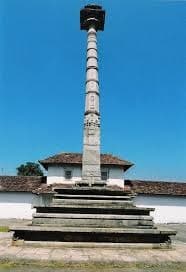
A Jain votive column standing before the medieval temples of Deogarh, the Manastambha is an architectural and spiritual landmark of Rajasthan, intricately carved and rich in symbolism.
The Manastambha is a votive column erected before the Jain temples of Deogarh, in Rajasthan. These monumental pillars, characteristic of Jain architecture, mark the entrance to sacred complexes and symbolise the spiritual pride of the community. Deogarh is home to a remarkable ensemble of Jain temples, and the Manastambha is one of its most immediate visual landmarks.
What to see
The Manastambha appears as a slender column, often topped by a four-sided platform adorned with figures of Jinas (Jain saints). The shaft is finely carved with geometric and floral motifs. It stands facing the main entrance of the temple, creating a strong visual axis with the sanctuary.
History and context
The term manastambha literally means "pillar of pride" or "pillar of honour" in Sanskrit. In Jain tradition, it symbolises the abandonment of ego and spiritual elevation. These columns have been erected since the Middle Ages before Jain temples throughout India. Deogarh, an active Jain centre for centuries, preserves several examples of this type of monument.
Highlights of the visit
The carved pillar
Examine the reliefs on the shaft closely: each register recounts an episode from Jain cosmology. The quality of the stone carving testifies to the craftsmanship of local artisans.
The Jain temple complex
The Manastambha is part of a larger ensemble. The temples of Deogarh, some dating back to the 8th–9th centuries, deserve a thorough visit for their sculptures and inner sanctuaries.
Etiquette and visiting rules
- Remove your shoes before entering the sacred precinct.
- Modest dress required (shoulders and knees covered).
- Leather items (belts, bags) are sometimes forbidden in strict Jain temples — check locally.
- Maintain calm and respectful behaviour; avoid loud conversations.
Photography tips
Early morning light is ideal for photographing the pillar without backlighting. Frame from below to emphasise the column's verticality. Check with the guardian whether photography is permitted inside the sanctuaries.
Location and access
Deogarh is a small town in Rajsamand district, in Rajasthan. It is accessible from Udaipur (around 150 km away) or from Ajmer. The nearest railway station is Deogarh Madaria, on the Ajmer–Udaipur line. The Jain temple complex is located in the town itself, within walking distance of the centre.
Around the area
- Jain temples of Deogarh — an ensemble of more than thirty medieval sanctuaries to explore around the Manastambha.
- Fort of Deogarh — a Rajput fortress overlooking the town, now partly converted into a heritage hotel.
- Lake Pichola, Udaipur — a few hours' drive away, an ideal starting point for exploring southern Rajasthan.
Frequently asked questions
The dry season, from October to March, offers pleasant temperatures. Avoid the months of June to August if you are sensitive to the intense heat of Rajasthan.
Yes. Covered shoulders and knees are required. Also bring socks or easy-to-remove shoes, as you will walk barefoot within the precinct.
Yes. The Jain temple complex and the fort of Deogarh are easily visited in the same day, as the town is modest in size.
It is generally allowed outdoors, around the Manastambha. Inside the sanctuaries, ask permission from the guardian before bringing out your camera.
The road between Udaipur and Deogarh is accessible by car or taxi. A train also connects Udaipur to Deogarh Madaria station. Allow approximately two to three hours depending on your mode of transport.
Photos
Interested in this visit?
We can include it in your personalised itinerary.