Khajuraho Temples – Eastern Group
Khajuraho Temples – Eastern Group
Khajuraho's eastern group brings together Jain and Hindu temples from the 9th–12th centuries in a more contemplative atmosphere than the western group. Parsvanatha, Javari, Vamana: refined sculptures and living spirituality.
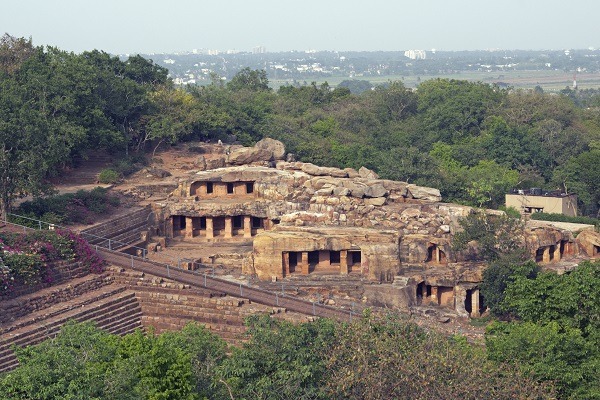
The eastern group of Khajuraho temples comprises several Jain and Hindu sanctuaries built between the 9th and 12th centuries under the Chandela dynasty. Less frequented than the western group, it offers a more peaceful atmosphere. Some temples remain active, lending them a living spiritual dimension absent from purely archaeological sites.
Practical information at a glance
- Access: on foot or by rickshaw from Khajuraho's centre, east of the village.
- Entrance: the Jain temples (Parsvanatha, Adinatha, Shantinatha) are managed separately; a modest entrance fee is generally requested for the Jain complex.
- Dress code: clothing covering shoulders and knees is mandatory in active temples.
- Recommended duration: 1.5 to 2 hours for the entire group.
- Accessibility: some paved paths, but certain temples require climbing steps.
What to see
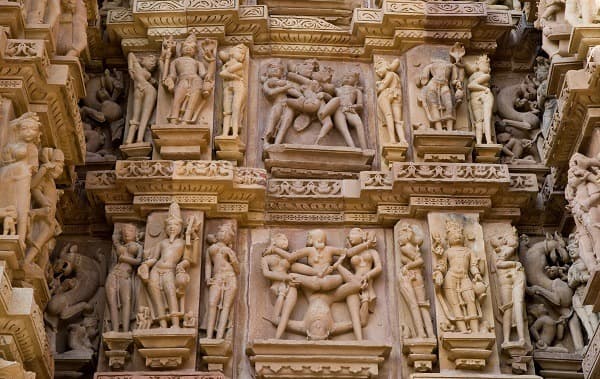
The eastern group comprises two distinct ensembles: the Hindu temples (Brahma, Vamana, Javari) and the Jain complex (Parsvanatha, Adinatha, Shantinatha). The Parsvanatha temple is the largest and best preserved of the Jain group. Its sculptured friezes depict scenes of daily life, apsaras, and sensual motifs comparable—though less explicit—to those of the western group.
History and context
The Chandela built over eighty temples at Khajuraho, of which about twenty remain. The eastern group bears witness to peaceful coexistence between Hinduism and Jainism under this dynasty. The Jain temples were erected by merchants and patrons of the Jain community, who wielded considerable influence in the region. The site has been inscribed as a UNESCO World Heritage site since 1986.
Highlights of the visit
Parsvanatha Temple
The most imposing of the Jain group. Its outer walls are adorned with finely detailed sculptures: women at their toilette, musicians, deities. The quality of execution rivals the masterpieces of the western group.
Javari Temple
A small Hindu temple dedicated to Vishnu, remarkable for the delicacy of its shikhara (pyramidal tower). Its modest scale allows sculptures to be observed at close range.
Vamana Temple
Dedicated to Vamana, the dwarf avatar of Vishnu. Its soaring shikhara and friezes of celestial figures make it one of the most elegant examples of late Chandela style.
Active Jain complex
The Shantinatha temple remains in use. Jain devotees come to pray here, giving the place a living and authentic atmosphere, distinct from purely museological sites.
Etiquette and visiting rules
- Remove your shoes before entering active temples.
- Dress modestly, covering shoulders and knees.
- Speak softly in spaces of active worship.
- Ask permission before photographing worshippers at prayer.
Photography tips
Morning light (before 9 a.m.) is ideal: it illuminates the east-facing façades without harsh shadows. The bas-relief sculptures of the Parsvanatha temple stand out particularly well in raking light. Photography is generally permitted outside temples; check restrictions inside active sanctuaries.
Location and access
The eastern group lies east of Khajuraho village, at a reasonable walking distance from the western group. Most visitors travel from the town centre by rickshaw or bicycle—bicycles are available for rent in the village. Khajuraho airport serves the town from Delhi and Varanasi. The nearest railway stations are Mahoba or Satna, with onward connections by bus or taxi.
Nearby attractions
- Khajuraho Western Group — the largest ensemble of Chandela temples, famous for its erotic sculptures and evening sound and light show.
- Khajuraho Southern Group — two isolated temples, including the Duladeo, in a lush and tranquil setting.
- Khajuraho Archaeological Museum — sculptures recovered from the sites, invaluable for understanding Chandela iconography.
- Raneh Falls — granite and coloured marble gorges on the Ken River, some thirty kilometres away.
Frequently asked questions
Yes. The atmosphere is calmer, the active Jain temples add a spiritual dimension, and the Parsvanatha temple features sculptures of quality comparable to the site's most celebrated monuments.
Yes. Shoulders and knees must be covered in active temples. Bring a shawl or sarong if you are wearing short clothing.
Absolutely. Starting early with the western group (which is more extensive), you can devote the afternoon to the eastern group. Allow a full day for both.
It is generally permitted outside temples. Inside active sanctuaries, ask permission and respect any posted restrictions.
October to March offers pleasant weather. Summer (April–June) is very hot. The monsoon (July–September) makes travel more challenging but the site is less crowded.
Interested in this visit?
We can include it in your personalised itinerary.