Chittorgarh Fort
Chittorgarh Fort
Perched on a rocky plateau in Rajasthan, Chittorgarh Fort stands as one of India's largest fortifications. Ruined palaces, medieval towers, and intricately carved temples narrate the epic saga of the kings of Mewar.
Chittorgarh Fort rises majestically from a rocky plateau nearly 180 metres above the Rajasthan plains. A UNESCO World Heritage Site, it stands as one of India's greatest fortifications, a symbol of Rajput resistance against successive invasions. Its palaces, temples, and commemorative towers chronicle three centuries of battles, sacrifices, and a warrior culture deeply woven into Rajasthan's identity.
Quick Facts
- Admission: Paid entry (tiered pricing for Indian residents and foreign visitors)
- Recommended duration: 3 to 5 hours to explore the entire site
- Access: By car or auto-rickshaw from the lower town; ascent via a winding road through several fortified gates
- Dress code: Modest clothing recommended for temples within the fort
- Lighting: Early morning visits advised to avoid heat and capture golden light
What to See
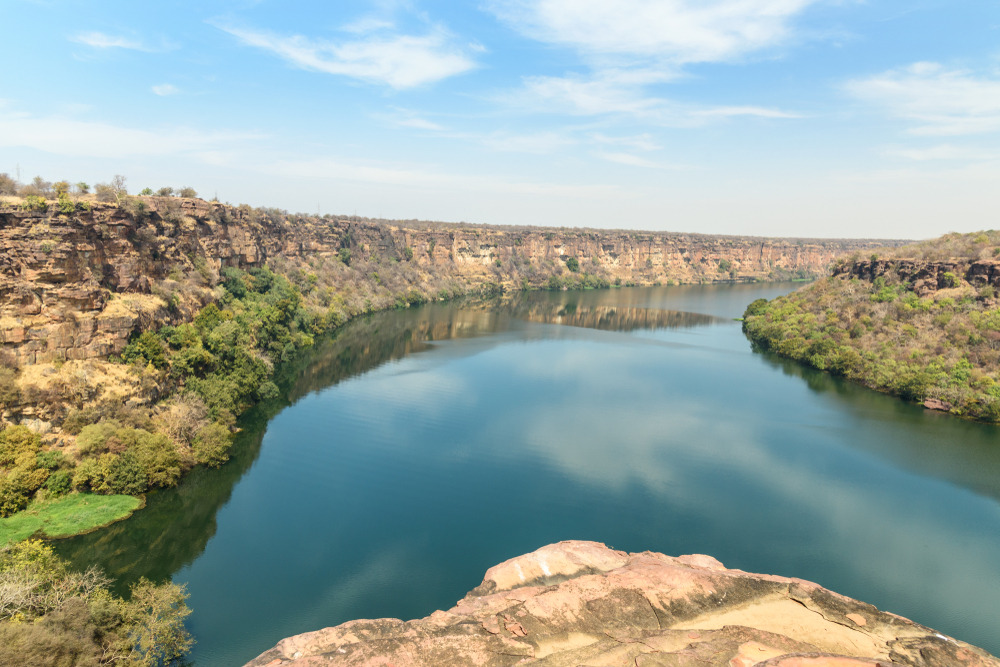
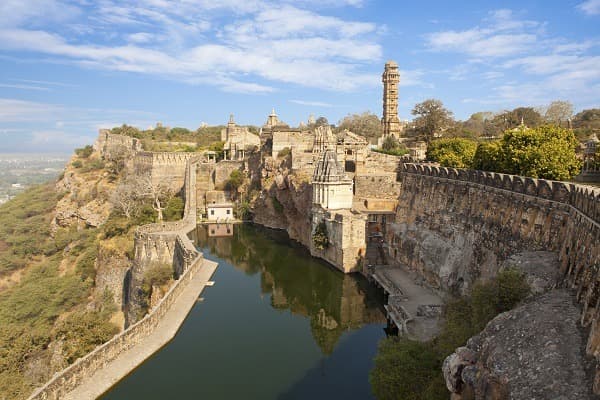
The fort sprawls across some 700 hectares. Within lie ruined palaces, ancient water reservoirs, dozens of Hindu and Jain temples, and two emblematic towers. Wild vegetation claims spaces between monuments, lending the site the atmosphere of a lost city.
- Victory Tower (Vijay Stambha): A nine-storey tower erected in the 15th century to commemorate a victory over the Malwa Sultanate
- Tower of Fame (Kirti Stambha): The older tower, dedicated to Jain faith
- Rana Kumbha Palace: A partially preserved palatial complex, linked to the legend of the poet-saint Mirabai
- Padmini Palace: A pavilion beside an artificial lake, associated with the legend of Queen Padmini
- Meera Temple and Kumbha Shyam Temple: Two intricately carved Hindu temples standing side by side
- Reservoirs (kunds): Several basins carved into rock, testifying to a sophisticated hydraulic system
History & Context
Chittorgarh served as the capital of the Mewar kingdom for centuries. The fort endured three major sieges: in 1303 by Alauddin Khilji, in 1535 by Bahadur Shah of Gujarat, and in 1568 by Mughal emperor Akbar. Each siege concluded with a collective jauhar — women of the fort threw themselves into flames to escape capture. These tragic episodes lie at the heart of Rajput memory and popular Rajasthan literature.
After Akbar's conquest, the Mewar court relocated to Udaipur. Chittorgarh was never reoccupied as a capital, explaining its partial ruin and abandoned atmosphere.
Highlights of Your Visit
The Victory Tower (Vijay Stambha)
Rising some 37 metres, this tower is adorned with sculptures of Hindu deities across its nine storeys. A narrow interior staircase leads to the summit, rewarding you with panoramic views of the plateau and surrounding plains.
Rana Kumbha Palace
The fort's largest palatial complex. Its ruins preserve sculpted columns, interior courtyards, and underground chambers where, by tradition, Mirabai is said to have lived and composed bhajans dedicated to Krishna.
Padmini Palace
Located in the fort's southern section, this white pavilion beside a water body is linked to the legend of Queen Padmini, whose beauty purportedly triggered Alauddin Khilji's siege. The setting is tranquil and often less crowded than other areas.
The Fortified Gates (pols)
The ascent to the fort passes through seven successive gates. Each functions as a distinct defensive point. Ram Pol and Bhairon Pol gates are among the best preserved and most impressive.
Etiquette & Visiting Rules
- Remove shoes before entering active temples within the fort
- Dress modestly (shoulders and knees covered) to access sanctuaries
- Photography is generally permitted in outdoor spaces; check restrictions inside temples
- Observe silence in areas of active worship
Photography Tips
Morning light is ideal for photographing the Victory Tower, with sculptures most prominent in raking sunlight. Late afternoon light from the western ramparts offers stunning sunset views over the plains. Avoid midday: light-coloured stone overexposes easily.
Location & Access
The fort stands at Chittorgarh, in south-eastern Rajasthan, roughly 115 km north-east of Udaipur. Chittorgarh railway station has good connections to Udaipur, Jaipur, and Delhi. From the station, auto-rickshaws and taxis make the ascent to the fort entrance. The site is sprawling but flat once atop the plateau: walking is feasible, though hiring a vehicle or auto-rickshaw at the entrance simplifies visits to distant monuments.
Nearby Attractions
- Udaipur City Palace — a lakeside palace of the Mewar maharajas, approximately 115 km to the south-west.
- Lake Pichola — an artificial lake in central Udaipur, dotted with island palaces.
- Eklingji Temple — a complex of Shiva temples between Chittorgarh and Udaipur, on the main route.
- Kumbhalgarh Fort — another major Mewar fortress, famous for its 36 km walls, roughly 100 km to the north-west.
Frequently asked questions
October to March offers dry, pleasant weather. Summer (April–June) brings intense heat on this exposed plateau. Monsoon (July–September) greens the site but can make some paths slippery.
Allow a minimum of 3 hours for the main monuments. A full day lets you explore the entire plateau comfortably, including lesser-visited areas.
Yes. The two towns lie roughly 115 km apart. Some visitors make a day trip from Udaipur, but an overnight stay in Chittorgarh allows an early morning visit under optimal conditions.
Photography is allowed in outdoor spaces and at archaeological monuments. Inside active temples, check for prohibition signs before using your camera.
The plateau is relatively flat once atop, but monuments themselves have unadjusted stairs. Vehicle or auto-rickshaw ascent is possible. Accessibility for those with reduced mobility remains limited across the site.
Accredited guides offer their services at the fort entrance. Given the site's expanse and the historical richness of each monument, a guide significantly enhances understanding of the place.
Photos
Interested in this visit?
We can include it in your personalised itinerary.