Yangthang
Yangthang
A high-altitude village in Sangla Valley (Kinnaur), Yangthang preserves traditional Kinnauri architecture, apple orchards, and commanding views of the sacred Kinnaur Kailash massif.
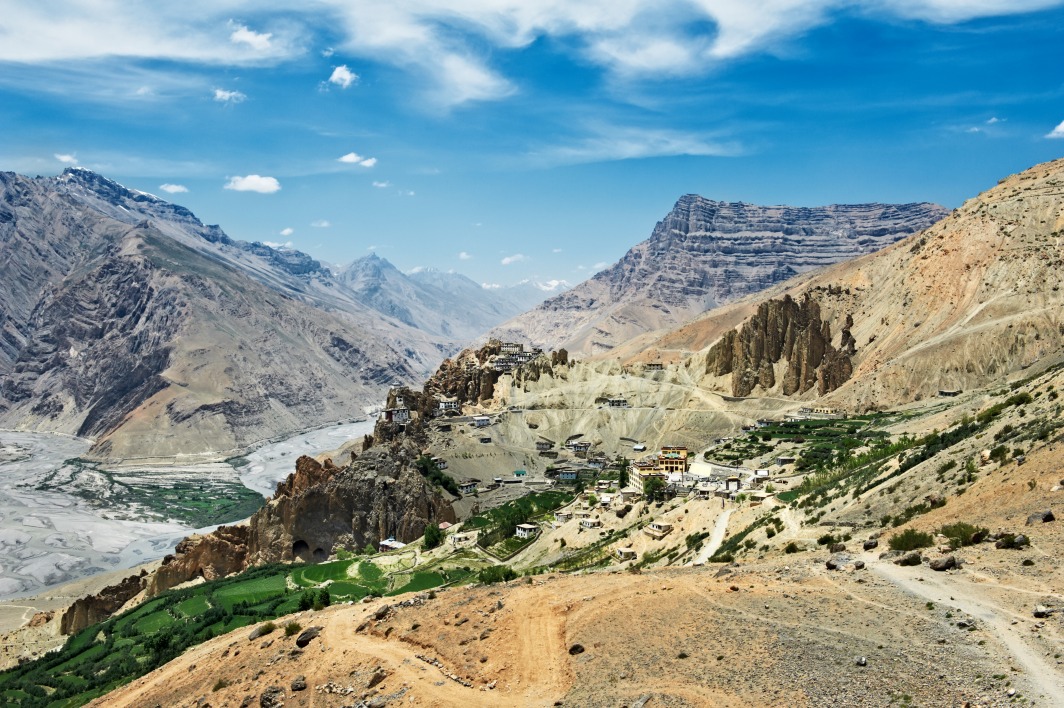
Yangthang is a high-altitude village in Kinnaur district, Himachal Pradesh, nestled in Sangla Valley. Perched above the Baspa River, it commands direct views of the snow-capped peaks of Kinnaur Kailash. The village retains its traditional wooden and stone architecture, apple orchards, and a well-preserved atmosphere, far removed from mass tourism circuits.
What to see
The immediate landscape combines agricultural terraces, apple and walnut orchards, and pine forests. Traditional Kinnauri houses, with wooden frameworks and intricately carved balconies, dominate the village. The Kinnaur Kailash massif—revered by Hindu and Buddhist communities alike—rises in the background and is visible on clear days. A modest local temple marks the village center.
History and context
Kinnaur is a transition zone between Tibetan and Indian influences. Villages in Sangla Valley, including Yangthang, remained isolated for centuries: the road connecting the valley to the rest of Himachal Pradesh was only opened to foreign visitors in 1992. This late opening explains the relative preservation of local traditions, architecture, and agricultural practices.
Highlights
Views of Kinnaur Kailash
The Kinnaur Kailash massif (approximately 6,050 m) is visible from the higher elevations of the village. The central rocky pinnacle, known locally as Shivling, is a pilgrimage destination. Morning light on the cliff faces is particularly striking.
Kinnauri architecture
Multi-story houses combine stone foundations with intricately carved wooden upper levels. Overhanging balconies and geometric patterns on facades are hallmarks of this distinctive regional style.
Orchards and mountain agriculture
Sangla Valley is renowned for apples, apricots, and walnuts. Autumn brings the apple harvest, animating village life. Stepped, irrigated terraces structure the agricultural landscape.
Photography tips
Morning light is ideal for capturing Kinnaur Kailash before clouds roll in. Wooden house facades are best rendered in soft, angled light at sunrise or sunset. Always seek permission from locals before photographing interiors or people.
Location and access
Yangthang sits in Sangla Valley, Kinnaur district, Himachal Pradesh. The valley is reached from Shimla via National Highway 5 (the Hindustan-Tibet highway), then by a secondary road up the Baspa Valley. Sangla, the valley's main town, is the nearest reference point. Chitkul, the last inhabited village before the Indo-Tibetan border, sits higher in the same valley. Mountain roads may close during winter and after heavy monsoon rains.
Foreign nationals require an Inner Line Permit to travel beyond certain checkpoints in Kinnaur district—verify current regulations before departure.
Nearby attractions
- Sangla — the valley's main town, offering treks, basic services, and a good base.
- Chitkul — the last inhabited village in Baspa Valley, at the Indo-Tibetan border, featuring an ancient temple and alpine scenery.
- Kamru Fort — a medieval fortress overlooking Sangla, dedicated to the goddess Kamakhya.
- Kinnaur Kailash — the sacred massif visible across the valley, the focal point of pilgrimage circuits.
Frequently asked questions
May–June and September–October offer the most favorable conditions: clear roads, clear skies, and comfortable temperatures. July–August brings monsoon rains that can make roads treacherous. Winter often cuts off the valley with snow.
Foreign nationals must obtain an Inner Line Permit (ILP) for certain zones in Kinnaur district. Contact local authorities or your travel agency before departure, as regulations can change.
Yangthang easily connects with Sangla and Chitkul as part of a two- to three-day circuit through Baspa Valley. Sangla has more accommodation options and serves as a practical base.
Ask permission before photographing locals or private spaces. Respect local places of worship: remove shoes before entering temples and wear clothing covering shoulders and knees.
Sangla Valley ranges from approximately 2,600 m to 3,000 m. Allow time for acclimatization, especially if arriving directly from the plains. Altitude sickness symptoms (headache, fatigue) can occur at this elevation for some visitors.
Photos
Want to discover this destination?
Our local advisors design your tailor-made trip.