Ranthambhore National Park
Ranthambhore National Park
Ranthambhore brings together wildlife and Rajput history in a unique setting: dry forest, lakes frequented by tigers, and a UNESCO-listed medieval fort, two hours from Jaipur.
Ranthambhore is one of Rajasthan's largest wildlife reserves, nestled between the arid Aravalli Hills and the Vindhya plains. Once a hunting ground for the maharajas of Jaipur, this national park is today one of the finest places in India to observe the Bengal tiger in its natural habitat. The ruins of a medieval fortress overlook the lakes and dry forest, creating a rare landscape where history and wildlife coexist.
Essential information at a glance
- Access: Sawai Madhopur, approximately 180 km from Jaipur, is the gateway town to the park; the railway station is well served from Jaipur, Delhi and Agra.
- Entry: Paid admission; safaris (by jeep or canter) are booked through the official Indian government portal — online reservation recommended well in advance during peak season.
- Seasons: The park is closed mid-July to mid-October (monsoon). The best period for tiger spotting is October to June, with peak visibility in April-May.
- Recommended duration: Two to three days to undertake multiple safaris (morning and afternoon) and maximise sighting opportunities.
- Dress code: Neutral colours (khaki, beige, green); avoid white and bright colours.
- Accessibility: Forest tracks are unmaintained; wheelchair access is very limited.
What you'll see
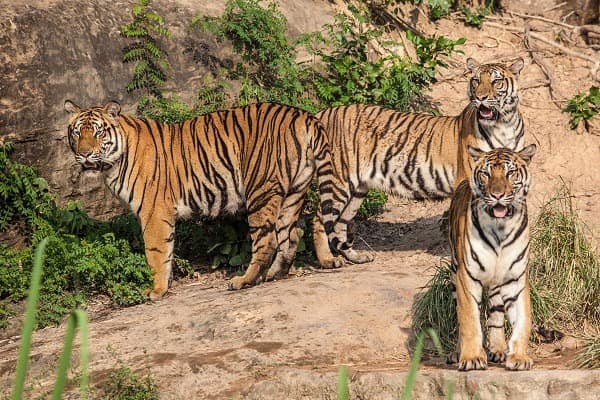
The park is home to a population of Bengal tigers relatively habituated to human presence, making it one of the most conducive sites for extended observations. Leopards, striped hyenas, golden jackals, marsh crocodiles and a wide variety of birds (including the giant kingfisher and fishing eagle) also inhabit the reserve. The lakes Padam Talao, Malik Talao and Raj Bagh Talao are strategic water points where wildlife congregates.
History and context
Ranthambhore Fort, inscribed as a UNESCO World Heritage site as part of the Hill Forts of Rajasthan group, dominates the park from a rocky outcrop. Built in the 10th century, it was a Rajput stronghold before falling under Mughal control. The maharajas of Jaipur made it their private hunting reserve in the 19th century. In 1973, the site became part of Project Tiger, the national tiger conservation programme launched by Indira Gandhi.
Highlights of your visit
The jeep safari
Zones 1 to 5 are the most frequently visited and offer the best chances of spotting a tiger. Each vehicle follows an itinerary assigned by the forest authorities. The early morning safari, at sunrise, is generally the most rewarding.
Ranthambhore Fort
Accessible from within the park, the fort houses temples dedicated to Ganesh, Shiva and Ramlalaji, still in active worship. Pilgrims access it even outside safari hours. The view over the forest and lakes from the ramparts is breathtaking.
The lakes and their surroundings
Padam Talao, the park's largest lake, is lined with water lilies and frequented by crocodiles and sambar deer. It is a prime observation point, especially in late morning when animals come to drink.
Photography tips
The golden light of the first hours after sunrise is ideal for photographing wildlife. A telephoto lens (300 mm minimum) is essential. Sudden movements and loud noises must be avoided. Photography is permitted from vehicles; exiting the safari is strictly forbidden.
Location and access
The park is located in Sawai Madhopur, in south-east Rajasthan. Sawai Madhopur railway station is directly connected to Jaipur (approximately 2 hours by train), Agra and Delhi. Taxis and tuk-tuks provide links between the station and hotels or the park entrance. Most accommodations arrange transfers and safari bookings.
Nearby attractions
- Jaipur — The 'Pink City', capital of Rajasthan, is the most common departure point for reaching Ranthambhore.
- Agra — The Taj Mahal and Agra Fort combine naturally with a stay at Ranthambhore on a Golden Triangle–Rajasthan circuit.
- Bundi — An authentic small Rajput town with a notable palace and stepwells, a few hours' drive away.
- Keoladeo Ghana National Park (Bharatpur) — A UNESCO-listed bird sanctuary, accessible from Agra or Jaipur.
Frequently asked questions
April and May offer the best chances: vegetation is sparse and tigers congregate at water points. The October to March period is more pleasant climatically, with regular sightings.
Safaris are booked through the official Rajasthan government portal. During peak season (November-April), places sell out quickly: reserve several weeks in advance. Your accommodation can also assist you.
The jeep (6 seats) offers greater flexibility and a better photography experience. The canter (20 seats) is cheaper but louder and less manoeuvrable on forest tracks.
The fort is located within the park. Access is normally via safari or a special permit for pilgrims. Contact local forest authorities for exact procedures.
Opt for neutral colours (khaki, beige, olive green). Avoid white, red or any bright colour. A hat and light jacket are useful in the morning, even in the warm season.
Yes. The park fits easily between Jaipur and Agra on a Delhi–Jaipur–Ranthambhore–Agra–Delhi circuit, adding two to three nights on site.
Photos
Want to discover this destination?
Our local advisors design your tailor-made trip.